Bradenton
Tampa Bay
Commercial Real Estate
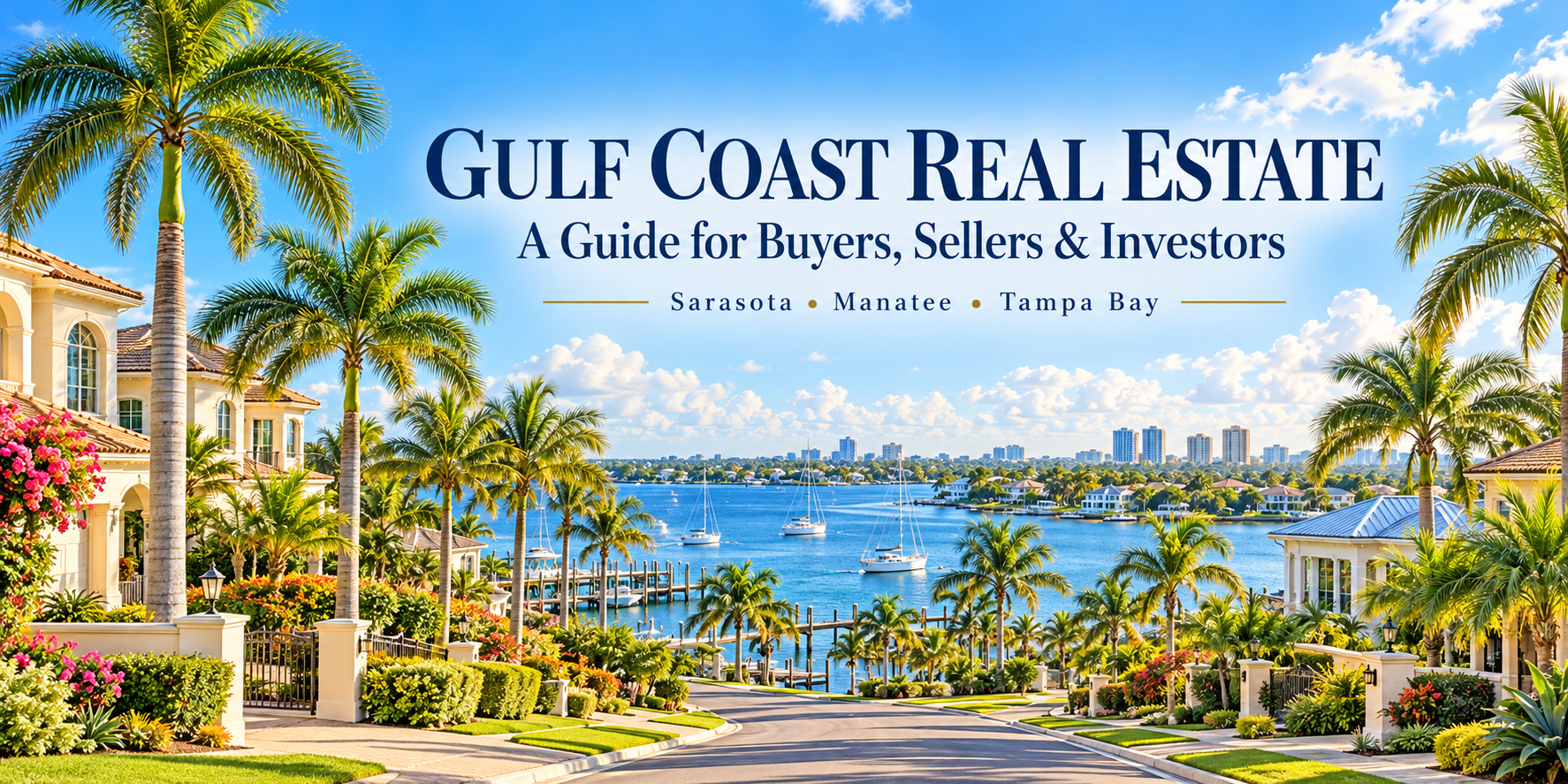

Local knowledge. Thoughtful strategy. Property decisions built around what matters to you.
There is something about Florida's Gulf Coast that stays with you.
Perhaps it is the morning light over Sarasota Bay, the quiet beauty of an established Bradenton neighborhood, the energy of downtown Sarasota, or the feeling of turning onto a palm-lined street and realizing you have found somewhere you would genuinely like to call home.
For others, the attraction is opportunity: a well-positioned investment property, a family home ready for its next chapter, land with future potential, or a commercial building that has supported a business for decades.
These properties have something in common. Their value cannot be understood through an asking price alone.
Across Sarasota, Manatee County, Bradenton, Lakewood Ranch, the barrier islands and the greater Tampa Bay region, real estate decisions involve much more than square footage and recent comparable sales.
They involve timing, ownership costs, lifestyle, financial priorities and the future someone hopes to build.
I am John Acosta, a Real Estate Advisor with Fine Properties, working with buyers, sellers, investors and property owners throughout Florida's Gulf Coast.
My approach begins with understanding the property, the market and—most importantly—the individual circumstances behind the decision.
The Gulf Coast is not one uniform housing market.
A condominium overlooking Sarasota Bay, a family home in Northwest Bradenton, a newer property in Lakewood Ranch and a waterfront residence on Longboat Key may all fall within the same broad region. Yet the factors influencing their ownership costs, buyer demand, marketability and long-term appeal can be remarkably different.
Even properties just a few streets apart can have meaningful differences in flood exposure, insurance requirements, age, lot characteristics, association obligations or potential future uses.
This is why regional market headlines are useful as background information, but they are rarely sufficient for an individual property decision.
Understanding a particular property requires examining the immediate competition, recent comparable sales, active listings, condition, financial obligations and the likely motivations of prospective buyers or sellers.
The question is not simply whether the Gulf Coast market is strong or weak.
The more useful question is: What is happening with the particular property, in the particular location, that matters to you?
For readers interested in regularly changing market conditions, I explore those developments separately in Florida Gulf Coast Real Estate: What to Watch in Fall 2026.
The principles in this guide are intended to remain useful beyond any single market cycle.
 Thoughtful presentation helps prospective buyers see a property's character, possibilities and connection to the Gulf Coast lifestyle. Effective marketing begins with understanding what makes a home distinctive. Illustrative image.
Preparing to sell a home is often the beginning of another important chapter.
Perhaps the family needs more room. Perhaps the children have moved away and a once-busy house feels different. A property may have been inherited, become difficult to maintain, or simply no longer fit the owner's plans.
Whatever the circumstances, selling begins with understanding not just what the property might bring, but what a successful outcome would look like.
A thoughtful listing strategy considers recent comparable sales, currently competing properties, location, condition, improvements and the expectations of likely buyers.
A home should not be priced solely around the amount an owner hopes to receive, nor should a seller automatically assume that the highest asking price produces the strongest final result.
Pricing influences how buyers discover a property, which competing homes they compare it against and whether they perceive it as a compelling opportunity.
The goal is to establish a credible market position while protecting the seller's objectives.
The way a property is presented matters.
Professional photography, attractive lighting, a clean and welcoming environment, thoughtful staging and clear descriptions help buyers understand what makes a home desirable.
However, preparation should be strategic rather than automatic.
Not every improvement produces a worthwhile return. Before investing in renovations, sellers should consider whether repairs, cosmetic improvements or simply better presentation are likely to influence the property's marketability.
For older homes, the condition and documentation of major systems can be especially important.
Roof age, HVAC equipment, plumbing, electrical systems, windows and past improvements may influence insurance, financing, inspections and buyer confidence.
I explore those considerations in greater detail in Aging Gulf Coast Homes: What Owners, Sellers and Investors Should Know.
An effective marketing plan should give prospective buyers meaningful opportunities to discover, explore and inquire about a property.
Depending on the assignment and agreed marketing strategy, that can include:
I create a dedicated digital marketing experience for properties where appropriate, giving buyers multiple ways to discover them, explore their features and request information.
But marketing alone cannot substitute for sound pricing, appropriate preparation and responsiveness.
The purpose is not simply to attract attention. It is to help the right audience understand the property's value.
A successful sale also requires careful consideration of offers, financing, inspection issues, contingencies, timing and the practical details leading to closing.
And sometimes the most valuable work begins well before the property is ready to be listed.
 Finding the right home is about more than an asking price. It's about discovering a place that feels right while understanding its location, condition, ownership costs and long-term possibilities. Illustrative image.
Buying a property can be one of life's most exciting decisions.
It can also be one of the most financially consequential.
There is the feeling of walking into a home and immediately imagining your furniture in the living room, family gathering around the kitchen, or quiet evenings on the patio.
That sense of connection matters.
But so does understanding what ownership will require after the excitement of closing day.
Two homes with similar prices may have substantially different total ownership costs.
Property taxes, homeowner's insurance, flood coverage where appropriate, association dues, maintenance, utilities, financing terms and anticipated repairs can change the financial picture considerably.
A buyer considering an older house may need to evaluate the age of major components.
A buyer considering a condominium should review the condominium association's financial health, reserves, inspections, insurance, restrictions and potential assessments, as applicable to the property.
Waterfront homes can present additional questions involving seawalls, docks, salt exposure, storm vulnerability, flood conditions and maintenance.
New construction has its own considerations: builder contracts, warranties, community development district assessments where applicable, association rules, timelines and the cost of upgrades.
A good purchase decision considers the entire property—not just the most attractive room or the advertised monthly payment.
Some households value walkability, restaurants and cultural destinations.
Others prioritize outdoor space, boating, proximity to schools or training facilities, privacy, newer construction, or convenient access to work and family.
The same neighborhood may be ideal for one buyer and impractical for another.
Someone relocating to Bradenton for a connection with IMG Academy, for example, may approach location very differently from someone seeking a waterfront retirement property or an investment condominium.
My guide to IMG Academy in Bradenton explores how different family circumstances can affect local housing choices.
The best property is not necessarily the one with the most impressive photographs. It is the one whose location, condition, ownership costs and everyday experience fit the buyer's objectives.
Price is important, but the terms of an offer can matter just as much.
Financing arrangements, deposits, inspection periods, contingencies, closing dates and the seller's particular circumstances can influence the strength of a proposal.
Sometimes an appropriate concession is more valuable than a small adjustment to the purchase price.
Sometimes certainty and timing matter most.
A thoughtful offer should balance the buyer's interests against the realities of the particular property and transaction.
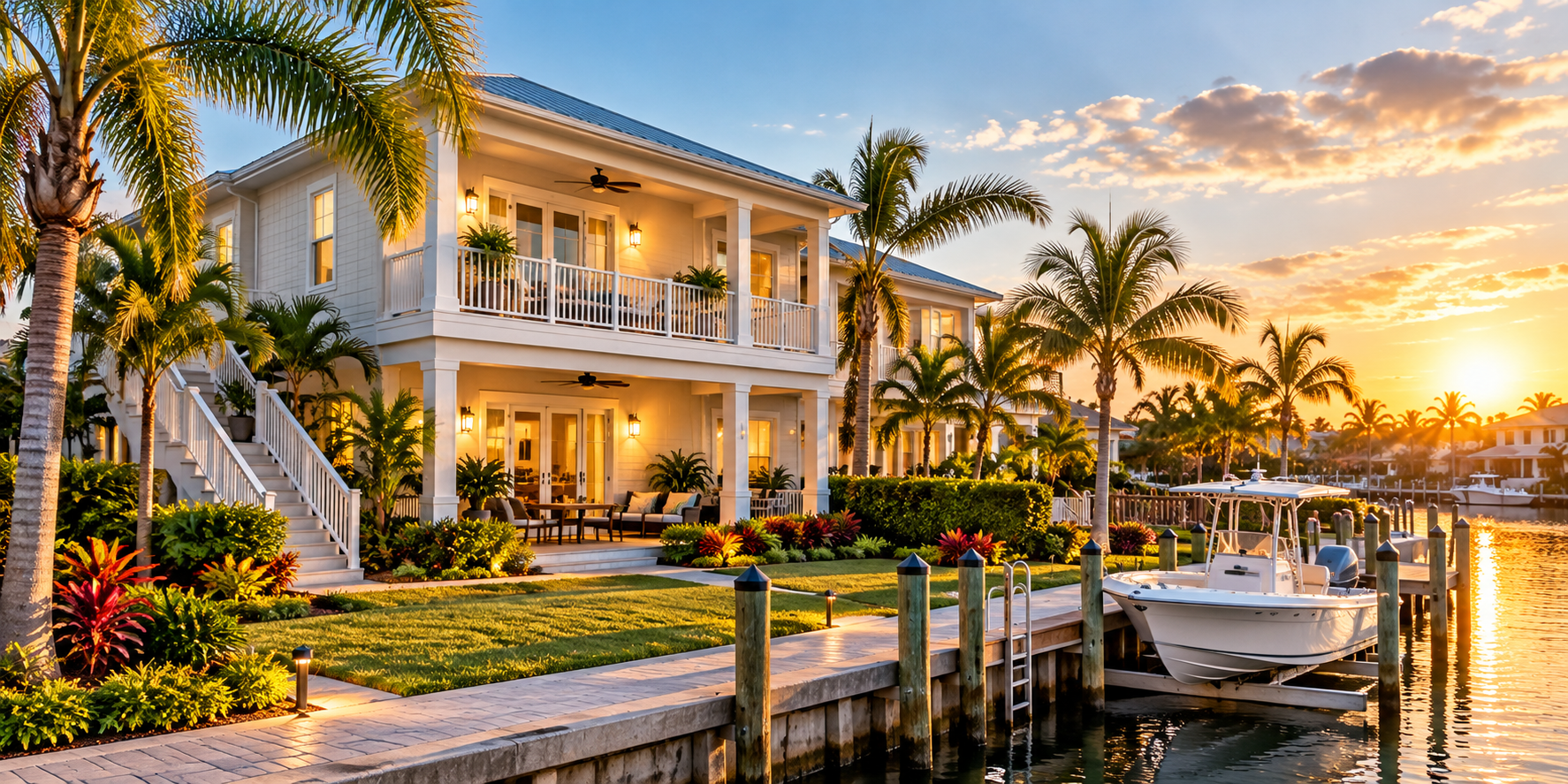 Real estate investing along Florida's Gulf Coast offers opportunities across different property types and locations. A sound investment strategy looks beyond appearance to evaluate income potential, operating expenses, risk and long-term objectives. Illustrative image.
Florida's Gulf Coast offers a broad range of real estate investment possibilities.
Traditional rental houses, duplexes, condominiums, small multifamily properties, commercial buildings, land and mixed-use opportunities each bring different considerations.
But an attractive location or projected rental rate does not automatically make a property a sound investment.
An investment needs to be evaluated as an operating asset.
Depending on the property, a useful analysis may consider:
For a rental investment, net operating income generally measures income after relevant operating expenses but before debt service and certain other items. Cash flow after financing is a separate calculation.
An appealing capitalization rate can be misleading if income assumptions are unrealistic or substantial capital improvements have been overlooked.
Likewise, a property with modest immediate income may still warrant consideration under a particular investment strategy—but appreciation or rent growth should never be treated as guaranteed.
Investment analysis should not end with acquisition.
A longtime landlord may own a property with substantial equity but face increasing maintenance obligations.
An absentee owner may be managing an aging home from another state.
A family may have inherited a property without a clear plan for renting, maintaining or selling it.
In such situations, the important question may be whether continued ownership still serves the owner's goals.
Retaining the property, improving it, changing the leasing strategy, selling or repositioning capital may each deserve consideration.
For qualifying investment or business real estate, a Section 1031 exchange may offer an avenue for deferring certain federal tax consequences, subject to strict requirements and professional guidance.
For a more detailed explanation, read 1031 Exchanges in Florida: A Practical 2026 Guide for Property Owners and Investors.
Real estate decisions involving tax treatment should always be coordinated with qualified tax and legal professionals.
Some properties represent more than an investment or a place to live.
They represent a livelihood.
Consider the longtime owner of a neighborhood restaurant, a family-operated auto repair shop, an independent retailer, a contractor's facility or a professional practice occupying its own building.
Over the years, the business may have become inseparable from the property in the owner's mind.
Yet the business and the real estate are often separate assets, with different values, obligations and potential buyers.
An owner preparing for retirement or a change in direction may have several possible paths.
The business and real estate might be sold together. The operating business might be sold while the real estate is retained and leased to the new operator. The property might be sold separately, or ownership and management might be transitioned over time.
Each approach can affect income, financing, taxes, liability, succession planning and the people connected to the enterprise.
My role is to help owners evaluate the real estate component, understand the property-related alternatives and coordinate with qualified attorneys, accountants, business intermediaries and other professionals as appropriate.
The conversation does not have to begin with a listing.
Sometimes it begins with a simple question:
What would you like the next chapter of your life—or your business—to look like?
I explore these decisions in When a Business and Its Property Are Connected.
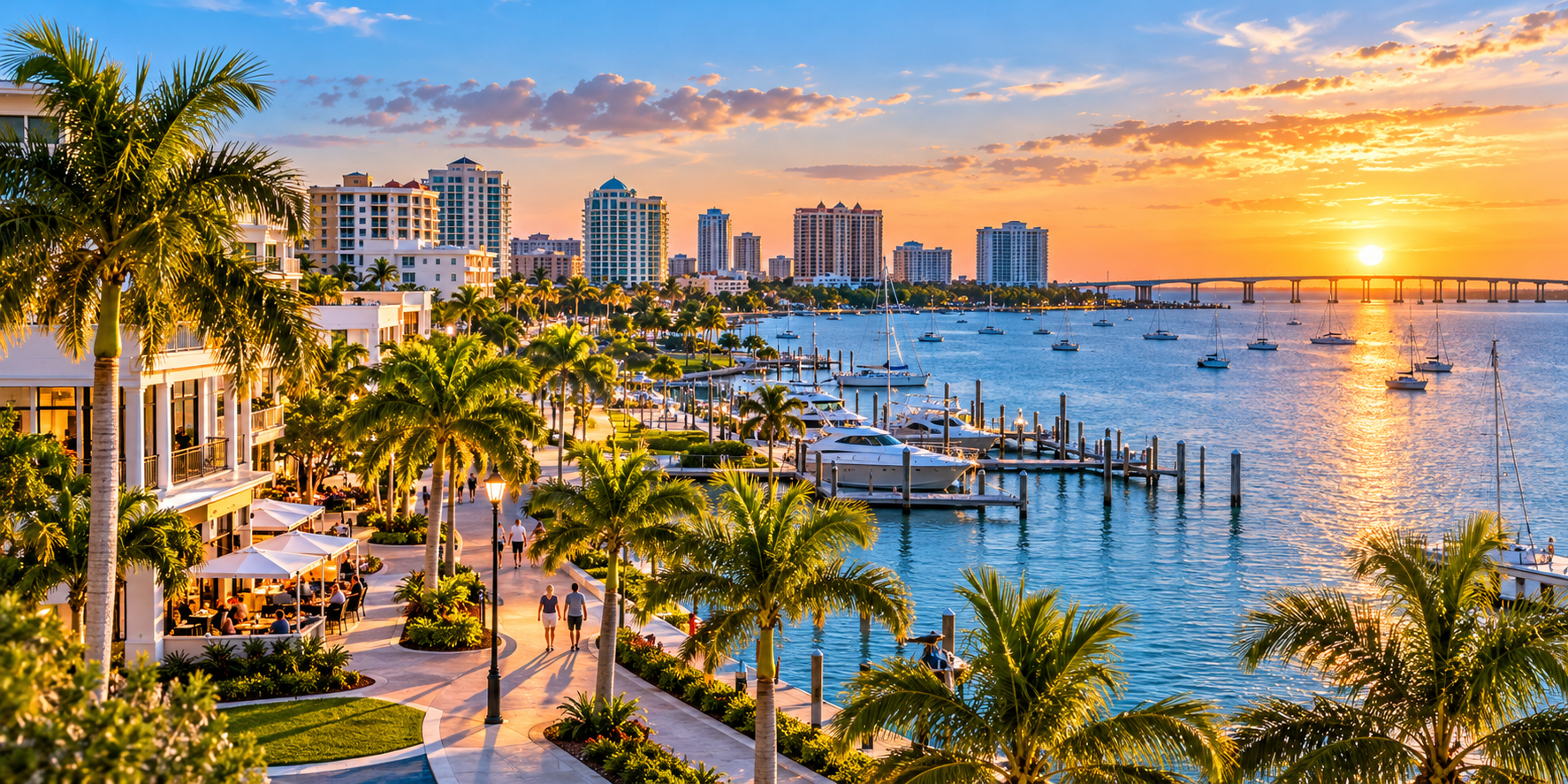 From walkable waterfront districts to established neighborhoods and growing communities, Florida's Gulf Coast offers countless ways to live, work and invest. Each location has its own character, opportunities and ownership considerations. Illustrative image.
Part of what makes this region compelling is the variety of places that exist within a relatively short geographical distance.
Each community has its own character, housing stock, amenities, ownership considerations and practical tradeoffs.
Sarasota combines established residential neighborhoods, cultural institutions, downtown living, waterfront communities and access to Gulf beaches.
Downtown Sarasota offers a different daily experience from Southside Village, Palmer Ranch or the mainland neighborhoods farther north and south.
For some, the appeal is proximity to restaurants, arts, parks and urban amenities.
For others, Sarasota represents an opportunity to find a quieter residential setting while remaining connected to the city's cultural life.
Property type is particularly important here. Downtown condominiums, older single-family homes and newer planned developments should not be evaluated using exactly the same assumptions.
Bradenton offers a mix of longstanding neighborhoods, waterfront environments, working communities and newer developments.
Northwest Bradenton is especially interesting because of its established streets, mature trees, proximity to the Manatee River and access to places such as Robinson Preserve.
Other portions of Bradenton offer different housing styles, price points and connections to employment, schools, sports and daily conveniences.
Eastern Manatee County presents another landscape, including communities experiencing continued residential and commercial development.
The distinction matters.
Bradenton is not a single type of neighborhood, and Manatee County is not a single real estate market.
Anna Maria Island encompasses three municipalities: the City of Anna Maria, Holmes Beach and Bradenton Beach.
Although they share an island, their individual characteristics and regulatory frameworks should not be treated as interchangeable.
Beach access, boating, seasonal activity, residential character, flood exposure and vacation-rental considerations can all influence property decisions.
Anyone purchasing with a rental strategy should verify the specific municipality's current rules, applicable licensing requirements and any condominium or association restrictions.
Island living can be extraordinary, but successful ownership requires understanding the property beyond its proximity to the beach.
Longboat Key offers a distinctive range of Gulf-front condominiums, bayfront residences, single-family neighborhoods and boating-oriented properties.
The appeal may be immediate, but the underlying ownership considerations deserve careful review.
Condominium association finances, reserves, maintenance history, flood conditions, insurance, coastal exposure and the condition of docks or seawalls may all be relevant, depending on the property.
The island also spans portions of both Sarasota and Manatee counties, making accurate property identification particularly important.
Lakewood Ranch appeals to many buyers because of its planned communities, newer residential construction, amenities and variety of housing choices.
Waterside adds a distinctive lakeside setting and a connection to Sarasota-area amenities.
However, communities within Lakewood Ranch can differ considerably in housing type, association obligations, amenities and distance to particular destinations.
A buyer should examine the specific village, property, fees and daily travel needs rather than treating the entire development as one interchangeable neighborhood.
The greater Tampa Bay area extends the region's opportunities into a larger metropolitan environment.
St. Petersburg, Clearwater, Tampa and their surrounding communities offer urban residences, historic housing, waterfront properties, investment opportunities and diverse commercial corridors.
Different neighborhoods can offer markedly different experiences.
A condominium in downtown St. Petersburg, an established home in Clearwater and a commercial property in Tampa may require entirely different approaches to valuation, ownership costs and market positioning.
The region's variety is part of its appeal—and one reason local analysis is essential.
Across these communities, several recurring considerations deserve attention.
Insurance and storm exposure. Wind coverage, flood risk, prior claims and replacement costs may influence both affordability and marketability. Flood maps are useful starting points, but they should not be mistaken for complete property-specific risk assessments.
Taxes and exemptions. A property's current tax bill may not represent what a purchaser will owe after a change in ownership. Homestead exemptions, assessment limitations and other circumstances should be evaluated through the appropriate county property appraiser.
Condominium and association obligations. Fees, reserves, governing documents, pending assessments, restrictions and applicable inspection requirements should be reviewed before a purchase or sale decision.
Building condition. The age of a property is only part of the story. Maintenance history, permitted improvements and the remaining useful life of important systems deserve consideration.
Future use. Zoning, rental regulations, association restrictions, permitting and other requirements can influence whether a buyer's plans for a property are feasible.
These issues are not reasons to avoid Gulf Coast ownership.
They are reasons to approach it with clarity.
I believe thoughtful real estate representation begins by listening.
Before discussing a listing price, a particular neighborhood or a possible investment, I want to understand the objective.
Is the goal to relocate, simplify, build wealth, preserve income, accommodate family, transition a business or prepare for retirement?
Is timing essential, or is there room to evaluate alternatives?
Are there ownership obligations or concerns that need to be understood before taking the next step?
Those answers shape the strategy.
From there, the process may involve property research, comparable-sales analysis, preparation, marketing, negotiation, careful review of available information and coordination with the appropriate professionals.
I work across residential, commercial and investment real estate, including circumstances in which a business and its property must be considered together.
No two assignments are identical.
And not every productive conversation has to result in an immediate transaction.
Sometimes the right first step is simply to understand where things stand.
A home can hold decades of memories.
A condominium can represent a new season of independence or a long-awaited connection to the coast.
An investment property can reflect years of discipline and planning.
A small commercial building can be the place where someone earned a living, supported a family, employed neighbors and built something that mattered.
Real estate carries numbers, documents and obligations. But it also carries stories.
The responsibility of a Real Estate Advisor is to appreciate both.
Whether you're thinking of selling, purchasing, investing, evaluating an inherited property or considering the future of a business-related property, I welcome the opportunity to help you understand your options.
The first step does not have to be complicated.
It can begin with a conversation.
 Beyond the contracts, market statistics and property decisions, real estate is about the lives we build and the places we call home. Sometimes a new chapter begins with simply imagining what is possible. Illustrative image.
Continue exploring the places, ownership questions and property decisions shaping our region:
If you're evaluating a home, commercial property, investment opportunity or a possible sale along Florida's Gulf Coast, I would welcome a conversation about your goals and the options worth considering.
Explore More Articles & Insights
Visit JohnAcostaRealEstate.com
Contact: john@johnacostarealestate.com
John Acosta
Real Estate Advisor
Fine Properties
Sarasota • Manatee • Tampa Bay
Residential • Commercial • Investment • Business & Property Transitions
John Acosta is a Florida real estate sales associate affiliated with Fine Properties. JohnAcostaRealEstate.com is an independently operated agent website, not the brokerage's official website.
This article is intended for general educational information and does not constitute legal, tax, financial, insurance or investment advice. Property conditions, financing, local regulations and market information can change. Consult appropriately qualified professionals for property-specific guidance.
Originally published August 22, 2026. Substantially revised October 2026. This evergreen guide is periodically reviewed; time-sensitive market updates are covered in separately dated articles.