

Bradenton
Tampa Bay
Commercial Real Estate
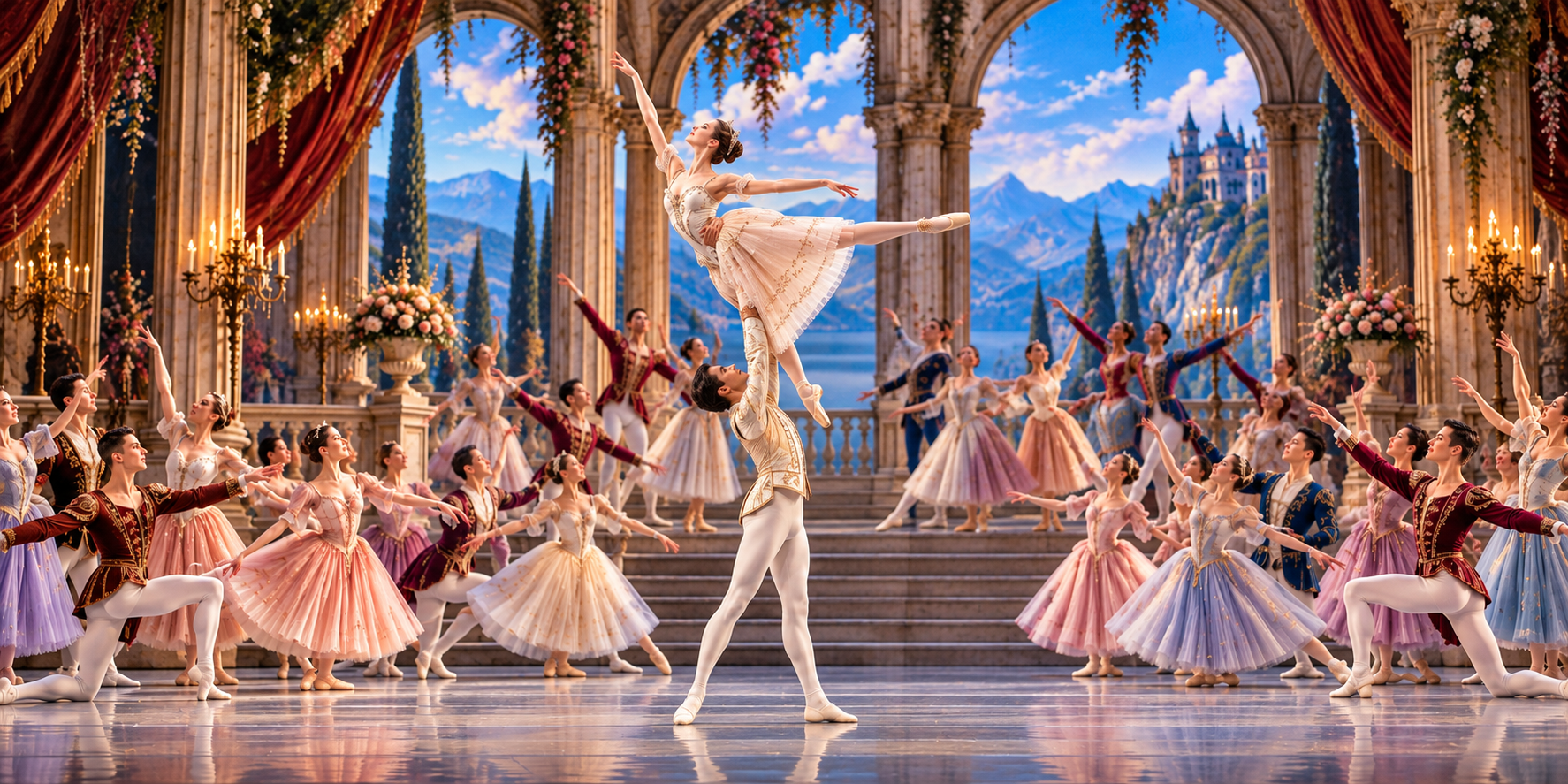

From a founding vision in 1987 to international performances in London and New York, the story of The Sarasota Ballet is one of artistry, discipline, preservation, and the people who make it possible.
Long before I ever attended a ballet in person, I was captivated by what I saw on television.
As a boy growing up in the Sarasota–Bradenton area, I remember watching ballet dancers move with a grace that almost defied explanation. The music, magnificent costumes, elaborate scenery, and extraordinary precision created a world that seemed closer to a fairy tale than to ordinary life.
And then there were the ballerinas.
The way they appeared to float across the stage, rise effortlessly into the air, or remain suspended in perfect balance was mesmerizing. Watching them reminded me of the magical worlds I had seen in Disney films, where beauty and imagination seemed capable of overcoming the laws of nature.
And alongside them were the men.
There was something equally extraordinary about the male dancers—the elegance of their movement, the power concealed within their composure, and the remarkable way strength could become an expression of grace. They could rise into the air with breathtaking athleticism, turn with astonishing control, or bring a ballerina seemingly beyond the reach of gravity, all while making the extraordinary appear effortless.
Yet their artistry extended far beyond the spectacular lifts and leaps. There was sensitivity in their partnering, nobility in their bearing, and a quiet eloquence in the way they moved through the music. They were not simply there to support the ballerinas; they were artists whose presence, individuality, and expressive gifts helped give the entire performance its life.
Together, the dancers created something that seemed to transcend the limitations of the human body—a world in which strength and delicacy, masculinity and femininity, movement and music could exist in extraordinary harmony.
Whenever I encountered advertisements for The Sarasota Ballet or passed places associated with its performances, those childhood impressions would return. There was something remarkable about knowing that an art form I had admired from a distance was part of the cultural life of the community where I grew up.
As I became older, I began to understand that what appeared effortless was the result of exceptional training, physical conditioning, and years of practice.
But that understanding was only the beginning.
It was not until adulthood, through attending live performances and eventually stepping into a ballet studio myself, that I began to appreciate just how demanding the art truly is.
Ballet has a remarkable way of introducing you to muscles you never knew you had. Movements that appear beautifully simple can require an astonishing combination of strength, balance, flexibility, coordination, and endurance.
Even familiar physical sensations take on new meaning. The demands placed upon your feet, ankles, calves, hips, and the smaller stabilizing muscles can be unlike those encountered in more conventional exercise. You begin discovering just how many parts of the body must work together to accomplish a single controlled movement.
And that is before considering the music.
Or the artistry.
Or the extraordinary coordination required between two dancers who must move as though they share a single understanding of time, balance, and motion.
What captivated me as a child was the beauty I could see.
What fascinates me today is the extraordinary amount of work I had not yet learned to recognize.
That realization has only deepened my appreciation for professional ballet—and for the artists who devote their lives to it.
The Sarasota Ballet provides a compelling example of this remarkable art form. Its history encompasses visionary founders, distinguished artistic leadership, internationally recognized repertoire, accomplished dancers across every rank, and the countless professionals whose work makes each performance possible.
Behind every seemingly weightless moment is a world of human achievement.
And that is where this story begins.
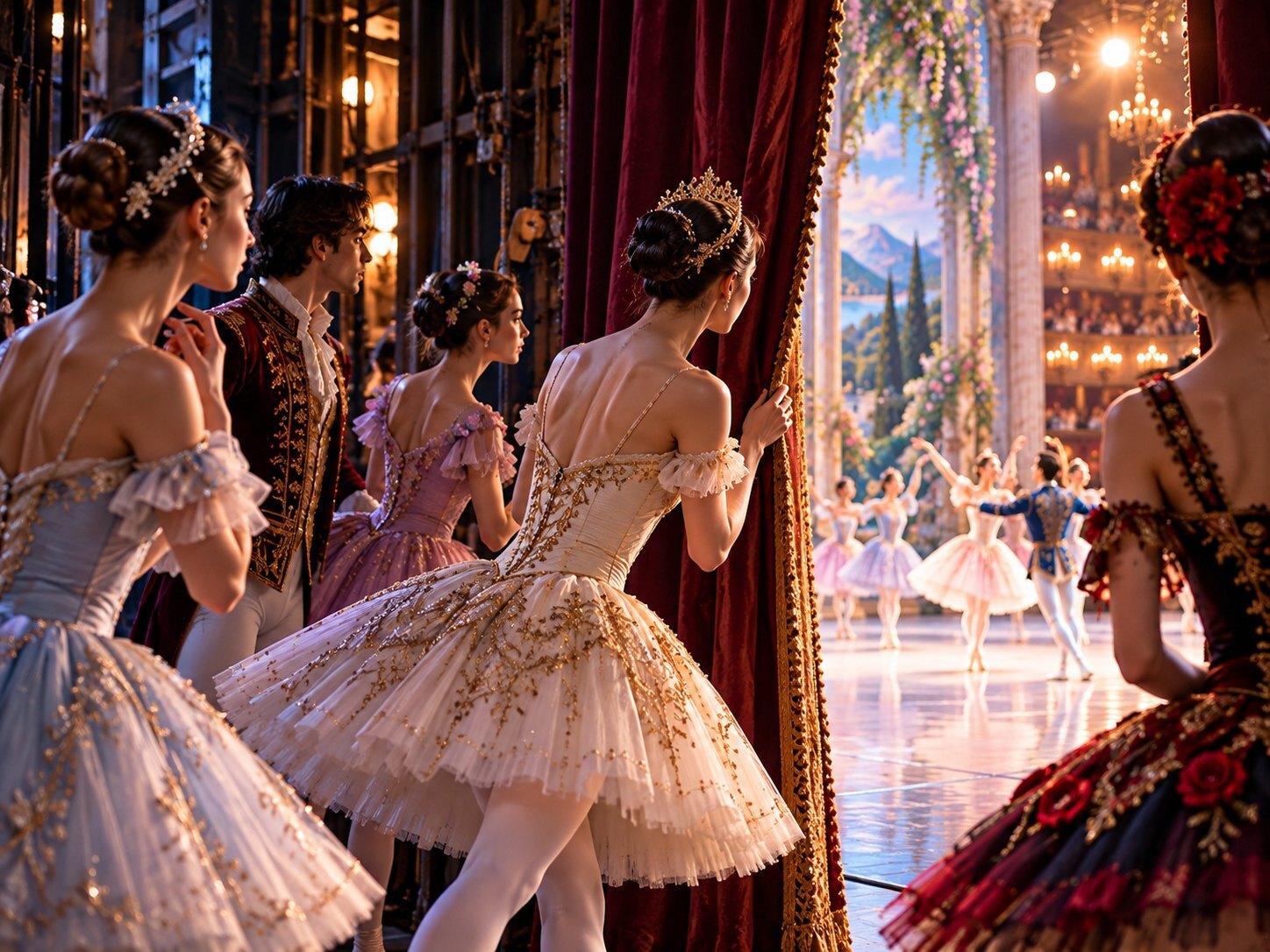 AI-generated editorial illustration depicting the anticipation of dancers waiting in the wings before entering the stage. Not an actual Sarasota Ballet performance.
The Sarasota Ballet traces its beginnings to 1987, when Jean Weidner Goldstein established the organization as a presenting company with the goal of developing a permanent resident ballet ensemble.
Three years later, that ambition became reality.
In 1990, Montreal-based choreographer Eddy Toussaint became the company's first director, and The Sarasota Ballet began its first resident season.
Early programming emphasized Toussaint's choreography. Following a period in which Goldstein served as interim director, Robert de Warren assumed artistic leadership in 1994.
De Warren brought international experience, including earlier work with ballet at Teatro alla Scala in Milan and Northern Ballet. His thirteen-year tenure helped establish the company's professional identity and repertoire before a major leadership transition in 2007.
These beginnings matter because professional ballet is a demanding institution to create and sustain.
It requires more than staging occasional performances. A resident company must assemble dancers, retain artistic personnel, develop audiences, maintain rehearsal schedules, secure theaters, support productions, and establish the financial resources needed for another season.
Goldstein's founding vision created the conditions for all of those things to develop in Sarasota.
In 2007, Iain Webb became Director of The Sarasota Ballet.
Webb's experience in British ballet helped shape a distinctive artistic direction, particularly through the presentation and preservation of choreography by Sir Frederick Ashton.
Margaret Barbieri, a former principal dancer with the Sadler's Wells Royal Ballet, had already worked with the Sarasota company staging ballet productions before she was appointed Assistant Director in August 2012.
Together, Webb and Barbieri brought an unusual depth of practical knowledge to the company's work with Ashton and related repertory.
Ashton was a defining figure in twentieth-century British ballet. His choreography is associated with finely articulated footwork, musical responsiveness, theatrical character, and an expressive vocabulary capable of moving between humor, romance, and psychological complexity.
Preserving that work requires more than knowing the steps.
Ballets live through performance traditions: the quality of a movement, a pause in a musical phrase, the character of a gesture, the way dancers relate to one another onstage.
Those qualities can be difficult to preserve in notation or recordings alone.
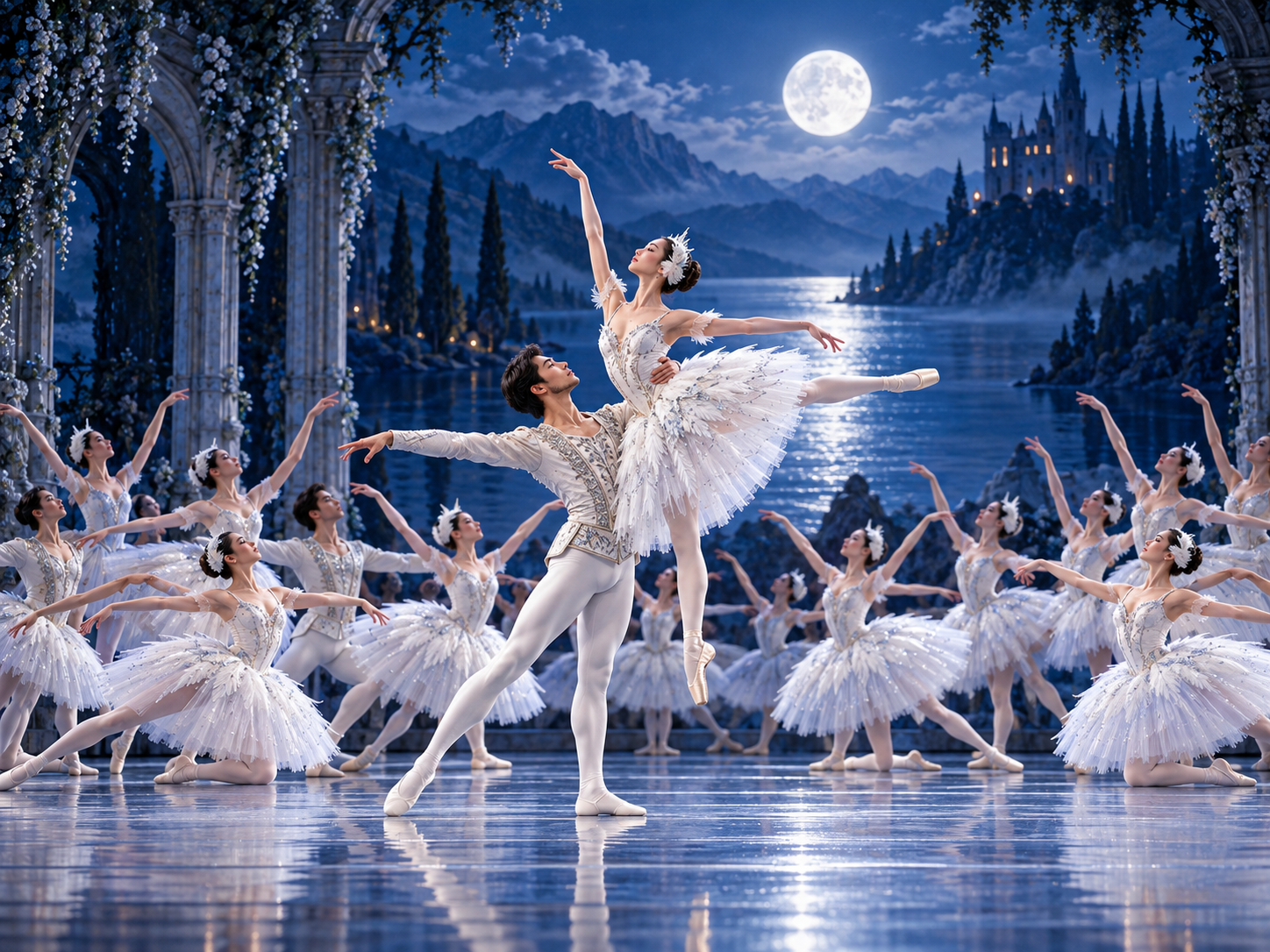 AI-generated editorial illustration inspired by the grandeur of classical ballet performance. Not a photograph of The Sarasota Ballet or a specific production.
They depend upon artists and coaches who understand how a ballet was meant to move and how its dramatic meaning emerges.
Barbieri's experience performing British repertory, together with Webb's artistic leadership and programming, helped make the preservation of Ashton's choreography a defining part of Sarasota's identity.
The company's commitment attracted wider attention during the Sir Frederick Ashton Festival, held from April 30 through May 3, 2014, at the Sarasota Opera House.
The festival presented multiple programs devoted to Ashton, allowing audiences to encounter works that were rarely assembled within a single event.
The achievement was significant not simply because of the number of ballets presented, but because it demonstrated the company's willingness to devote sustained artistic resources to historical choreography.
Preservation, in this context, is an active undertaking.
An older ballet must be rehearsed by living dancers, supported by current musicians and production teams, and introduced to audiences who may be seeing it for the first time.
The result can make the past feel remarkably immediate.
That work became one of the foundations of The Sarasota Ballet's growing international profile.
The performing arts also require leadership beyond the rehearsal studio.
In February 2016, Joseph Volpe became Executive Director of The Sarasota Ballet, bringing extensive administrative experience from New York's Metropolitan Opera.
Volpe's career at the Met was extraordinary in its range. Starting as an apprentice carpenter, he eventually became General Manager, serving in that position from 1990 to 2006.
His experience spans the physical realities of theatrical production and the institutional responsibilities involved in operating a major performing-arts organization.
At Sarasota, his executive work has supported the company's staffing, administration, financial planning, and organizational development.
Such responsibilities are easy for audiences to overlook.
A performance may last only two hours, but bringing it to the stage requires agreements with artists, scheduling, fundraising, technical planning, and the management of countless practical details.
The artistic direction of a company and the administration supporting it are separate responsibilities, yet neither can function effectively without the other.
Together, they determine what an institution has the capacity to create.
A ballet company may change its programming from season to season. The abilities required of a professional dancer take years to develop.
Classical ballet asks for an unusual combination of muscular control, agility, coordination, flexibility, balance, endurance, and expressive sensitivity.
The movement must be physically accomplished while remaining responsive to music and theatrical meaning.
A dancer preparing a featured role may need to refine difficult turns, jumps, balances, or partnering passages. A corps de ballet artist may face the additional challenge of maintaining exact alignment and timing with an entire group.
Neither kind of work is simple.
And technical mastery is only one aspect of professional preparation.
Dancers must understand how to create characters, adapt to different choreographic styles, work with partners, and respond to coaching.
Even experienced professionals continue taking class.
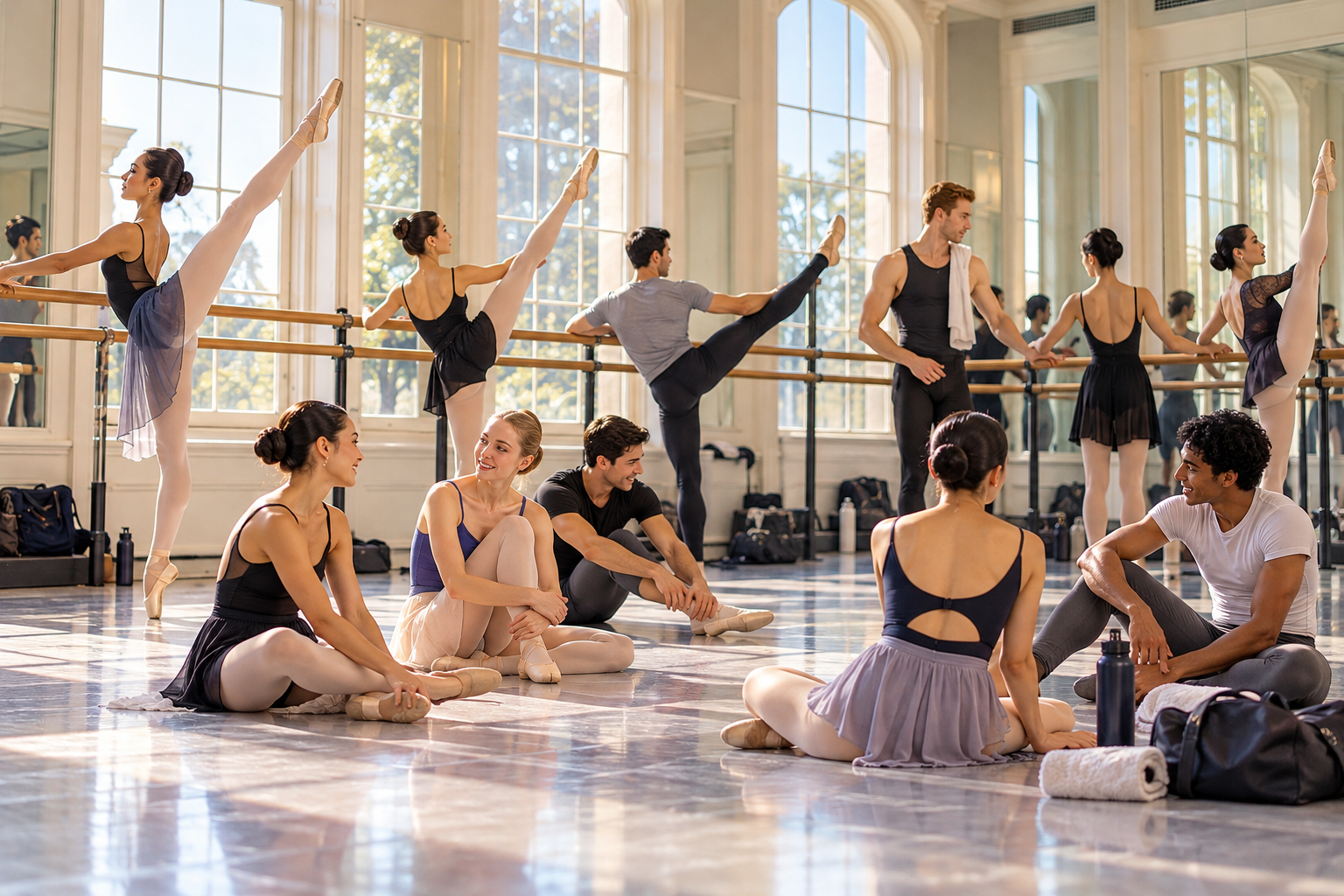 AI-generated editorial illustration depicting the flexibility, discipline, and camaraderie of dancers between classes. Not an actual Sarasota Ballet rehearsal.
The studio is where artistry is patiently built, one movement at a time.
Even for the most accomplished professionals, ballet remains an endless process of discovery and refinement. Every extension, turn, balance, and carefully placed step reflects years of training, yet mastery never eliminates the need to return to the fundamentals. The body must learn not only strength and flexibility, but also precision, musicality, and the extraordinary coordination required to make difficult movement appear entirely natural.
There is something remarkable about that quiet dedication. Long before the audience sees a dancer rise effortlessly into the air or glide across the stage, countless hours have been spent at the barre, correcting the smallest details, strengthening the body, and developing the instinctive connection between music and movement. What appears weightless in performance is built through patience, repetition, and an unwavering commitment to the art.
Watching ballet can create the impression that physical strength and artistic delicacy are opposing qualities.
In reality, the visual ease of a controlled movement often depends upon considerable physical preparation.
Partnering requires coordination and shared timing. A supported balance depends upon the contributions of both dancers. A powerful jump must be controlled through its landing.
Professional dancers also face the challenge of maintaining their physical health through demanding rehearsal and performance schedules.
Research in dance science supports the importance of appropriate supplementary conditioning, fatigue management, and recovery, although no training method can guarantee freedom from injury.
I have developed a greater appreciation for these demands through my own adult ballet classes.
Learning a movement and performing it musically are two very different accomplishments. What looks straightforward from a theater seat can become a lengthy exercise in patience, correction, and concentration.
That discovery has made watching professional dancers all the more rewarding.
The artistry lies partly in how thoroughly the work has been absorbed.
Victoria Hulland's history with The Sarasota Ballet illustrates how the experience accumulated by an exceptional performer can continue shaping an artistic institution.
Hulland joined the company in 2007 and became a principal dancer in 2009.
Her performing career developed during the period in which Webb and Barbieri expanded the company's repertory and international recognition.
A principal dancer's responsibilities are considerable.
Leading roles require technical authority, interpretive intelligence, musical understanding, and the ability to collaborate closely with partners and an ensemble.
Repeated experience with demanding choreography also creates an understanding that can be especially valuable to younger performers.
Hulland retired from the company's performing ranks in 2022, but her involvement with The Sarasota Ballet did not end there.
She subsequently became Artistic Assistant to the Directors.
In that capacity, her years onstage contribute to the transmission of professional knowledge.
A former performer can recognize details of timing, weight, intention, and style that may be difficult to convey through written instructions alone.
The transition from performing to coaching and artistic support also reveals something important about a dancer's career.
The public may remember the performances.
The company may continue benefiting from the artist's experience long afterward.
Hulland's involvement with Sarasota's educational community provides an additional connection to future generations, although the professional accomplishments and artistic responsibilities remain the central story here.
For readers interested in the wider training environment, our companion feature explores The Sarasota Ballet School and ballet training in Sarasota.
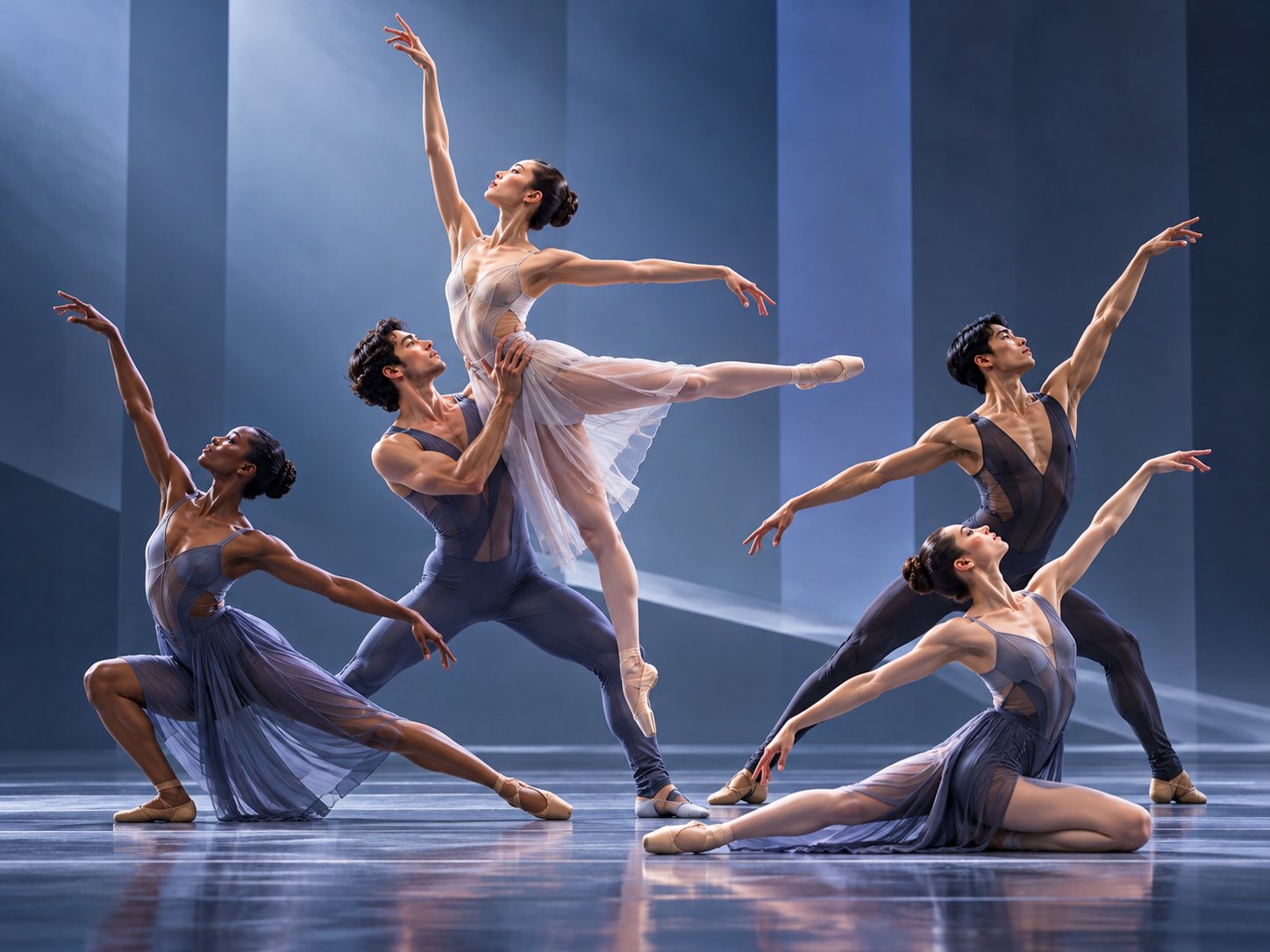 AI-generated editorial illustration depicting the expressive movement and athleticism of contemporary ballet. Not an actual Sarasota Ballet performance.
The Sarasota Ballet's principal artists bring different experiences and artistic strengths to the stage. Their careers reveal the many dimensions of professional ballet—from creating original choreography and preserving classical traditions to developing the trust and musical understanding required for exceptional partnering.
Ricardo Graziano, Misa Kuranaga, Andrii Ishchuk, and Ricardo Rhodes offer four distinctive examples of that artistry.
Brazilian-born Ricardo Graziano joined The Sarasota Ballet as a soloist in 2010 and was promoted to principal dancer in 2011.
His contribution extends beyond performance.
In 2011, Webb offered him an opportunity to create choreography for the company, beginning with Shostakovich Suite.
Graziano received the title of Resident Choreographer in 2014 and went on to develop a substantial body of work, including Valsinhas, Sonatina, and In a State of Weightlessness.
His choreography has also reached audiences through commissions beyond Sarasota.
This dual career is particularly meaningful within a company so closely associated with preserving existing ballet.
The repertory is enriched not only by reviving historical works, but by creating opportunities for new choreography.
Graziano's career demonstrates how a professional performer can become a creative contributor to the art form itself.
His 2026 revival of Valsinhas, with parallel casts exploring the same choreography through male and female ensembles, offers a particularly interesting example of how a choreographic idea can be revisited and reconsidered.
Born in Japan, Misa Kuranaga brings an extraordinary range of classical experience to The Sarasota Ballet. A former principal dancer with Boston Ballet and San Francisco Ballet, she has performed leading roles across the classical and neoclassical repertoire, from Swan Lake and The Sleeping Beauty to works by George Balanchine and Sir Frederick Ashton.
Kuranaga first joined Sarasota as a resident guest principal during the 2025–2026 season, appearing in productions including Les Sylphides, Birthday Offering, and Stars and Stripes. Her appointment as a permanent principal for 2026–2027 marked a new chapter in a career already shaped by some of America's most prominent ballet companies.
Her arrival also illustrates an important dimension of Sarasota's artistic identity: the ability of a Gulf Coast company to attract accomplished performers whose experience connects local audiences to the wider world of professional ballet.
Born in Kharkiv, Ukraine, Andrii Ishchuk began studying ballet at the age of four. His early training at the Kharkiv Ballet School laid the foundation for a career that would eventually take him across the Atlantic and onto some of the world's most prominent stages.
As a teenager, Ishchuk moved to New York on a scholarship to study at Ellison Ballet. Arriving in a new country with limited English, he faced the challenges of adapting to an unfamiliar environment while pursuing the demanding training required of a professional dancer.
After completing his studies, he joined American Ballet Theatre's Studio Company in 2016, became an apprentice with the main company in 2017, and advanced to its corps de ballet in 2018.
His repertoire at American Ballet Theatre encompassed classical and dramatic works, including Swan Lake, Giselle, Onegin, and Romeo and Juliet, alongside contemporary choreography that required a different range of movement and expression.
Ishchuk joined The Sarasota Ballet as a principal dancer for its 2026–2027 season. His decision to come to Sarasota was influenced in part by the company's close association with the choreography of Sir Frederick Ashton, whose distinctive artistic language he had come to admire.
His journey reflects the international character of professional ballet: an artist shaped by Ukrainian training, American institutions, and an enduring curiosity about the repertoire now finding a new artistic home on Florida's Gulf Coast.
For Sarasota audiences, his arrival adds another experienced and distinctive performer to a company whose strength comes from the individual histories and collective dedication of its dancers.
Ricardo Rhodes joined The Sarasota Ballet in 2007, became a soloist in 2010, and was promoted to principal in 2012.
His long association with the company has included leading roles in major classical and neoclassical repertoire, among them Balanchine's Apollo and Ashton's The Dream.
Rhodes's career emphasizes the experience gained through years of performance and the artistic demands of partnering.
A pas de deux depends upon a shared understanding of timing and movement. The dancers must anticipate, respond, and maintain control without allowing the visible mechanics of their cooperation to overpower the choreography.
That requires considerable skill from both artists.
The two Ricardos therefore represent complementary aspects of company life.
Graziano has contributed original choreography alongside his performance career.
Rhodes's longstanding repertory experience and partnering work reflect another essential form of artistic continuity.
Both belong to an institution whose achievements emerge through individual contributions to a collective art.
Not every ballet is an exercise in delicate romance or quiet elegance. Some productions are exuberant celebrations of movement, music, theatrical color, and the extraordinary coordination of a full company.
In March 2026, The Sarasota Ballet presented George Balanchine's Stars and Stripes at the Van Wezel Performing Arts Hall as part of its Life & Liberty program, celebrating the 250th anniversary of American independence.
Created in 1958 and set to the spirited marches of John Philip Sousa, Stars and Stripes transforms classical ballet into a dazzling display of patriotic pageantry. Dancers perform in vibrant red, white, and blue military-inspired costumes, combining precise footwork with sweeping formations and spirited theatricality.
Ricardo Rhodes performed the leading male role of El Capitan, alongside a large ensemble whose synchronized movement helped bring the production's festive atmosphere to life.
The performance offers a wonderful contrast to the company's Ashton repertoire. It demonstrates ballet's capacity for humor, spectacle, musical brilliance, and collective celebration—all while demanding considerable technical precision.
For audiences, the result can feel wonderfully spontaneous. Behind that impression lies the familiar discipline of professional ballet: hours of rehearsal, exact timing, and an entire company moving together toward a shared artistic purpose.
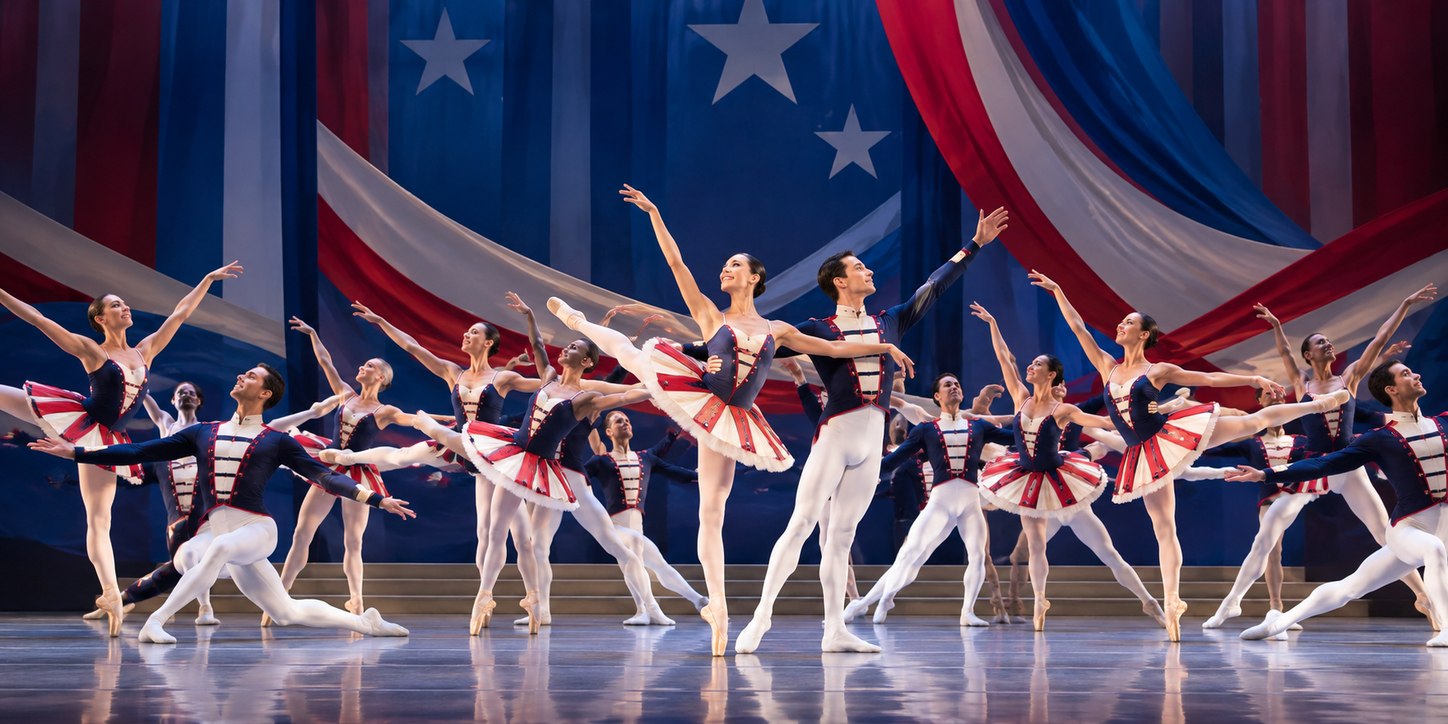 AI-generated editorial illustration inspired by the patriotic pageantry of George Balanchine's Stars and Stripes. Not a photograph of The Sarasota Ballet's production.
A professional ballet company is not simply a group of principal dancers accompanied by a supporting cast.
Its artistic structure encompasses different ranks, each involving distinct responsibilities and stages of professional development.
Principal dancers generally carry many of the major leading roles.
Junior principals, first soloists, and coryphées may take increasingly prominent assignments while remaining important contributors to ensemble work.
Corps de ballet dancers are essential to the collective visual and dramatic patterns of classical and contemporary choreography.
Apprentices are developing artists experiencing the transition toward professional company life.
The names of these ranks describe a working structure.
They do not tell the whole story of the artistry taking place within it.
No single article could adequately explore the individual journeys, talents, and contributions of every artist who makes up The Sarasota Ballet. The dancers highlighted here represent only a portion of a company whose accomplishments depend upon the dedication of its entire ensemble.
Each performer brings a distinct history, perspective, and artistic sensibility into the studio. Yet ballet asks something more of them: the ability to transform individual excellence into a shared expression. Through daily class, rehearsal, trust, musical understanding, and countless moments of cooperation, these artists create something that belongs not to any one dancer, but to the company as a whole.
That collective achievement deserves recognition every bit as much as the individual performances that capture an audience's imagination.
Sierra Abelardo's advancement offers a striking example of professional development within The Sarasota Ballet.
After joining the corps de ballet in 2022, she progressed through the company and was promoted to junior principal in 2025.
Her appearance with Samuel Gest in the balcony pas de deux from Ashton's Romeo and Juliet during the company's 2026 Joyce Theater engagement offers a concrete example of the responsibilities undertaken by its emerging artists.
Gest, promoted to first soloist for the 2026–2027 season, trained at the Royal Ballet School and brings professional experience from Europe.
The company's first soloists also include Gus Payne, whose British training connects naturally with the repertoire so important to Sarasota, and Sumika Fujiwara, who joined for the anniversary season after performing with Tulsa Ballet.
Their experiences differ, but each contributes to the company's ability to interpret diverse choreography.
Among the coryphées, Ze Ellis provides another important story.
Ellis trained through Sarasota's own Margaret Barbieri Conservatory and Studio Company before progressing into the professional ranks, illustrating how rigorous local training can connect to a performing career.
The corps de ballet carries some of classical ballet's most demanding collective responsibilities.
A formation of dancers must preserve individual technique while functioning as a unified group.
Musical phrasing, spacing, direction, and timing become shared decisions.
A small variation by one performer can change the visual effect of an entire passage.
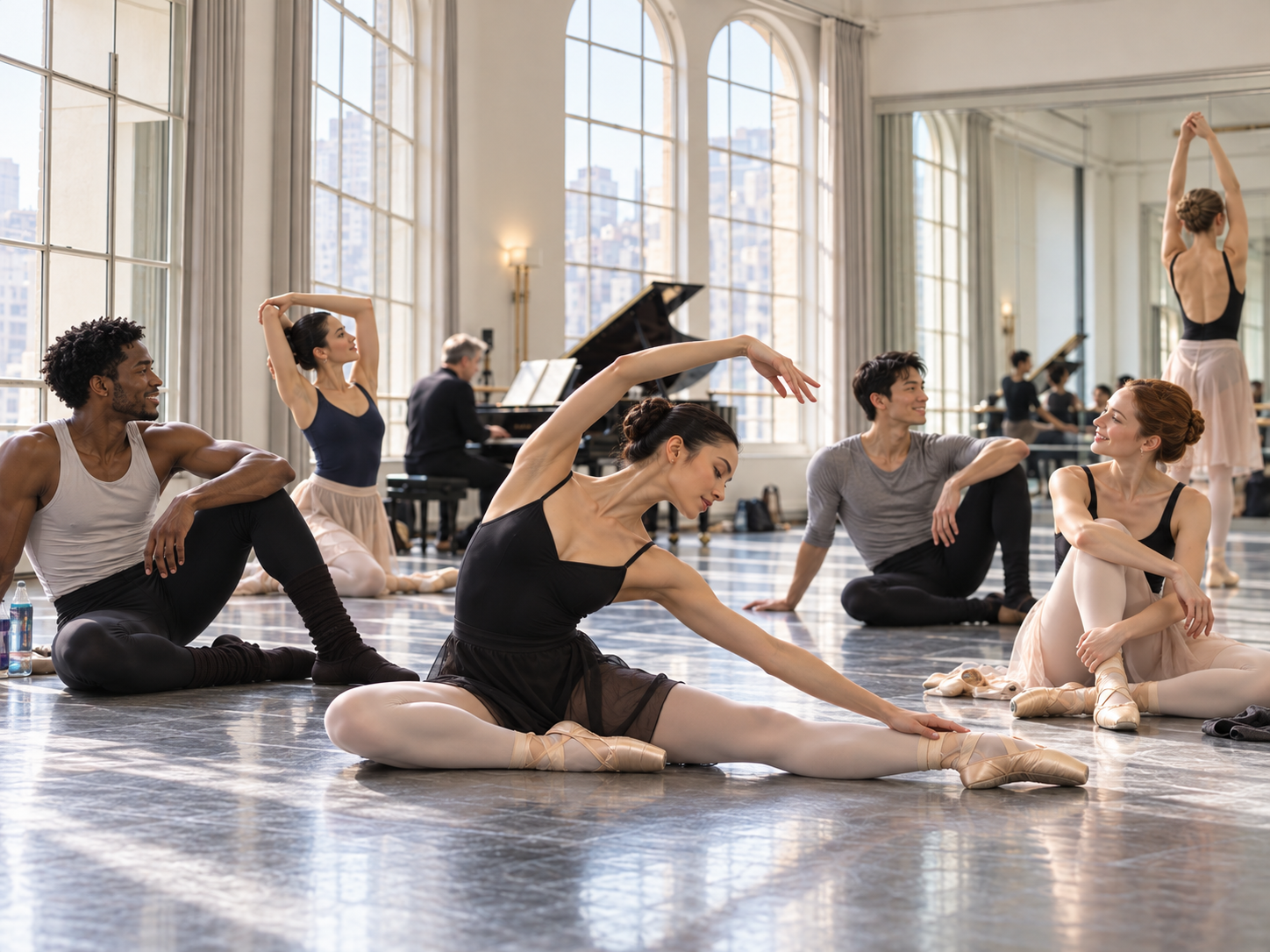 AI-generated editorial illustration depicting dancers stretching together during studio practice. Not an actual Sarasota Ballet rehearsal.
Alberto Blanco, Principal of The Sarasota Ballet School, offered a useful literary analogy in a 2025 Dance Teacher discussion about supporting roles.
He compared background performers to the descriptive details of a book—the elements that establish the setting in which the central story unfolds.
The comparison is apt.
An ensemble can build atmosphere, express relationships among characters, or become the primary visual subject of a ballet.
Within Sarasota's corps de ballet, artists including Pasha Levy, Ella Lau, Jonah Glickman, Andrea Marcelletti, Emmanuelle Watkins, Owen Watson, and Nathan Smith contribute to that work.
Pasha Levy offers an especially interesting example of the individual artistry that exists within the corps de ballet. Born in Queens, New York, she trained at the Ellison Ballet Professional Training Program and Eva Janiszewski Ballet before joining The Sarasota Ballet in 2025.
Her repertoire has already ranged from Sir Frederick Ashton's choreography to contemporary works by Will Tuckett and Gemma Bond. During the company's September 2026 engagement at The Joyce Theater, Levy performed alongside Andrea Marcelletti and Gus Payne in Ashton's Les Rendezvous. Writing for Dance Informa, critic Richard Philion singled out the clarity of her footwork, musical responsiveness, and stage presence.
It is a reminder that individual distinction is not confined to principal roles. Within a professional ensemble, an artist can make a lasting impression through the quality of even a brief appearance.
Each arrives with individual training and professional aspirations. Their assignments may change dramatically from one ballet to another.
And while the audience's attention naturally moves toward featured variations and leading roles, the performance's coherence depends upon everyone involved.
Nathan Smith brings another distinctive background to The Sarasota Ballet's corps de ballet. Born in Buffalo, New York, he trained with the American Academy of Ballet and Miami City Ballet School before dancing with Pittsburgh Ballet Theatre. He joined The Sarasota Ballet in 2025, bringing experience that includes works by George Balanchine, Sir Frederick Ashton, and other major choreographers.
During the company's September 2026 engagement at The Joyce Theater in New York, Smith performed alongside Ricardo Rhodes and Simon Plante in Sir Peter Wright's Summertide, partnering principal dancer Marijana Dominis. In his review for Dance Informa, Richard Philion praised the sensitivity of the partnering and the beautifully weightless effect the dancers created together.
Smith's career illustrates the versatility demanded of today's professional dancers, as well as the essential role of trust, coordination, and musicality within an ensemble.
Jonah Glickman brings a distinctive combination of classical training and expressive versatility to The Sarasota Ballet. Originally from Manchester, New Hampshire, he trained with the Northeast School of Ballet, School of American Ballet, and English National Ballet before dancing with Carolina Ballet. He joined Sarasota's corps de ballet in 2024.
Among the works he particularly values is George Balanchine's Rubies, whose sharp musicality and energetic movement allow a different side of his artistry to emerge. During the company's 2026 Joyce Theater engagement, Glickman was among the dancers featured in Ashton's Illuminations, an example of the stylistic range required within the professional ensemble.
Andrea Marcelletti, born in Rome, Italy, joined The Sarasota Ballet as an apprentice in 2019 and advanced to the corps de ballet in 2022. Trained at English National Ballet School, he has performed works ranging from Ashton's Les Rendezvous to Sir David Bintley's A Comedy of Errors.
The latter holds particular significance for Marcelletti: the character of Derek was created on him, giving the dancer a personal connection to the role. His appearance with Pasha Levy and Gus Payne in Les Rendezvous at The Joyce Theater in 2026 further illustrates the musicality, theatrical characterization, and ensemble collaboration that distinguish the company's repertoire.
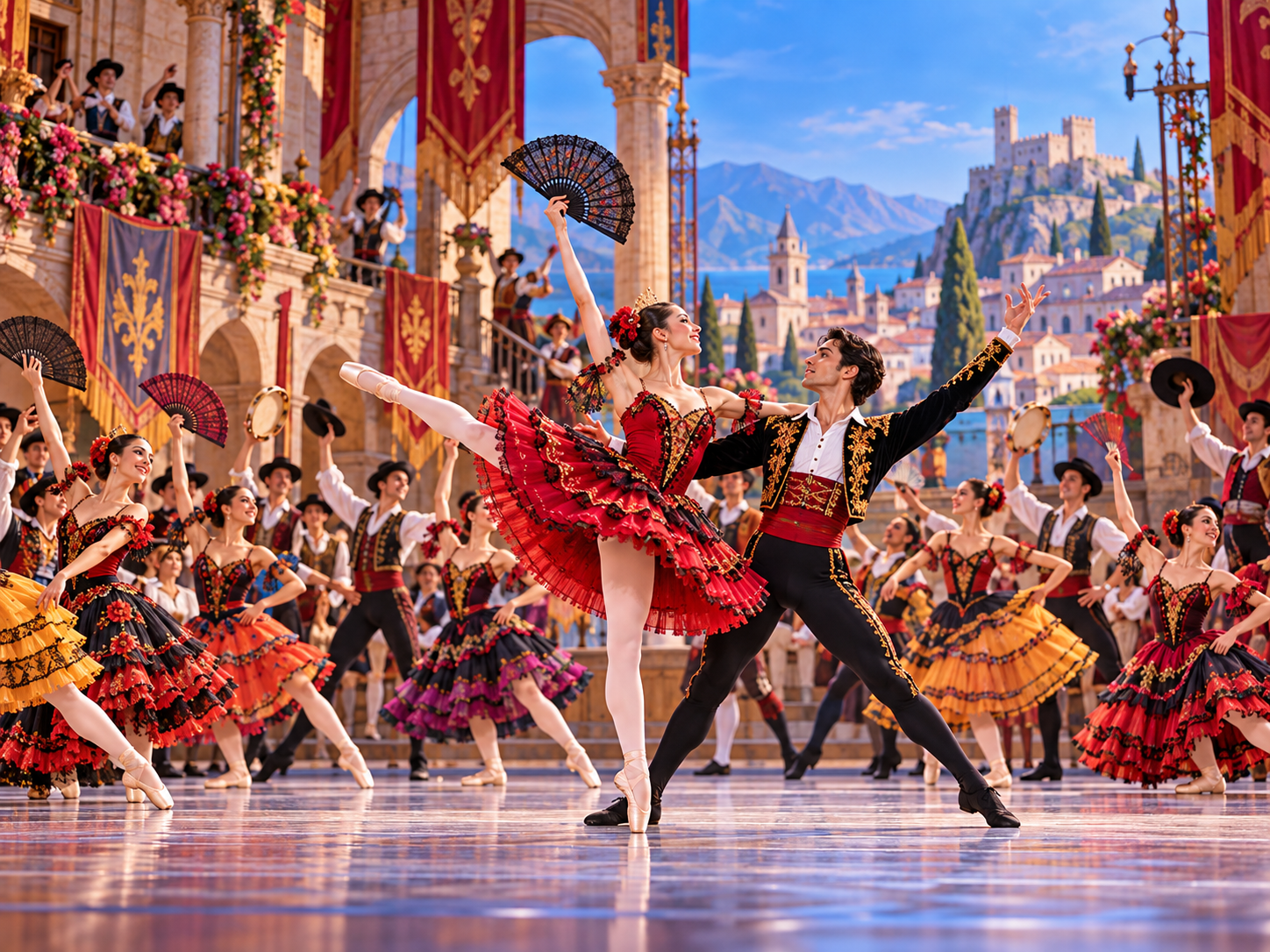 AI-generated editorial illustration inspired by the dramatic costumes, character work, and theatrical storytelling of ballet. Not an actual Sarasota Ballet production.
Owen Watson brings another perspective to the company's corps de ballet. Born in Phoenix, Arizona, he began studying ballet at 13, having previously dreamed of becoming a Broadway performer. His training took him through the School of Ballet Arizona, Master Ballet Academy, and Houston Ballet Academy before he danced with Kansas City Ballet's Second Company. He joined The Sarasota Ballet in 2026.
Among his memorable experiences was performing in the corps of George Balanchine's Allegro Brillante while training at Houston Ballet Academy. Cast alongside more advanced dancers, Watson has described the experience as an incentive to work harder and grow artistically.
His journey is a reminder that dancers arrive at the professional stage by different paths, each shaped by persistence, demanding training, and the influence of the artists around them.
Ella Lau offers a particularly meaningful connection between Sarasota's training community and its professional company. After studying at the Margaret Barbieri Conservatory, she joined The Sarasota Ballet as an apprentice in 2024 and advanced to the corps de ballet in 2025.
Among the works she has enjoyed performing is George Balanchine's Rubies, a lively, musically demanding ballet set to Igor Stravinsky's music. Her experience illustrates how classical training can develop into professional artistry, with each new role presenting opportunities to grow in technique, musicality, and expression.
Lau's progression also highlights the importance of nurturing emerging talent within Sarasota's own ballet community—helping carry its artistic traditions from the studio onto the professional stage.
At the apprentice level, Isabella Damico represents another compelling stage of professional development. Originally from Turnersville, New Jersey, she trained at Chamberlain Ballet and Miami City Ballet School before joining The Sarasota Ballet in 2025.
Her experience already includes performing in George Balanchine's The Four Temperaments, a work known for its demanding musicality and neoclassical movement, as well as participating in Miami City Ballet's tour of Alexei Ratmansky's Swan Lake.
For an emerging artist, an apprenticeship offers an opportunity to build upon years of training while adapting to the expectations, repertoire, and daily discipline of a professional company.
Damico's progression illustrates how much preparation can precede a dancer's first professional appointment—and how much learning continues afterward.
The ensemble's strength lies in this combination of experience, development, and shared responsibility.
A ballet is built through all of its performers.
Most of what an audience eventually sees has been prepared by people who will never appear onstage.
The process begins in the studio.
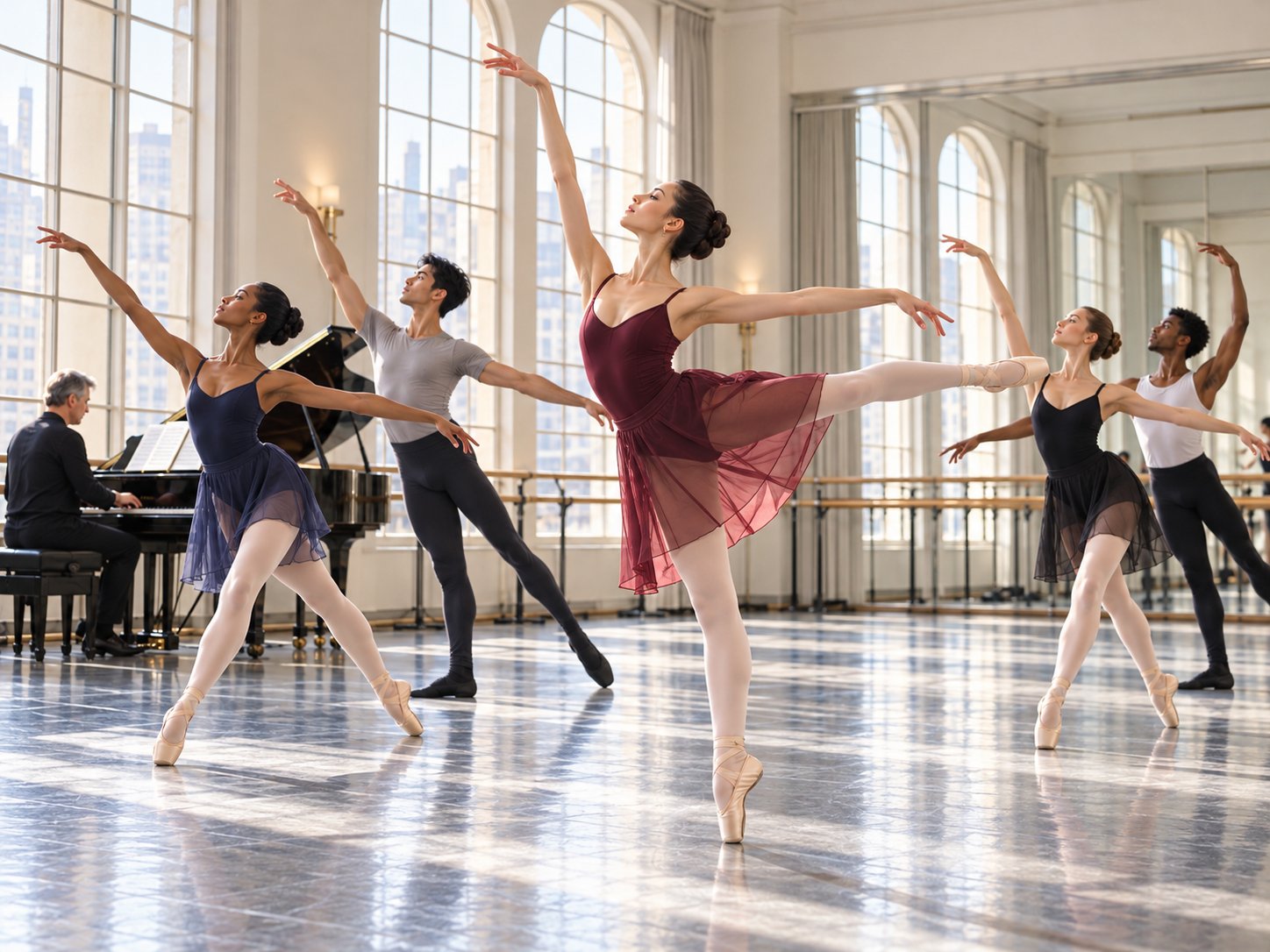 AI-generated editorial illustration representing a professional ballet class accompanied by live piano music. Not an actual Sarasota Ballet rehearsal.
Daily class, rehearsals, and coaching require music, space, planning, and careful attention to the dancers' needs.
Class pianists Zara Baroyan and Carl Haan are among the musicians whose work supports the company's preparation.
For a ballet accompanist, playing music is more than supplying a pleasant background.
The tempo and phrasing must support the structure of the exercise and allow movement to unfold with clarity.
Ballet masters Octavio Martin and Roman Rykine are among the artistic professionals responsible for coaching and rehearsal preparation.
Such work may involve helping dancers master choreography, refine movement quality, and bring consistency to a performance across different casts.
The production team brings another range of expertise.
Ethan Vail, the company's Production Manager and Resident Lighting Designer, is part of the technical work that determines how a performance is presented visually.
Diana Childs, the company's Stage Manager, contributes to the coordination essential to rehearsals and live performances.
Lighting, scenery, costumes, and stage operations must work in coordination with the choreography.
A ballet costume serves two purposes.
It contributes to the theatrical world while accommodating movements that may require considerable extension, rotation, partnering, or repeated physical contact.
Wardrobe preparation therefore involves practical decisions as well as visual design.
A costume that looks beautiful when standing still must also function under the demands of a performance.
Seams, fastenings, fabric, fit, and the requirements of choreography can all affect how a design works onstage.
Behind an apparently effortless entrance stands a detailed technical process.
The same is true of lighting.
A shift in illumination may reveal a dancer, alter the audience's sense of space, or change the emotional meaning of a scene.
Yet that change must occur at the appropriate moment.
The audience experiences the result as theater. The people operating the production experience it as a sequence of carefully coordinated responsibilities.
When The Sarasota Ballet performs with the Sarasota Orchestra, the interaction between musicians and dancers becomes another vital part of the production.
Music in ballet is not simply decoration.
It establishes time, structure, atmosphere, and emotional development.
The relationship between the score and the choreography influences how the audience experiences movement.
All of these disciplines must come together for the performance to exist.
The dancers may be the people an audience remembers most vividly.
But the stage belongs to many crafts.
The Sarasota Ballet's artistic reputation has taken its work far beyond Florida.
The company has appeared at major American venues and festivals including Jacob's Pillow, The Joyce Theater, New York City Center, and the Kennedy Center.
These performances introduced its repertoire to audiences familiar with a wide range of ballet companies and artistic traditions.
In June 2024, the company undertook a particularly meaningful engagement in London as part of the Ashton celebrations.
Its performances at the Linbury Theatre within the Royal Opera House complex brought Sarasota's dancers to the city associated with so much of the British ballet heritage that Webb and Barbieri had championed.
The company also participated in a main-stage appearance alongside artists of The Royal Ballet.
There is something noteworthy about that progression.
An institution founded to establish a professional company in Sarasota had developed an artistic identity sufficiently distinctive to carry its work back to the historical setting of some of its most important repertoire.
In autumn 2026, The Sarasota Ballet returned to New York's Joyce Theater with a program including Ashton, Antony Tudor, and Sir Peter Wright.
These engagements are not proof that every performance or institutional decision has been flawless.
They are documented examples of the company's participation in the wider international ballet community.
For a Gulf Coast city, that represents a significant cultural connection.
Although the professional company is the focus of this feature, its relationship with education and community programs is important.
The Sarasota Ballet School, Margaret Barbieri Conservatory, and Studio Company support dancers at different stages of training and development.
Individual careers, such as Ze Ellis's progression into the professional ranks, show how those pathways can connect.
The organization also operates Dance – The Next Generation, a tuition-free program for eligible children from underserved communities in Sarasota and Manatee counties.
It combines dance training with educational support and enrichment.
Established during the organization's early years, the program reflects a broader understanding of dance as a cultural and educational resource.
Not every student will pursue a professional career.
The value of engaging with dance can also be found in musical appreciation, coordination, personal discipline, creative expression, and the experience of participating in an artistic community.
We explore Sarasota's educational opportunities in greater depth in our guide to The Sarasota Ballet School.
Sarasota's character is shaped by more than its coastline.
Its theaters, museums, orchestras, galleries, and performing-arts institutions provide a cultural landscape that influences how people experience the region.
The Sarasota Ballet is an important part of that landscape.
Its performances bring residents and visitors into venues including the FSU Center for the Performing Arts, Sarasota Opera House, and Van Wezel Performing Arts Hall.
Its professional dancers and artistic staff contribute to the wider community of musicians, performers, teachers, and arts professionals living and working in the area.
Those contributions are part of what makes a place distinctive.
For someone considering a move to Sarasota, the availability of professional ballet, opera, orchestral performances, museums, and educational programs may be as meaningful as the beaches or boating opportunities.
A community is experienced through the lives people build there.
Culture is one part of that experience—not an accessory to it.
That cultural identity is especially evident in downtown Sarasota, where historic landmarks, performing-arts venues, distinctive neighborhoods, and residential living come together. I explore that connection further in my guide to Downtown Sarasota: History, Neighborhoods, Walkability & Ownership.
A lift may last only a few seconds.
The audience sees the rise, the held position, and the return to the floor. What it may not see is the coordination that makes the movement possible.
There is a partner's timing, a dancer's years of preparation, music that supports the phrasing, rehearsal that refines the choreography, a costume fitted for movement, and lighting that allows the audience to experience the intended scene.
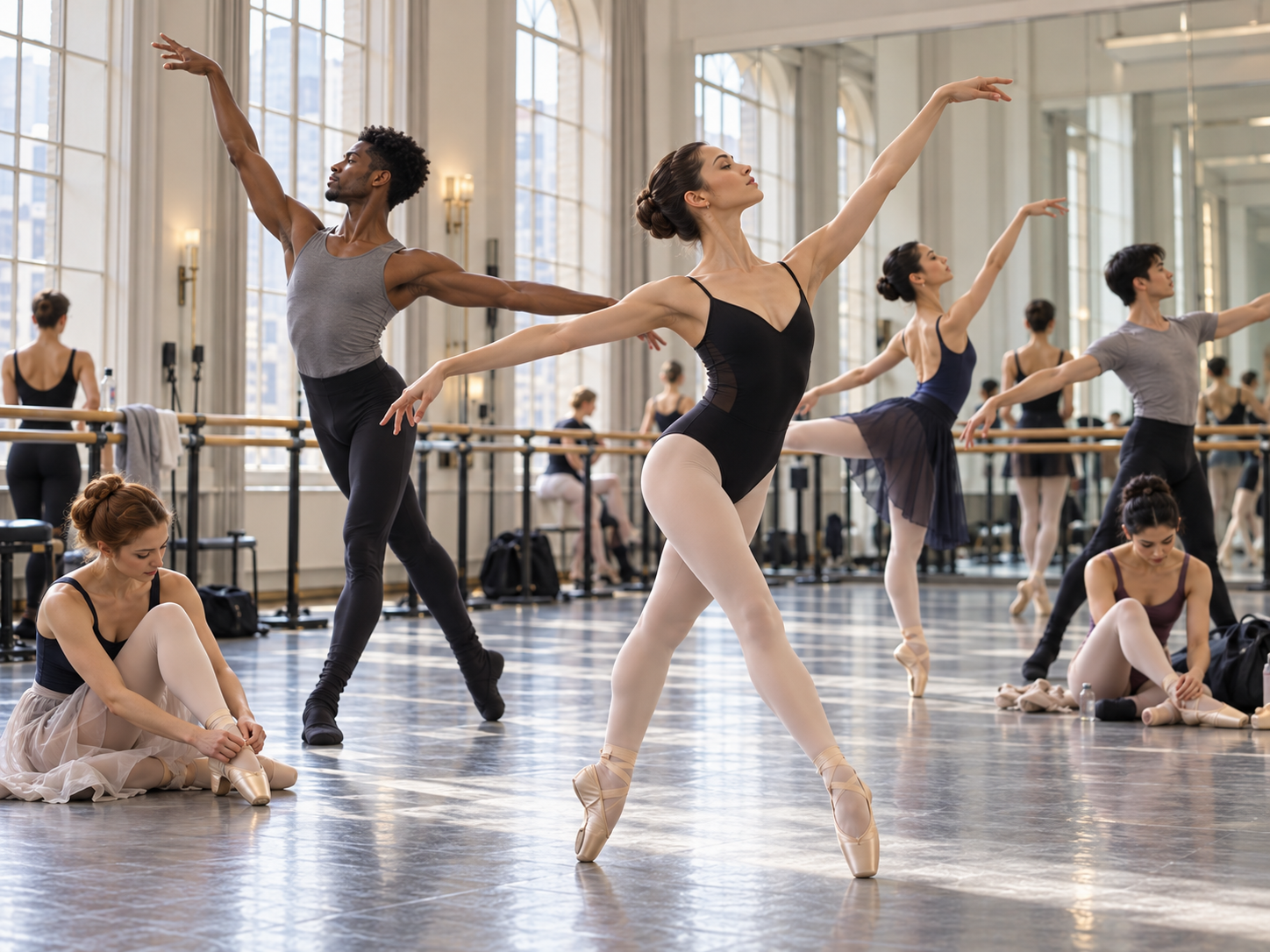 AI-generated editorial illustration depicting the daily discipline, preparation, and shared dedication behind professional ballet. Not an actual Sarasota Ballet rehearsal.
None of these elements exists independently.
As an adult, I no longer watch ballet in quite the same way I did when I was young.
I notice more of the effort.
I recognize some of the physical and musical demands that once escaped my attention.
Yet the feeling that first drew me toward ballet remains.
When the music begins and the dancers move, the theater can still become another world.
The difference is that I now understand more clearly how many people worked to make that possible.
The Sarasota Ballet's legacy is not simply a record of premieres, tours, and principal dancers.
It is the continuing work of an artistic community—people whose knowledge, discipline, and imagination allow something demanding to appear, for a moment, beautifully free.
Season information current as of October 23, 2026.
The Sarasota Ballet celebrates Iain Webb's twentieth season as Director in 2026–2027.
The announced season comprises sixteen ballets by thirteen choreographers, including eight company premieres, across a seven-program schedule that also includes a presentation by the visiting Paul Taylor Dance Company.
The opening program, scheduled for October 23–25 at the FSU Center for the Performing Arts, brings together Gemma Bond's Manner, a selection of Ashton divertissements, and Dominic Walsh's Wolfgang for Webb.
The return of Wolfgang for Webb is especially meaningful: the ballet originated during Webb's inaugural Sarasota season, connecting the anniversary to the beginning of his artistic leadership.
For current programming, casting, locations, and tickets, visit The Sarasota Ballet's official 2026–2027 season overview.
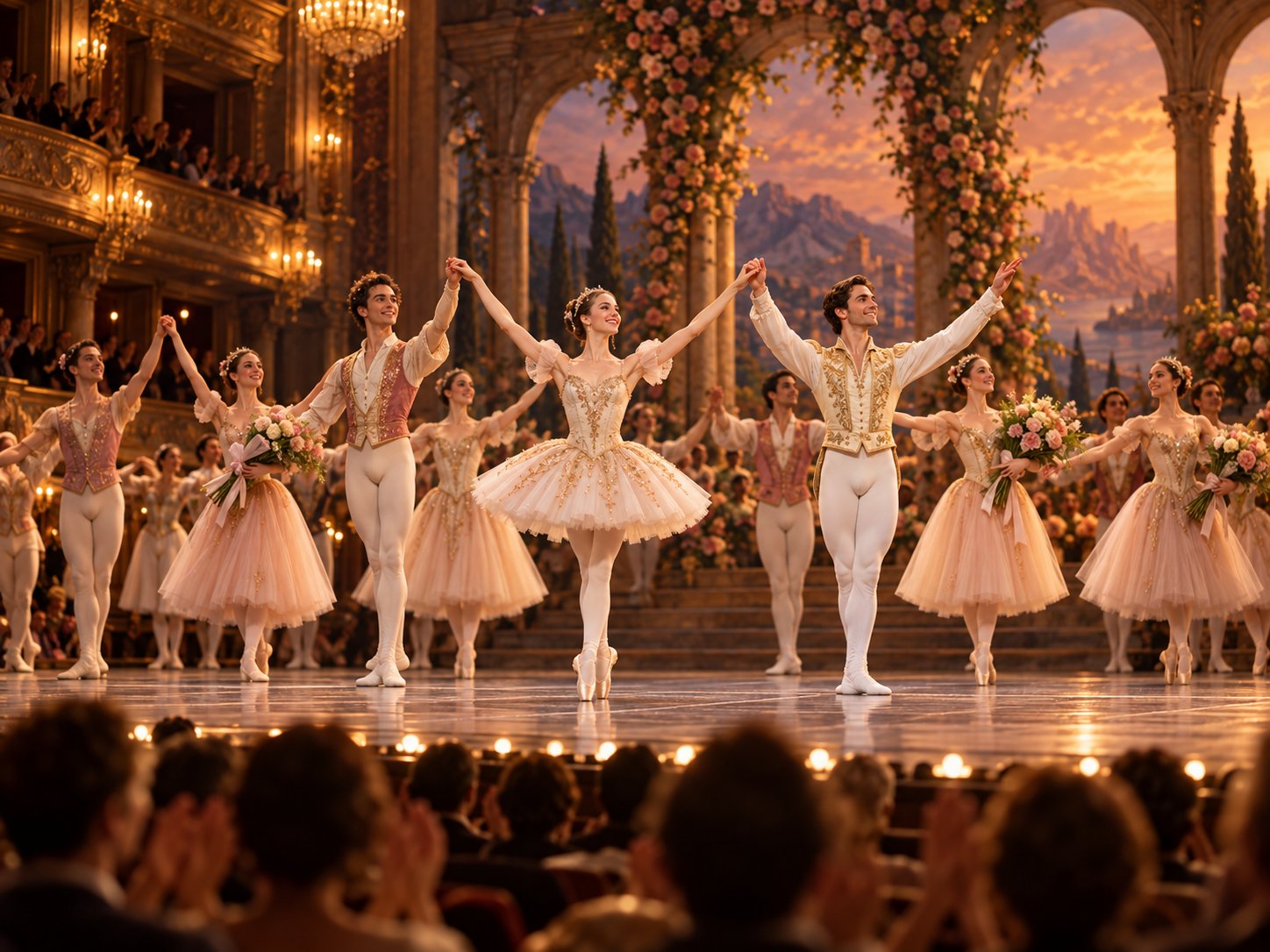 AI-generated editorial illustration celebrating the shared artistry of a ballet company at curtain call. Not an actual Sarasota Ballet performance.
John Acosta is a Florida Real Estate Advisor affiliated with Fine Properties, serving Sarasota, Manatee County, and Florida's Gulf Coast.
Through John Acosta Real Estate, he writes about local history, community life, arts and culture, housing, and the experiences that make the region distinctive.
Explore John Acosta Real Estate
This is an independently written editorial feature. John Acosta Real Estate is not affiliated with, sponsored by, or officially endorsed by The Sarasota Ballet.
Editorial review date: October 23, 2026. Personnel, performance schedules, and program information may change.