Real Estate Market Insights
Florida Gulf Coast Real Estate
Florida Condos
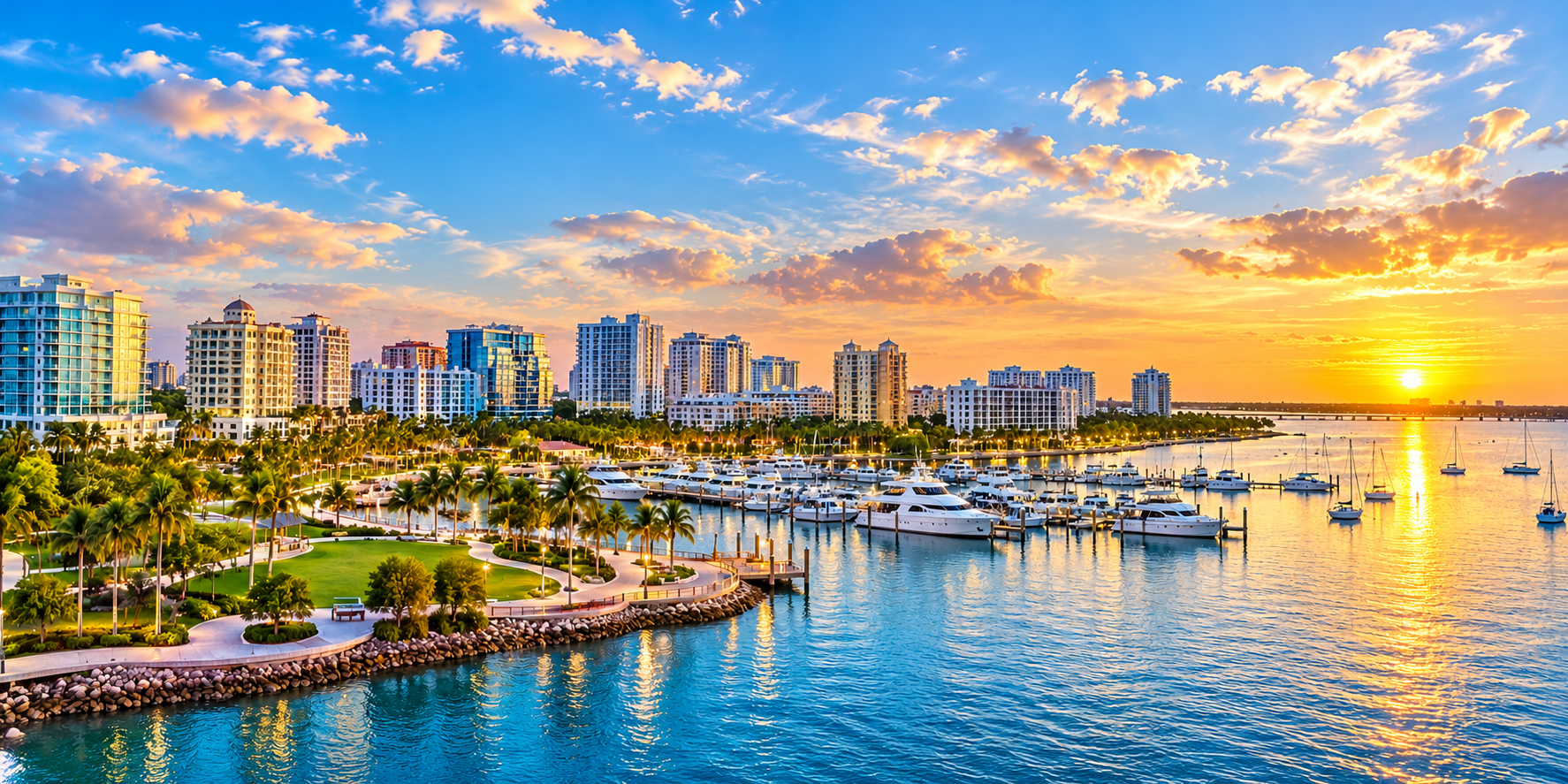

An exploration of the people, places, architecture, neighborhoods, and ownership considerations that make Downtown Sarasota one of Florida's most distinctive Gulf Coast communities.
There are places where a city's history is preserved behind museum doors. In Downtown Sarasota, much of that history remains part of everyday life.
You can walk along Main Street past buildings that survived Sarasota's earliest commercial years, step into a theater that narrowly escaped demolition, discover a quiet enclave of Mediterranean Revival cottages, and continue toward a waterfront where public parks and contemporary residential towers are reshaping the city's skyline.
The contrast is part of Sarasota's appeal.
Its downtown is neither simply a historic district nor merely a collection of new condominiums overlooking the bay. It is a place where architecture, arts, commerce, neighborhood identity, and coastal living have developed alongside one another—sometimes comfortably, sometimes through difficult debates about what should be preserved and what should come next.
For residents, prospective buyers, second-home owners, and investors, understanding Downtown Sarasota means looking beyond individual buildings and listings. It means understanding how the city came to be, how its neighborhoods differ, and what ownership here actually involves.
Long before Sarasota became associated with waterfront condominiums, cultural institutions, and winter visitors, the surrounding region was home to Indigenous peoples whose history extends back thousands of years.
European contact and settlement brought profound changes to the region. During the nineteenth century, Sarasota gradually developed into a small coastal community connected to fishing, agriculture, transportation, and trade.
Its transformation accelerated in the early twentieth century.
Among the figures who helped shape the emerging city were developer Owen Burns and circus entrepreneur John Ringling. Their investments reflected an extraordinary period of ambition along Florida's Gulf Coast, when promoters and developers envisioned communities far larger and more sophisticated than the settlements that preceded them.
The Florida land boom of the 1920s produced hotels, commercial buildings, residential neighborhoods, civic improvements, and architectural landmarks.
Not every project succeeded. The boom eventually collapsed, and the Great Depression brought further hardship. Yet much of Sarasota's enduring architectural character emerged from those years.
What makes Downtown Sarasota especially interesting today is that fragments of this early city remain visible within a much larger modern urban landscape.
Main Street is one of the clearest places to experience the relationship between old and new Sarasota.
Restaurants, galleries, shops, offices, residential buildings, and entertainment venues occupy a downtown environment that continues to evolve. Some storefronts have changed repeatedly over the decades, while the buildings above them tell an older story.
Main Street is also an important connection between the city's inland commercial blocks and the waterfront.
For someone considering downtown living, that relationship matters. Being close to Main Street may mean convenient access to dining, entertainment, and daily activities, but it can also mean more pedestrian activity, deliveries, special events, and nighttime noise.
The experience of living directly above a busy commercial block can differ substantially from living several streets away in a quieter residential building.
Those distinctions deserve attention when comparing properties that are all marketed simply as being in Downtown Sarasota.
At 1490 Main Street stands Worth's Block, one of the city's notable surviving early commercial buildings.
Constructed in 1912, the two-story brick building dates to a time when Sarasota's downtown was still developing its commercial identity. It is associated with the city's early shop-house pattern, in which commercial and residential uses occupied the same structure.
Worth's Block survived the devastating 1915 Main Street fire, making it an important physical connection to the city's early business district.
But its survival is only part of the story.
Over the decades, successive alterations concealed much of the building's original appearance. During a major rehabilitation in 1988, later coverings were removed, revealing original brickwork and historic architectural details, including interior features that had been hidden beneath more recent finishes.
The building subsequently became widely associated with The Gator Club.
Its preservation illustrates something important about downtown redevelopment: a historic building does not have to become a museum to remain valuable. Continued commercial use can help a landmark remain part of the living city.
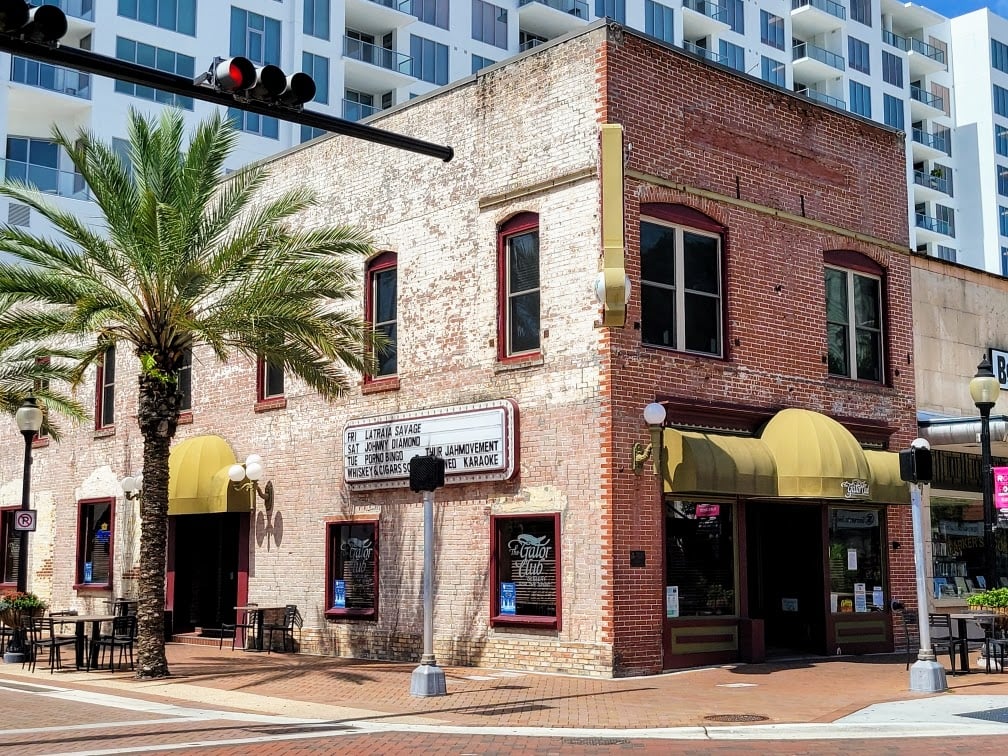 Worth's Block on Main Street, photographed in 2022. Photo: Upstateherd / Wikimedia Commons, CC BY-SA 4.0. No changes made.
Not every institution that defines downtown is a building.
The Sarasota Farmers Market, established in 1979, has become a familiar part of the city's Saturday routine.
Its presence brings residents and visitors into the heart of downtown for produce, prepared foods, flowers, artisan products, and the simple pleasure of spending a morning outdoors.
The market also demonstrates how public streets can serve a purpose beyond moving vehicles. On market mornings, downtown becomes a gathering place where commerce and community life overlap.
For residents considering a home within walking distance, this kind of recurring activity can be a meaningful lifestyle advantage.
It also reinforces an important point: walkability is not just a number assigned to a neighborhood. It is the practical ability to enjoy the places and routines that matter to an individual household.
A short distance from the city's busier commercial streets, Burns Court offers a very different sense of scale.
Developed during the 1920s under Owen Burns, with designs associated with architect Thomas Reed Martin, the Burns Court Historic District is known for its intimate collection of Mediterranean Revival residences.
The district's modest proportions, architectural details, and historic setting provide a contrast to the larger buildings that increasingly define other portions of downtown.
It is an especially compelling reminder that Sarasota's early development included more than grand hotels and prominent waterfront estates.
Smaller residential environments were also part of the city's architectural ambitions.
The Burns Court Historic District was listed on the National Register of Historic Places in 1984.
For architecture enthusiasts, its appeal lies in the relationship between buildings, street, and neighborhood character.
For property owners, historic surroundings can offer distinctive architectural value, but they may also introduce preservation considerations, maintenance demands, and limits on certain alterations.
Buyers should distinguish between a property that is merely old, a property within a designated historic district, and a property subject to specific local preservation requirements.
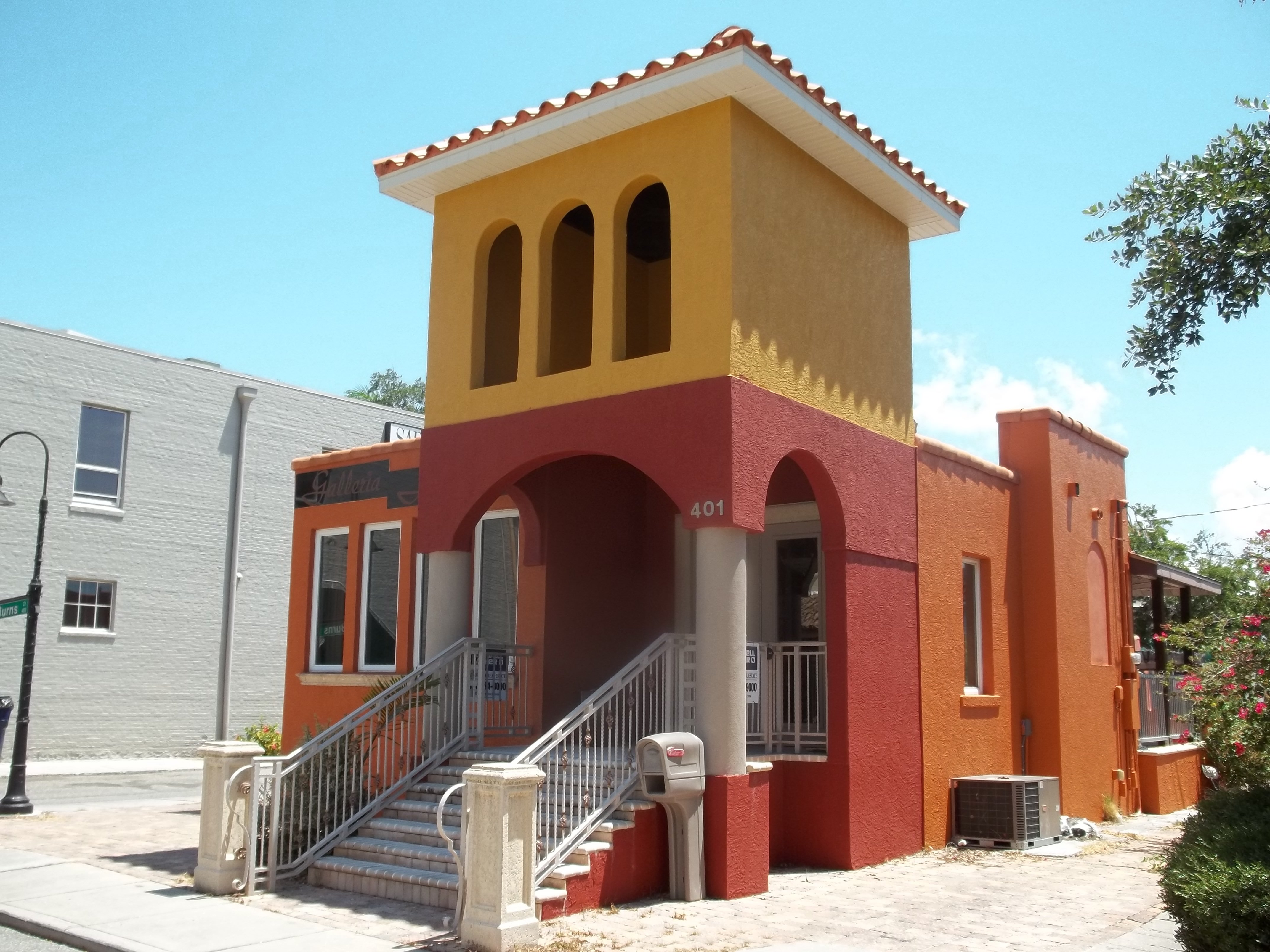
A building in Sarasota's Burns Court Historic District, photographed in 2011. Photo: Ebyabe / Wikimedia Commons, CC BY-SA 3.0. No changes made.
Any meaningful account of Downtown Sarasota must include the history of Overtown, the historically African American neighborhood associated with the area now commonly called the Rosemary District.
Long before contemporary residential development and new commercial investment changed the district's appearance, Overtown was an important center of Black community life in Sarasota.
Lewis Colson, who had been enslaved before emancipation, played a significant role in Sarasota's early development and surveying. His story is inseparable from the city's founding-era history.
Colson and his wife, Irene, also helped establish the foundations of Sarasota's early African American religious community. Bethlehem Baptist Church became an important institution in Overtown.
The neighborhood supported families, churches, businesses, and community relationships during periods when segregation and discriminatory practices shaped where people could live, work, and gather.
As Sarasota grew, the district experienced substantial physical and economic change.
The later use of the Rosemary District name, along with redevelopment and renewed investment, should not obscure the earlier neighborhood's identity or the people who built its community life.
Today, the area includes apartments, condominiums, restaurants, businesses, and new construction. Its changing landscape offers opportunities for urban living, but it also raises important questions about historical recognition, preservation, affordability, and continuity.
For prospective residents, understanding the district's past makes its present more meaningful.
A neighborhood is more than its newest buildings.
Few Downtown Sarasota landmarks embody the city's history as vividly as the Sarasota Opera House.
Originally opened as the Edwards Theatre on April 10, 1926, the building was developed by Arthur Britton Edwards, Sarasota's first mayor and an important figure in its early real estate and civic development.
Its Mediterranean Revival architecture reflected the ambitions of the Florida land boom.
The theater was conceived as more than a performance space. Its original arrangement incorporated commercial and other uses, illustrating the multipurpose approach common to ambitious downtown buildings of the period.
Over the decades, the venue hosted entertainment and public gatherings while adapting to changes in Sarasota's cultural and commercial life.
But its future was not always secure.
By 1973, the former Edwards Theatre—then known as the Florida Theatre—had closed, and its future appeared bleak.
The building that had once symbolized Sarasota's ambitions during the Florida land boom was facing demolition.
According to Sarasota Opera's historical account, a wrecking ball was already in a neighboring parking lot when Duaine and Patricia Glenn purchased the property.
Their intervention preserved a building that might otherwise have disappeared from the downtown streetscape.
The Glenns subsequently used portions of the property for their Radio Engineering Institute, while the auditorium continued serving community purposes.
In 1979, the Asolo Opera Guild acquired the theater, beginning its transformation into a permanent home for opera.
The restored venue reopened for opera in 1984 with Tchaikovsky's Eugene Onegin.
Further improvements culminated in an extensive renovation completed in 2008.
When the building celebrated its centennial in 2026, it represented far more than a century of performances.
It stood as proof that preserving a historic building can give a city something new without requiring it to surrender something irreplaceable.
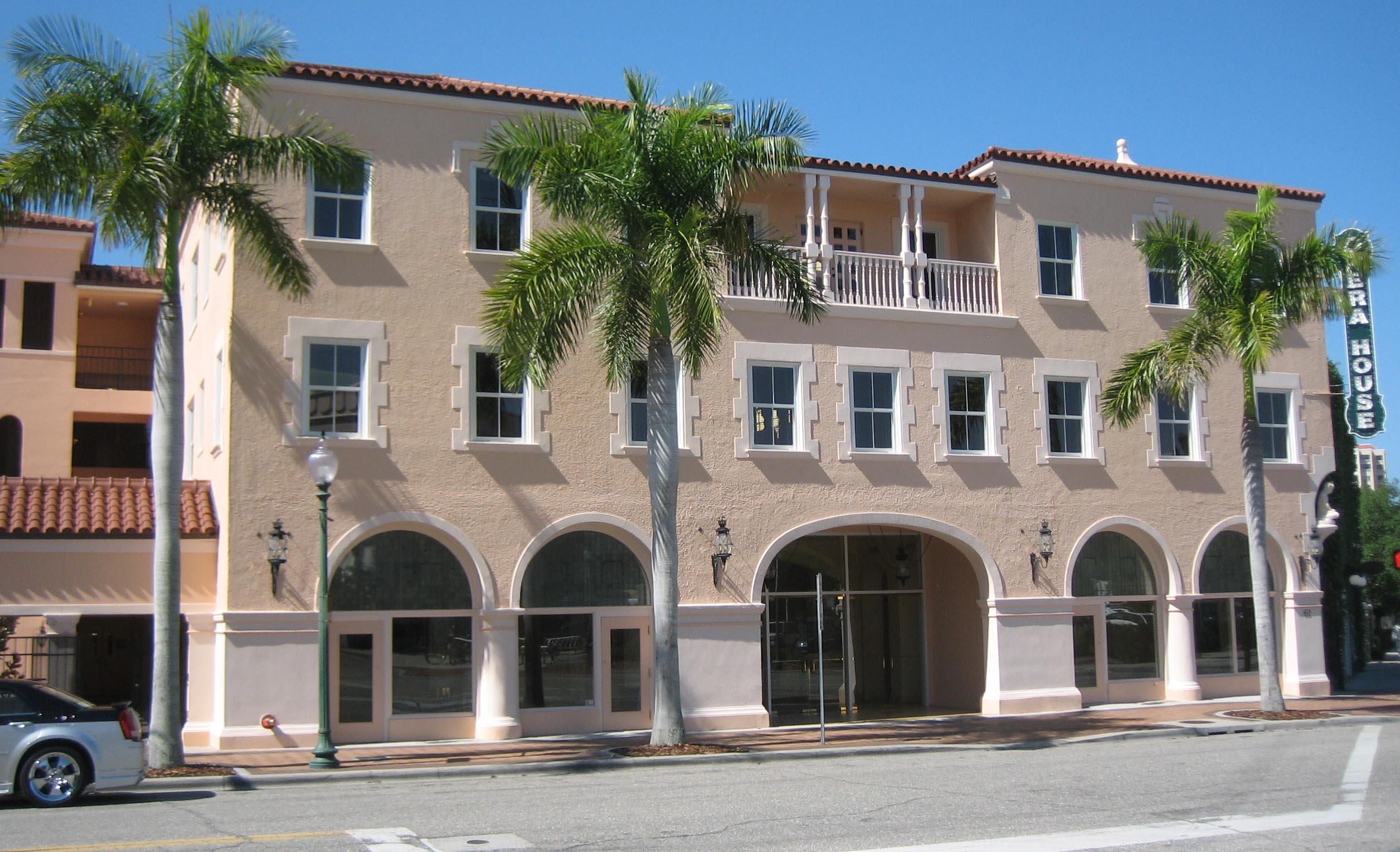
Sarasota Opera House, photographed in March 2008. Photo: Viva-Verdi / Wikimedia Commons, public domain.
The Opera House deserves its own deeper history. Readers interested in its architecture, artistic leadership, productions, and community connections can explore our Sarasota Opera House history and cultural guide.
Sarasota's reputation as a cultural destination is not the product of one institution.
It reflects a concentration of performing arts, museums, galleries, educational organizations, and audiences that support cultural activity throughout the year.
Florida Studio Theatre contributes to the downtown performing arts environment through its theaters and programming.
Sarasota Opera anchors an important historic building within the central city.
Other institutions—including the Van Wezel Performing Arts Hall, Sarasota Orchestra, Sarasota Ballet, and the city's broader museum and arts community—extend the cultural landscape beyond the immediate Main Street blocks.
That geographic distinction matters.
Not every institution commonly associated with Downtown Sarasota sits within the same compact pedestrian district. Some are located along the bayfront, while others are elsewhere in the Sarasota area.
For residents, the benefit is access to a remarkably varied cultural calendar within a relatively concentrated region.
For property buyers, however, actual walking and driving distances should be evaluated rather than assumed.
Our Sarasota Ballet School and ballet training guide explores another important part of the region's cultural and educational community.
For all its architectural and cultural attractions, Sarasota's relationship with the bay remains one of its most defining characteristics.
The waterfront creates a transition between the city's urban core and the open landscape of Sarasota Bay.
Around Marina Jack and Bayfront Park, residents and visitors can experience walking paths, public spaces, boating activity, views across the water, and the visual connection between downtown and the barrier islands.
The John Ringling Causeway and bridge are also part of this setting, connecting the mainland with Bird Key and the route toward St. Armands and Lido Key.
The bridge has become one of the area's recognizable landmarks, offering sweeping views of the bay and downtown skyline.
But proximity to the waterfront should not be confused with guaranteed water access or an unobstructed view.
Condominium buyers should examine the precise orientation of a residence, nearby development rights, public access routes, and whether a desirable view could change as surrounding parcels are developed.
A waterfront address, a water-view residence, and a property with actual boating access are three very different propositions.
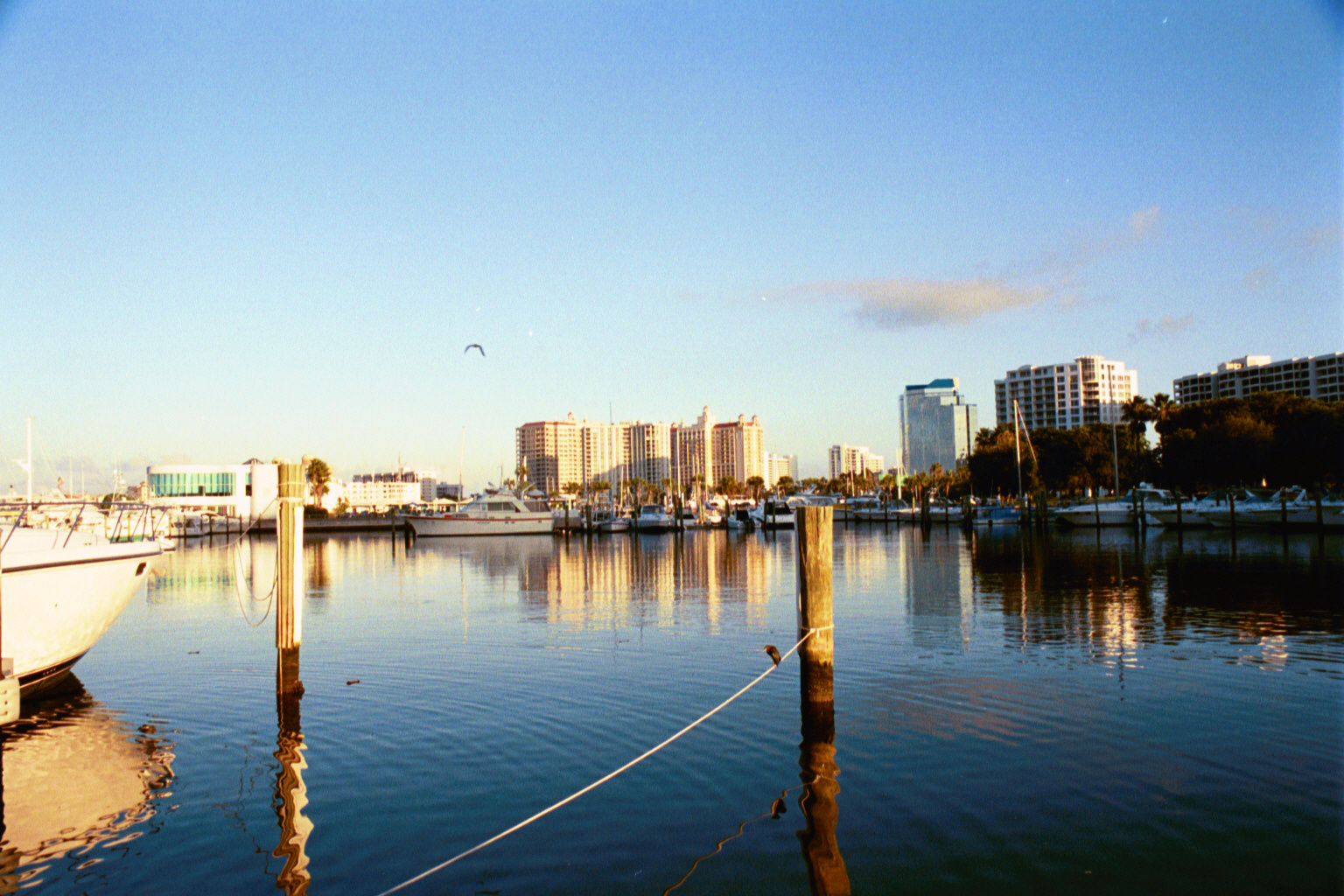
An earlier view of Sarasota's Bayfront Park Marina, photographed in 2007. Photo: Wendyrichmondrn / Wikimedia Commons, CC BY-SA 4.0. No changes made.
One of the most significant public-space initiatives in modern Sarasota is The Bay, a long-term effort to transform approximately 53 acres of city-owned bayfront land into a connected public park and cultural destination.
The project represents a different kind of investment from the private condominium development visible elsewhere along the waterfront.
Its central purpose is public access.
Phase 1 opened in October 2022, establishing an important early portion of the park.
By October 2026, the project had welcomed more than 1.2 million visits, according to the City of Sarasota.
That level of activity illustrates the growing importance of accessible waterfront space in a city experiencing substantial private development.
As of October 2026, Phase 2—an approximately 14-acre expansion with a reported budget of about $65 million—remained under construction, with major elements targeted for completion in 2027.
The work includes additional public spaces, shoreline improvements, and connections among cultural and recreational areas.
Historic structures also form part of the park's identity, including the Chidsey Library and the Municipal Auditorium.
The Bay is therefore not simply a new landscaped park. It is also an opportunity to reconnect existing civic landmarks with the waterfront around them.
The broader 53-acre vision continues across multiple phases. Individual improvements may open before an entire phase is finished.
For downtown residents, the project adds recreational and cultural opportunities without requiring private waterfront ownership.
For buyers, it reinforces the importance of understanding which public improvements are complete, which are underway, and which remain part of future phases.
South of the most concentrated Main Street commercial blocks, Marie Selby Botanical Gardens adds another dimension to Sarasota's waterfront identity.
The gardens are particularly associated with botanical collections, research, education, and their remarkable setting overlooking Sarasota Bay.
They provide a quieter experience than the surrounding commercial and residential districts.
Their presence also helps illustrate the variety of environments found within a relatively short distance of central Sarasota.
Someone choosing a downtown residence may value the ability to move between restaurants and cultural venues, public waterfront spaces, and botanical gardens without traveling far across the region.
As with other nearby destinations, the practicality of walking or cycling depends on the exact starting point and the route.
Perhaps no downtown area illustrates Sarasota's recent transformation more visibly than The Quay and the surrounding waterfront redevelopment district.
Large-scale projects have introduced new residential towers, commercial uses, restaurants, and public-facing spaces.
The Quay and surrounding waterfront district illustrate several stages of urban development at once.
Completed projects, including Bayso and other residential and commercial components, have already changed the neighborhood.
One Park Sarasota and The Ritz-Carlton Residences, Sarasota Bay were under construction as of October 2026, with anticipated delivery periods in early 2027 and late 2026, respectively.
Other developments, including One Park West, remained in earlier approval or planning stages.
Those projected dates are subject to change.
A completed condominium building with an operating association and established ownership history presents a different due-diligence profile from a tower under construction or a project that has not yet begun vertical development.
Preconstruction buyers should carefully evaluate contracts, deposit structures, developer disclosures, completion provisions, association budgets, projected operating costs, and the treatment of changes during construction.
The broader question is not simply whether a new tower looks attractive.
It is how that building will function as a long-term property investment and place to live.
Sarasota's development history includes repeated examples of buildings finding new purposes.
Worth's Block demonstrates the value of restoring an older commercial structure.
The Sarasota Opera House shows how a building once threatened with demolition can become a defining cultural landmark.
Other sites reveal that preservation is not always the outcome.
One contemporary example is the former U.S. Garage at 330 South Pineapple Avenue, an early automobile-related building dating to 1924–25.
The building later found new life through adaptive reuse, but its future became the subject of a preservation and redevelopment dispute.
As of early October 2026, the building remained standing while a legal challenge involving its proposed demolition continued. The associated development, renamed Lumora, had been reduced from an earlier two-building proposal to a single 10-story project.
The outcome remained unresolved, underscoring the difficult decisions cities face when historic architecture and redevelopment ambitions converge.
The significance of this story extends beyond one property.
Cities must continually decide how to accommodate housing, economic activity, infrastructure, and investment while retaining enough of their architectural and cultural identity to remain distinctive.
Preservation and redevelopment are not automatically opposites. Thoughtful adaptive reuse can sometimes accomplish both.
But not every historic building can be retained, and not every redevelopment proposal offers the same public benefits.
The important question is whether a city's decisions reflect an understanding of what makes the place valuable in the first place.
Downtown living offers a different daily rhythm from a waterfront estate, suburban neighborhood, or barrier-island condominium.
For some residents, the appeal is the ability to leave the car parked and walk to dinner, a performance, a coffee shop, or a weekend market.
For others, it is the combination of condominium convenience and proximity to Sarasota Bay.
The lifestyle can be particularly attractive to people seeking a primary residence with fewer exterior maintenance responsibilities, a seasonal home, or an urban setting near the coast.
However, the experience varies considerably by building and block.
A residence near Main Street's entertainment activity may offer exceptional convenience but less quiet.
A unit closer to the bay may command a premium for views and proximity to public waterfront spaces.
A home in a historic district may offer architectural character while requiring a different approach to maintenance and renovation.
Even buildings separated by only a few streets can differ in parking arrangements, traffic exposure, noise, amenities, insurance obligations, and association finances.
The right downtown property is therefore not simply the one with the best photographs or most impressive lobby.
It is the one whose location, ownership structure, and everyday characteristics match the buyer's actual priorities.
Downtown Sarasota offers several distinct forms of residential ownership.
Older and established condominiums may provide desirable locations, mature associations, and a history of actual operating expenses.
However, age can introduce questions about structural maintenance, mechanical systems, insurance, reserves, and capital projects.
A lower purchase price does not necessarily mean a lower total cost of ownership.
Newer buildings may offer contemporary layouts, updated amenities, concierge services, parking arrangements, and extensive shared facilities.
Those conveniences come with operating costs.
Buyers should evaluate recurring assessments, reserve contributions, insurance, management expenses, and the financial implications of maintaining amenities over time.
New development offers opportunities to purchase contemporary residences, sometimes with customization options or early access to particular floor plans.
But projected completion dates and preliminary budgets are not guarantees.
Contracts, developer disclosures, deposit protections, financing requirements, and the transition to association control deserve careful review.
Some areas near the downtown core retain smaller residential buildings and historic homes.
These properties may appeal to buyers who prefer architectural individuality or ownership outside a large condominium association.
They can also require closer attention to roof condition, building systems, flood exposure, renovation restrictions, and insurance availability.
Florida condominium ownership has changed substantially as building safety, reserve funding, and long-term maintenance have received increased attention.
For eligible condominium and cooperative buildings, milestone structural inspections and structural integrity reserve studies may be required under Florida law.
The applicable requirements depend on factors such as building characteristics, age, location, and statutory provisions.
Buyers should not assume that every building follows the same schedule.
Before purchasing, important questions include:
The most important distinction is between the purchase price and the total financial commitment.
A condominium with an appealing asking price may carry significant future costs if necessary repairs or reserve obligations have not been adequately funded.
Conversely, a building with higher monthly fees may be addressing its long-term maintenance responsibilities more systematically.
Neither conclusion should be reached without examining the actual documents.
For Florida condominium purchases, professional legal, inspection, insurance, and financial review can be particularly valuable.
Downtown Sarasota's waterfront setting is one of its greatest attractions, but it also makes coastal risk an essential ownership consideration.
Flood exposure can vary by parcel, building elevation, floor level, and construction characteristics.
Buyers should review current flood maps, available elevation information, insurance options, windstorm considerations, and the building's history.
A condominium unit located above ground level is not necessarily insulated from all flood-related financial exposure.
Damage to shared mechanical systems, parking structures, elevators, electrical infrastructure, or other common elements can affect owners throughout a building.
Insurance deductibles and association funding arrangements also matter.
These are building-specific questions, not matters that can be resolved solely by knowing a property's neighborhood.
Downtown Sarasota can appeal to seasonal residents who want access to cultural events, restaurants, the waterfront, and regional amenities without maintaining a larger single-family property.
But second-home ownership should be evaluated realistically.
Owners need to consider carrying costs during periods when the property is unoccupied, insurance requirements, property management, maintenance, and any restrictions imposed by the condominium association.
Investment buyers should pay particular attention to rental rules.
A property advertised in a desirable downtown location is not automatically suitable for short-term rentals.
Minimum lease periods, annual rental limits, approval procedures, and other restrictions can differ substantially among buildings.
Investors should also distinguish projected gross rental revenue from net operating income after association fees, taxes, insurance, maintenance, management, vacancies, and other expenses.
For owners considering a sale and reinvestment, certain investment-property transactions may also raise questions about tax-deferred exchanges under Internal Revenue Code Section 1031.
Those transactions require advance planning and qualified tax guidance.
Our Florida 1031 exchange guide explores the broader rules and considerations.
One of the advantages of Sarasota's real estate market is the variety of living environments within the broader region.
Downtown Sarasota offers an urban mix of restaurants, culture, condominiums, and bayfront public spaces.
Longboat Key emphasizes barrier-island living, coastal properties, boating opportunities, and a different pattern of residential development.
Siesta Key is associated with its beaches, island neighborhoods, seasonal activity, and its own transportation and ownership considerations.
Lakewood Ranch offers a substantially different setting, with master-planned neighborhoods, community amenities, and a wider range of suburban housing environments.
None is universally better.
A buyer who wants to walk to the opera and dine downtown may have different priorities from someone seeking a private dock, direct beach access, or a newer single-family home.
The most useful comparison begins with lifestyle, ownership costs, property type, and long-term plans—not just price per square foot.
Downtown Sarasota's next chapter will continue to be shaped by competing and complementary forces.
New residential development will bring additional residents and investment.
Public projects such as The Bay will expand access to waterfront space.
Historic buildings and districts will continue to raise questions about preservation, adaptive reuse, and neighborhood identity.
Infrastructure, parking, transportation, insurance, and the cost of ownership will remain important considerations.
For prospective buyers and existing owners, these changes create both opportunities and responsibilities.
New development can improve amenities and introduce desirable housing options, but it can also alter views, traffic patterns, construction activity, and the character of surrounding streets.
Public investment can enhance quality of life, while long-term maintenance and resilience remain essential.
The strongest ownership decisions come from understanding not only what Downtown Sarasota looks like today, but also how its individual districts are likely to function over time.
The skyline may be changing, but Downtown Sarasota's identity rests on much more than its newest towers.
It lives in the brickwork of Worth's Block, the intimate architecture of Burns Court, the history of Overtown, the extraordinary survival of the Sarasota Opera House, and the public spaces that reconnect the city with Sarasota Bay.
It is visible in a Saturday farmers market, a performance, an evening walk along the waterfront, or a quiet street where the buildings still reflect another era.
For those considering property here, that richness is part of the attraction.
Understanding the city—its history, neighborhoods, ownership structures, and ongoing transformation—can help turn an appealing property search into a more informed decision.
And for those who simply enjoy Sarasota, Downtown offers something equally valuable: a city whose past remains visible even as its future takes shape.
Whether you're considering a downtown condominium, evaluating a waterfront residence, preparing to sell, or exploring an investment-property transition, informed decisions begin with understanding the property and its surrounding market.
I work with buyers, sellers, and property owners throughout Sarasota, Manatee County, and Florida's Gulf Coast.
𝒥𝑜𝒽𝓃 𝒜𝒸𝑜𝓈𝓉𝒶
Real Estate Advisor
Keller Williams On The Water
Sarasota • Manatee • Tampa Bay • Florida's Gulf Coast
Residential • Commercial • Investment • Business & Property Transitions
Independent editorial disclaimer: This independently prepared local-history and real estate guide is not an official publication of any institution, municipality, developer, or organization discussed. Historical and development information is provided for general educational purposes. Project schedules, legal proceedings, property conditions, condominium obligations, and regulations may change. Buyers and owners should independently verify information and consult appropriate legal, tax, insurance, inspection, and financial professionals.
Research updated: October 11, 2026.