Manatee County Real Estate
Sarasota Real Estate
Tampa Bay

Resource review: November 10, 2026. Program rules, application windows and funding can change. Key legal and benefits guidance is sourced below; individual eligibility and live service availability must be confirmed directly with the administering organization.
Immediate danger or medical emergency: Call 911. Emotional crisis or concern for a veteran or service member: Call 988, then press 1, or text 838255 to reach the Veterans Crisis Line. Homeless or about to lose housing: Call 877-424-3838 for the VA’s 24-hour National Call Center for Homeless Veterans. You do not have to read this article first to make these calls.
Veterans Crisis Line | VA homeless services
A home can become difficult to navigate long before a family knows which office to call. A shower becomes unsafe. A surviving spouse opens an unfamiliar letter about benefits. An older veteran stops driving and begins missing appointments. These are ordinary moments with significant consequences—and there may be practical help available.
For many who served, years of moves, deployments and separations make home mean something simple: a door that locks, a kitchen where everything has its place, a street you know. After military service, familiar routines are rebuilt—sometimes in a new community, sometimes in the place someone has always called home. The people who shared those years of service may also be adjusting to a new chapter.
Veterans are teachers, physicians, business owners, tradespeople, artists, volunteers and neighbors. Some live with injuries or disabilities; others encounter new challenges with age. Many enjoy long, independent lives without either circumstance.
Help often exists but is hard to find: a grant that could make a bathroom accessible, a property-tax benefit a surviving spouse has not heard of, a ride to a medical appointment, or services that let someone stay in the house they love. Knowing where to turn can make a real difference.
This guide is meant to be a starting point. It brings together federal veterans benefits, Florida programs, community assistance, accessible-housing resources, homeownership guidance, and information for military families, caregivers and surviving spouses. Its local focus is Sarasota, Bradenton, Manatee County and Florida’s Gulf Coast, but many resources are available nationally. Readers do not need to be buying or selling a home to find something useful here.

Need help right now? Start with the urgent numbers above. Looking for a particular benefit? Use the Quick-Access Resource Guide immediately below. Making a housing decision? Go to the accessible-housing, aging-in-place, or homeownership sections. Looking for an organization near Sarasota or Bradenton? Use the local resource directory near the end.
A note about this guide: It is designed to help you identify the right office, prepare a useful question, and understand housing choices. It cannot determine eligibility or replace guidance from a VA benefits officer, licensed clinician, attorney, tax professional or lender. If you are helping a parent or spouse, include that person in decisions and confirm your authority before acting on their behalf.
If this page feels long, you do not need to read it from beginning to end. Choose the situation closest to yours and make one useful contact today:
|
If your concern is… |
Your first practical step |
|
A possible service-connected disability |
Contact an accredited representative and ask about a claim and whether an intent to file is appropriate. |
|
A home that no longer fits an injury or disability |
Describe the problem to a VA clinician or rehabilitation professional, then ask whether HISA, SAH, SHA, or other approved assistance could apply before hiring a contractor. |
|
An older veteran losing independence |
Ask the VA care team about home-based services, caregiver support, and transportation before concluding that selling the home is necessary. |
|
A veteran has died |
To report the death and help prevent VA benefit overpayments, call 800-827-1000, option 5 (Monday–Friday, 8 a.m.–9 p.m. Eastern). Then speak with an accredited representative about DIC, Survivors Pension, and accrued-benefit deadlines; separately identify urgent mortgage, insurance and legal notices. |
|
Housing at risk |
Call 877-424-3838 for the National Call Center for Homeless Veterans; contact the loan servicer or legal assistance promptly if formal notices have arrived. |
|
A veteran or family member needs free civil legal help |
Ask about income- and case-screened assistance through Bay Area Legal Services’ Bay Pines VA partnership, 727-398-9592. Qualifying spouses and adult children can also inquire. |
|
A walker, wheelchair or portable ramp is needed |
Call the Manatee equipment lending library, 941-744-3951, or Suncoast Center for Independent Living, 941-351-9545. Ask about inventory, eligibility and safe use. |
In an emergency, use the urgent contacts at the top of the guide instead.
You do not need every document or a complete explanation of your circumstances before asking for help. If possible, have these basics nearby:
If a caller is assisting someone else, explain the relationship and ask what consent or legal authorization the agency requires. Do not delay an urgent call while searching for paperwork.
Some problems require an immediate call; others allow time to compare options. This short table can help a veteran or family member avoid losing a benefit or missing a legal deadline.
|
Situation |
A useful action today |
What not to assume |
|
The veteran has died |
Report the death to VA at 800-827-1000, option 5 during published weekday hours. Ask an accredited representative which survivor claims should be filed and when. |
Reporting a death is not the same as applying for Dependency and Indemnity Compensation, Survivors Pension or accrued benefits. Certain accrued-benefit applications ordinarily have a one-year filing period, with a different VA rule for some lump-sum cases. |
|
A disability claim may be appropriate |
Ask an accredited representative about filing and whether an intent to file is useful while collecting records. |
An intent to file is not a completed claim, and it does not prove eligibility. |
|
An eviction, foreclosure or insurance cancellation notice has arrived |
Keep the notice, identify the stated deadline, and contact appropriate legal or housing assistance promptly; for veteran homelessness risk call 877-424-3838. |
Asking an agency for help does not automatically stop legal proceedings or extend deadlines. |
|
A home modification is needed |
Ask a clinician or rehabilitation professional to document the functional need and identify appropriate grants or services before signing a construction contract. |
A VA housing grant or local repair program does not automatically cover every expense or reimburse work started without approval. |
|
An older veteran cannot safely remain alone |
Contact the care team about an urgent functional assessment, immediate safety needs, home-based support, and who has authority to consent. |
An adult child’s relationship, an emergency-contact designation or family agreement does not automatically grant legal access to accounts or decision-making authority. |
|
A storm threatens someone relying on medical equipment |
Review evacuation arrangements, backup power, medications, accessible transportation and caregiver contact plans before conditions deteriorate. |
Special-needs registration by itself is not a complete evacuation or rescue plan. |
Documents worth keeping together: discharge papers or a records-request reference; current VA letters; relevant medical recommendations; legal-authority documents; mortgage or lease notices; insurance information; and a short list of deadlines. Store sensitive records securely and share them only with authorized people. If there is an immediate threat to safety, call for help first rather than gathering paperwork.
The source links for the principal time-sensitive points appear in the relevant chapters: reporting a death, accrued benefits, VA disability claims, and homeless-veteran assistance.
I want to enroll in VA health care. Check eligibility and apply online, by phone or with VA Form 10-10EZ. A disability compensation award is not a prerequisite to applying for VA health care.
I want to file a disability claim. Start at VA disability benefits. If still collecting evidence, learn about an intent to file and its timing rules. Free help is available from accredited VSO representatives.
I need my service records. Ask a county Veterans Services office for help or use the National Archives’ military records service.
I served in the Guard or Reserve, or have discharge-status questions. Do not assume ineligibility. Rules vary by benefit and qualifying service. See VA education benefit comparisons and character-of-discharge review.
I need help with necessary home repairs in Sarasota or Manatee County. Sarasota County currently advertises SHIP owner-occupied rehabilitation applications for qualifying low-income homeowners in its eligible service area—not properties within the City of Sarasota. Assistance may be offered as a secured, interest-free forgivable loan with ongoing occupancy conditions; call 941-861-5336 or email SHIP@scgov.net before assuming your address or project qualifies. Manatee County’s SHIP rehabilitation/replacement round currently states applications closed; call 941-749-3029 about other pathways or future rounds. These are county housing programs, not automatic veteran benefits.
I need to adapt my home. The VA’s Specially Adapted Housing (SAH), Special Home Adaptation (SHA), and Home Improvements and Structural Alterations (HISA) programs serve distinct needs and eligibility groups. Start at VA disability housing grants or ask your VA care team about HISA.
I care for a veteran. The VA Caregiver Support Program includes general caregiver support and a separate, more restricted comprehensive program. Call 855-260-3274 for the VA Caregiver Support Line.
I am approaching retirement or helping an aging veteran. Begin with the VA Geriatrics and Extended Care resources, county veterans services, and the Florida Department of Veterans’ Affairs. For future funeral planning, ask about pre-need eligibility for a VA national cemetery.
I have lost my military spouse. Ask about survivor compensation, survivors pension, burial or memorial benefits, possible home-loan eligibility and Florida property-tax provisions. Start with VA family and caregiver benefits and the VA burial and memorial guide.
I may lose my housing. Call the National Call Center for Homeless Veterans at 877-424-3838, available 24/7, including for veterans at risk of homelessness: VA homeless programs. If a mortgage is overdue, contact the servicer promptly and consult VA mortgage hardship guidance.
I am buying or selling a home. Review VA home loans and obtain individualized advice about financing, entitlement, taxes, insurance and property condition.
I need confidential counseling about adjustment or military sexual trauma. Check Vet Center eligibility or ask a VA facility for its military sexual trauma coordinator. Eligibility for certain related services does not depend on having filed a disability claim.
I need confidential local counseling. The Sarasota Vet Center is at 4801 Swift Road, Suite A, Sarasota; call 941-927-8285. Eligible veterans, service members and family members can receive no-cost readjustment counseling without VA health care enrollment; ask the center to assess eligibility.
I need free civil legal advice about a veteran’s benefits, housing, finances or family responsibilities. Bay Area Legal Services’ Medical-Legal Partnership with Bay Pines VA screens eligible veterans, spouses and adult children in Sarasota, Manatee and other covered counties. Call 727-398-9592 before visiting. Income and case screening apply; representation is not guaranteed.
I need to borrow a wheelchair, walker or other medical equipment right away. Ask Manatee County’s Community Health Lending Library at 941-744-3951 whether the item is available. Loans depend on donated inventory. For ramps or independent-living questions in Sarasota and Manatee, contact the Suncoast Center for Independent Living; current project or equipment availability needs confirmation.
I need someone local. Manatee County Veterans Services: 941-745-3795; Sarasota County Veterans Services: county veterans services directory. Verify office addresses and appointments directly before traveling.
These pathways describe places to begin, not guarantees of eligibility, funding, placement, or approval.
For a possible VA disability claim: (1) Speak with an accredited Veterans Service Organization representative or check the VA’s claim instructions. (2) Ask whether filing an intent to file is appropriate while records are gathered; timing can affect the eventual effective date. (3) Submit the claim with the supporting evidence available and respond to VA requests. An intent to file is not itself a completed claim.
For a bathroom, ramp or other accessibility change: (1) Describe the daily task that has become difficult to a VA care provider or qualified rehabilitation professional. (2) Ask the VA care team about HISA when the improvement is medically necessary, and separately ask the VA about SAH or SHA if the qualifying service-connected disability criteria may apply. (3) Obtain program-specific approval and qualified construction estimates before assuming a project will be funded or reimbursed.
For a threatened eviction or loss of housing: (1) Call 877-424-3838, the VA’s National Call Center for Homeless Veterans, if you are homeless or at risk. (2) Keep lease notices, court papers or mortgage correspondence, and ask for the locally appropriate SSVF or housing assistance referral. (3) If facing a legal deadline, seek qualified legal or housing-counseling help promptly; a program inquiry does not pause an eviction or foreclosure proceeding.
For a surviving spouse or adult child helping a parent: (1) Organize the veteran’s discharge and benefits records, household obligations and any legal authorizations. (2) Speak with an accredited county veterans service officer about possible survivor or caregiver programs. (3) Before changing home ownership or selling, ask qualified legal and property-tax professionals which responsibilities and exemptions actually apply.
|
Your immediate question |
Best first contact |
What to say or ask |
|
“I think a medical condition may be connected to my service.” |
Accredited VSO or VA disability claims team |
Ask about records, an intent to file, evidence and the proper application or decision review |
|
“I need VA health care or a referral.” |
VA health care enrollment or VA medical team |
Ask about enrollment, eligibility and which nearby clinic offers the needed service |
|
“I cannot safely enter or use part of my house.” |
VA clinician/rehabilitation team; separately ask about SAH/SHA |
Describe the task that is difficult; ask about HISA or adapted-housing evaluation before contracting |
|
“I care for a veteran and need support.” |
VA Caregiver Support Line, 855-260-3274 |
Ask about PGCSS, PCAFC and available respite or local support |
|
“My spouse died and the house and benefits are confusing.” |
Accredited VSO, relevant mortgage servicer, county property appraiser; estate attorney if needed |
Ask which benefits must be applied for, who owns the home and whether a tax exemption continues |
|
“I have an eviction notice or mortgage default.” |
VA homelessness line 877-424-3838, loan servicer, legal aid/housing counselor |
Give the actual deadline and ask for an immediate referral; a phone call alone will not pause proceedings |
This is a guide to who should evaluate a question, not a substitute for eligibility decisions or professional advice.
The Servicemen’s Readjustment Act of 1944—the original GI Bill—expanded access to education, training and home loans for millions of returning service members. Yet access was unequal. As the National Archives explains, discriminatory mortgage lending and segregation prevented many Black veterans from benefiting fully from the housing opportunities available to others. The history matters because eligibility for a benefit and the ability to use it are not always the same thing.
Today, veterans may need very different kinds of assistance at different points in life. A recently separated service member may be weighing training or employment. A veteran with a new disability may need rehabilitation and an accessible entrance. A retired veteran may need help reaching medical appointments. A surviving spouse may be trying to understand which benefits, if any, require a new application. The useful question is not simply what benefits exist, but how to reach the right one.
 Military spouses may build careers through relocations and maintain family routines during deployments; children may move between schools and communities. Military families also build friendships, traditions and ordinary lives that continue after service. When a spouse later becomes a caregiver—or an adult child begins helping an aging parent—the family’s needs and the veteran’s wishes both deserve attention.
Veterans are workers, neighbors, parents, artists, volunteers, entrepreneurs and retirees. A home that supports one person’s independence might be entirely wrong for another. In the chapters ahead, the aim is to connect individual circumstances with useful services and informed housing choices.
The Department of Veterans Affairs administers programs with different rules, forms, terminology and application channels. Someone may know they need help with a bathroom but not whether to contact a medical provider or housing-grant office. A surviving spouse may be unclear about continuing benefits; an older veteran may lack discharge records. The first step need not be knowing the name of a program. It can be a conversation about the need.
Florida county veterans service offices can help people understand benefits, gather documentation and identify application paths. That matters especially to people who have never filed a claim. A missing DD Form 214 or other document should not automatically end the inquiry. The VA explains that an applicant may request military service records and that VA ordinarily requests the DD214 after receiving an application for benefits. VA: requesting military service records.
An initial appointment may involve separation records, VA decision letters, medical information, dependency documents, income records and housing information. The exact documents depend on the benefit. Contact the office first rather than delaying solely because paperwork is incomplete.
If your DD214 is missing: Start with the VA guide to requesting military service records, which explains requests through the National Archives and other appropriate records systems. VA states that when you apply for VA benefits, it will request your DD214 as part of the application process; you do not have to obtain it from the National Archives before applying. An accredited representative or county veterans services office can help identify the appropriate route, including cases involving old or incomplete records. A family member requesting a deceased veteran’s records may need documentation of the death and the relationship. Record requests and benefit applications are related, but they are not the same process.
A disability claim can begin with a VA online application or help from an accredited representative. Evidence may include service and medical records, examinations, and statements from people with direct knowledge. VA Form 21-526EZ is used for many compensation claims. The evidence needed depends on the type of claim: direct service connection ordinarily considers a current disability, an event or illness connected to service, and a link between them; presumptive and secondary claims have different requirements.
Someone still gathering documentation can explore an intent to file, which can help protect a potential effective date if the completed claim is submitted within one year. Certain online applications establish an intent to file automatically. This is not guaranteed back pay or an extension of an appeal deadline. Keep copies of submissions and the date received by VA.
A denial, a lower rating than expected, or a disputed effective date deserves a careful reading of the decision letter. The right response depends on whether evidence is missing, whether the veteran believes VA made an error with the existing record, or whether a judge should review the decision. These are different routes, not interchangeable appeals.
|
VA decision-review route |
When it may fit |
Key deadline or evidence rule |
|
New and relevant evidence, or an eligible change-in-law basis, could affect the decision. |
May generally be filed later, but filing within one year of the decision can matter for protecting the potential effective date. |
|
|
The veteran believes VA made an error based on evidence already considered. |
Generally request within one year of the decision; new evidence is not accepted in this lane. |
|
|
The veteran wants review by a Veterans Law Judge. |
Generally request within one year; contested claims may have a 60-day deadline. Evidence rules depend on the selected Board docket. |
A later appeal to the U.S. Court of Appeals for Veterans Claims follows different filing rules. The timelines above are not a substitute for the deadline shown in the individual decision. An intent to file does not automatically extend an appeal deadline. Veterans can seek free assistance from an accredited VSO representative when choosing a review route. Official starting point: VA decision reviews and appeals.
VA health care enrollment is a separate process from disability compensation. Check health care eligibility and submit an application even if no disability claim has been approved. The PACT Act expanded eligibility for some veterans exposed to toxins and added presumptive conditions and exposure locations. A presumptive rule can reduce the proof required to establish service connection for certain conditions, but the precise service and medical criteria still matter. Relevant exposure histories can include burn pits, Agent Orange and other hazards; families should not assume an older diagnosis or previously denied claim settles eligibility forever. If VA denied an earlier toxic-exposure-related claim, ask an accredited representative whether a Supplemental Claim is appropriate. VA explains that most previously denied claims are not automatically reviewed under the PACT Act. Veterans filing a new claim can use VA Form 21-526EZ; eligible survivors considering a new or previously denied service-connected-death claim should ask about DIC and VA Form 21P-534EZ. The applicable service, diagnosis, evidence and effective-date rules still matter. See the VA’s national PACT Act benefits and claims guidance.
National Guard and Reserve service can establish eligibility for particular VA benefits, but the rules differ by program and type of duty. For ordinary VA health-care enrollment, VA generally requires qualifying federal active-duty orders and completion of the period called to serve; training-only duty does not by itself establish eligibility. Exceptions and distinct disability-compensation routes may apply when qualifying injuries or illnesses occurred during training. VA encourages former Guard and Reserve members to apply so their individual service can be evaluated. See VA health-care eligibility and VA Guard and Reserve benefits.
Discharge character also requires individualized review. An other-than-honorable or certain bad-conduct discharges do not establish automatic eligibility for all benefits, but neither should a veteran assume every form of care or assistance is unavailable. A VA character-of-discharge determination and a military discharge upgrade are separate processes; the former does not change the DD214. The VA explains discharge-upgrade and eligibility options. People affected by previous discharge policies, military sexual trauma, traumatic brain injury or mental health conditions should ask about the specific routes that may apply.
The VA accredits qualified Veterans Service Organization representatives, attorneys and claims agents. Accredited VSO claim representation is free; accredited attorneys and agents may charge permitted fees under applicable rules. Verify a representative through the VA accredited-representative directory. Be cautious of claims that approval or a particular disability rating is guaranteed.
The most useful first sentence may be a simple one: “I need help figuring out what assistance applies to my situation.”
Leaving military service can change employment, housing, health care, family routines and finances at the same time. Some people plan for that transition with confidence; others face complications. Neither experience is universal. The military’s Transition Assistance Program and the VA’s Solid Start outreach are intended to connect service members and newly separated veterans with information about benefits and the move into civilian life. Time-sensitive benefits and coverage questions should be considered before separation where possible.
 Depending on eligibility, VA education programs may support approved degrees, training, apprenticeships or other educational paths. VA Education Benefits offers an official starting point. Veteran Readiness and Employment (VR&E) provides separate services for qualifying people with service-connected disabilities; it is not merely another name for the GI Bill. Its potential pathways include vocational services and, when appropriate, independent-living support.
Veterans bring a remarkable range of experiences to civilian work, from medicine and aviation to logistics, engineering, communications, technical trades and leadership. Translating that experience into civilian credentials may require guidance. Veterans interested in entrepreneurship should distinguish actual education and counseling programs from claims of guaranteed startup grants.
Women veterans, younger veterans, Vietnam-era veterans, Guard and Reserve members, people who served in different wars or peacetime, and veterans with disabilities may encounter different program rules and service needs. Some are raising children, some are renting, some live alone, and others have no immediate caregiver or family nearby. Service-related experiences such as military sexual trauma, discrimination or an earlier discharge determination can affect whether an individual feels comfortable seeking care. Services should not presume one uniform veteran profile. VA women’s health and Vet Centers provide additional places to explore care and confidential readjustment counseling, subject to program eligibility.
A service member’s transition may also be a spouse’s career transition. Florida offers certain professional-licensing accommodations for eligible military families, but the precise rules depend on the profession and licensing authority. Community after service may come through veteran organizations—or through schools, faith communities, libraries, volunteer work, sports, cultural institutions and ordinary neighborhood life. A good life after service is not prescribed by a benefits program or real estate guide.
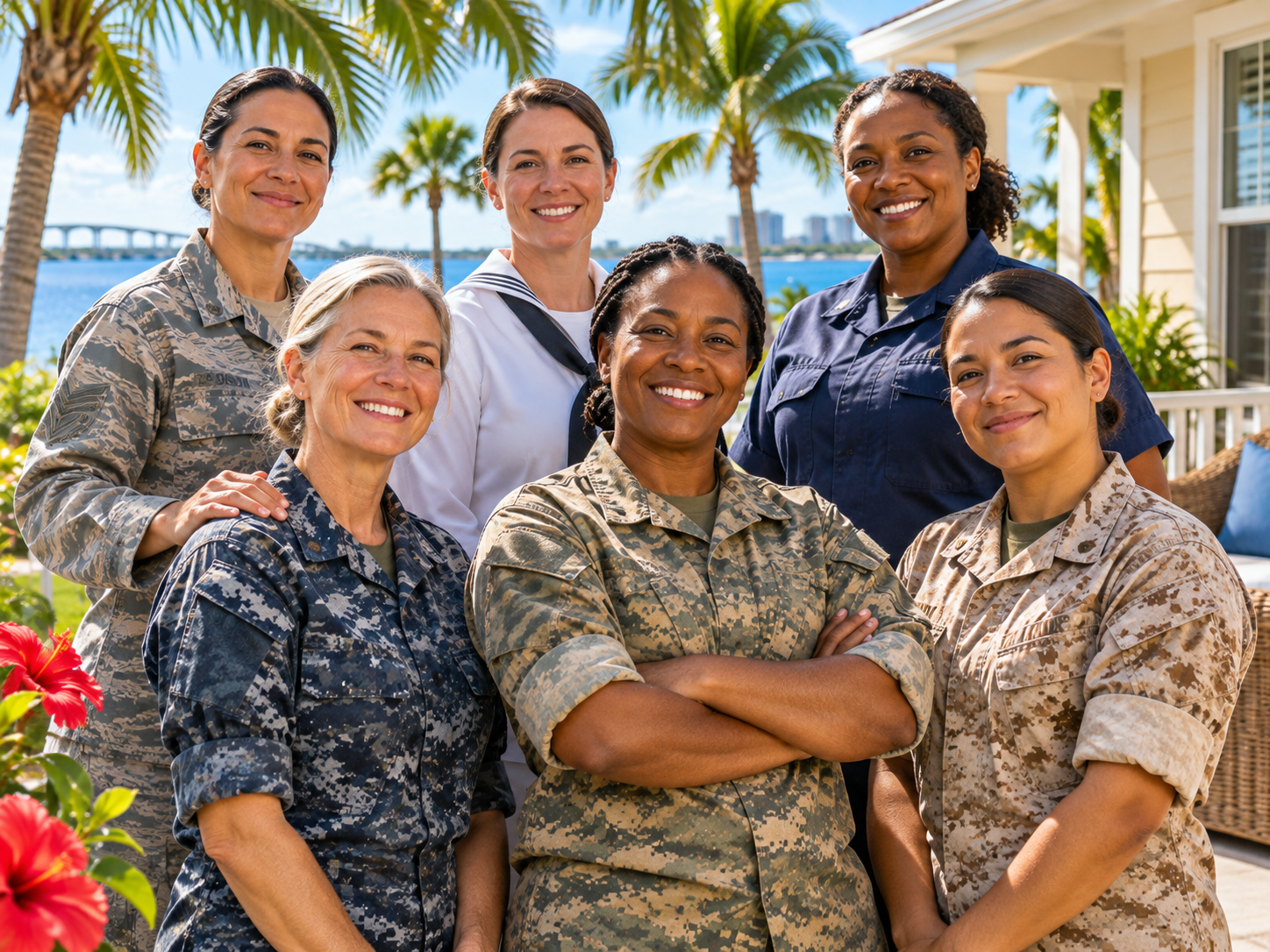 Women veterans have served in every era and pursue the same wide range of careers, family lives and personal goals as other veterans. When considering a relocation, they should be able to identify the VA care and specialty services they need rather than assume every outpatient clinic provides the same care. The VA has a dedicated Women Veterans Health Care program and eligibility guidance; a disability rating is not required simply to apply for VA health care.
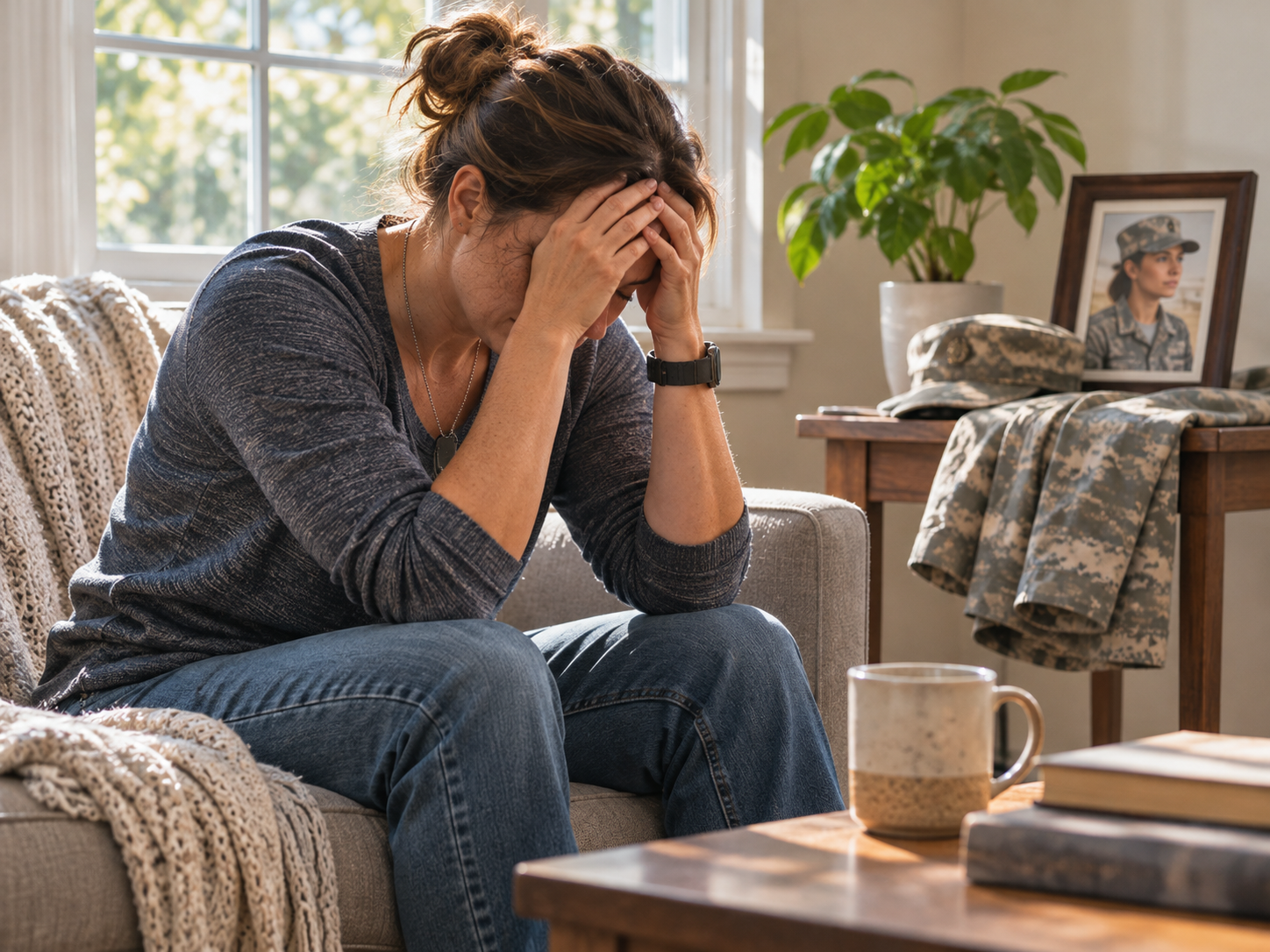 People of any gender who experienced military sexual trauma (MST) can ask about related care through a VA facility’s MST coordinator or an eligible Vet Center. VA guidance explains that certain MST-related treatment is available without proof of a disability claim or documentation that the incident was reported at the time. A person should ask the VA about their particular eligibility and care options rather than assume a previous benefits decision closes the door. VA MST-related services | Vet Center eligibility.
These resources are presented as options, not as assumptions about any veteran’s experience.
Military service can leave memories, relationships, strengths, and experiences that remain part of a person's life long after the uniform comes off. For some veterans, the transition home also brings difficult challenges: grief, persistent pain, traumatic experiences, disrupted sleep, depression, anxiety, loneliness, or the loss of a familiar sense of purpose. Other struggles may emerge much later, particularly after retirement, the death of a spouse, declining health, financial hardship, or increasing isolation.
These experiences do not define every veteran, and military service should never be treated as a diagnosis. But when someone is struggling, recognizing the need for support—and knowing where to turn—can make an extraordinary difference.
Suicide prevention deserves particular attention. A veteran does not have to appear visibly distressed or have a diagnosed mental health condition to be experiencing serious emotional pain. Families, friends, neighbors, and fellow veterans can play an important role by noticing changes, reaching out, and helping someone connect with appropriate care.
Warning signs can take different forms. They may include withdrawing from loved ones, expressing hopelessness, sleeping very little or excessively, increased alcohol or substance use, unusual agitation, giving away valued possessions, or saying that others would be better off without them.
Talking about wanting to die, searching for ways to end one's life, or expressing an immediate intention to harm oneself requires urgent attention.
Not every change in behavior indicates suicidal thinking, and some people experiencing suicidal thoughts show few obvious signs. The important response is not to diagnose someone from a distance, but to take concerning statements and behavior seriously.
VA guidance on recognizing suicide warning signs
Sometimes the most valuable first step is a simple, genuine conversation.
 Ask how the person has been feeling. Listen without rushing to correct, minimize, or explain away what they are experiencing. Avoid assuming that military training, professional success, independence, or a history of resilience means someone cannot be struggling.
If you are concerned that someone may be considering suicide, it is appropriate to ask directly and compassionately: “Are you thinking about suicide?” Research and VA guidance indicate that asking this question does not create suicidal thoughts. Instead, it can give someone an opportunity to speak openly.
If they acknowledge suicidal thoughts, help them connect with professional support. Avoid promising to keep an immediate safety threat secret. If it is safe for you to do so, stay with them while obtaining help.
When a person appears to be in immediate danger, has already harmed themselves, or has an imminent plan to do so, call 911 or seek emergency medical care immediately. If weapons are involved, do not attempt to confront or disarm the person; move to safety and notify emergency responders.
Families can also work with qualified professionals to reduce access to firearms, medications, or other potentially lethal means during periods of elevated risk. Safe, temporary storage arrangements and individualized safety planning can provide valuable protection.
VA suicide prevention resources
Call 988, then press 1.
Text 838255.
Or visit the Veterans Crisis Line to connect through confidential online chat.
The Veterans Crisis Line operates 24 hours a day, seven days a week, providing free, confidential support for veterans, service members, National Guard and Reserve members, and people concerned about them.
VA health care enrollment and a disability rating are not required to contact the Veterans Crisis Line.
A spouse, adult child, caregiver, friend, or neighbor may also reach out for guidance when worried about someone who served.
A person does not need to wait until a situation becomes life-threatening to make contact. The Crisis Line can help people experiencing emotional distress, uncertainty, or concern about their safety and connect them with additional resources.
 Crisis intervention is vital, but continuing care and human connection matter as well.
Depending on individual circumstances, veterans may benefit from counseling, primary care, treatment for depression or traumatic stress, help with substance use, chronic-pain management, peer support, family counseling, or opportunities to reconnect with meaningful activities and community relationships.
VA medical facilities offer mental health services and referrals. Eligible individuals may also receive confidential readjustment counseling through Vet Centers, which have eligibility rules distinct from standard VA health care enrollment.
For veterans and families in Sarasota and Manatee County, the Sarasota Vet Center, located at 4801 Swift Road, Suite A, Sarasota, can be reached at 941-927-8285. The nationwide Vet Center Call Center is available at 877-927-8387.
Sarasota Vet Center | VA mental health services
Not every challenge can be resolved through one telephone call, one appointment, or one conversation. Support may require persistence, follow-up, and a combination of professional care, practical assistance, and trusted relationships.
For families, that may mean helping someone make an appointment, offering transportation, checking in regularly, or making room for difficult conversations without judgment.
For veterans who are struggling, it may begin with allowing another person to help.
No veteran should have to navigate a moment of crisis without knowing that someone is available to listen. And no family should have to search through an entire resource guide to find that first point of contact.
Veterans Crisis Line: 988, then press 1 | Text 838255 | VeteransCrisisLine.net
A doorway that once seemed ordinary may become difficult for someone using a wheelchair. A tub may no longer suit a person with limited mobility. A familiar staircase may become a barrier. But accessible housing is about more than removing obstacles: preparing breakfast, enjoying privacy in the bathroom, gathering with family, and moving comfortably between the places that make a house one’s own.
Independence need not mean doing everything without help. It means retaining choice, control and dignity wherever possible.
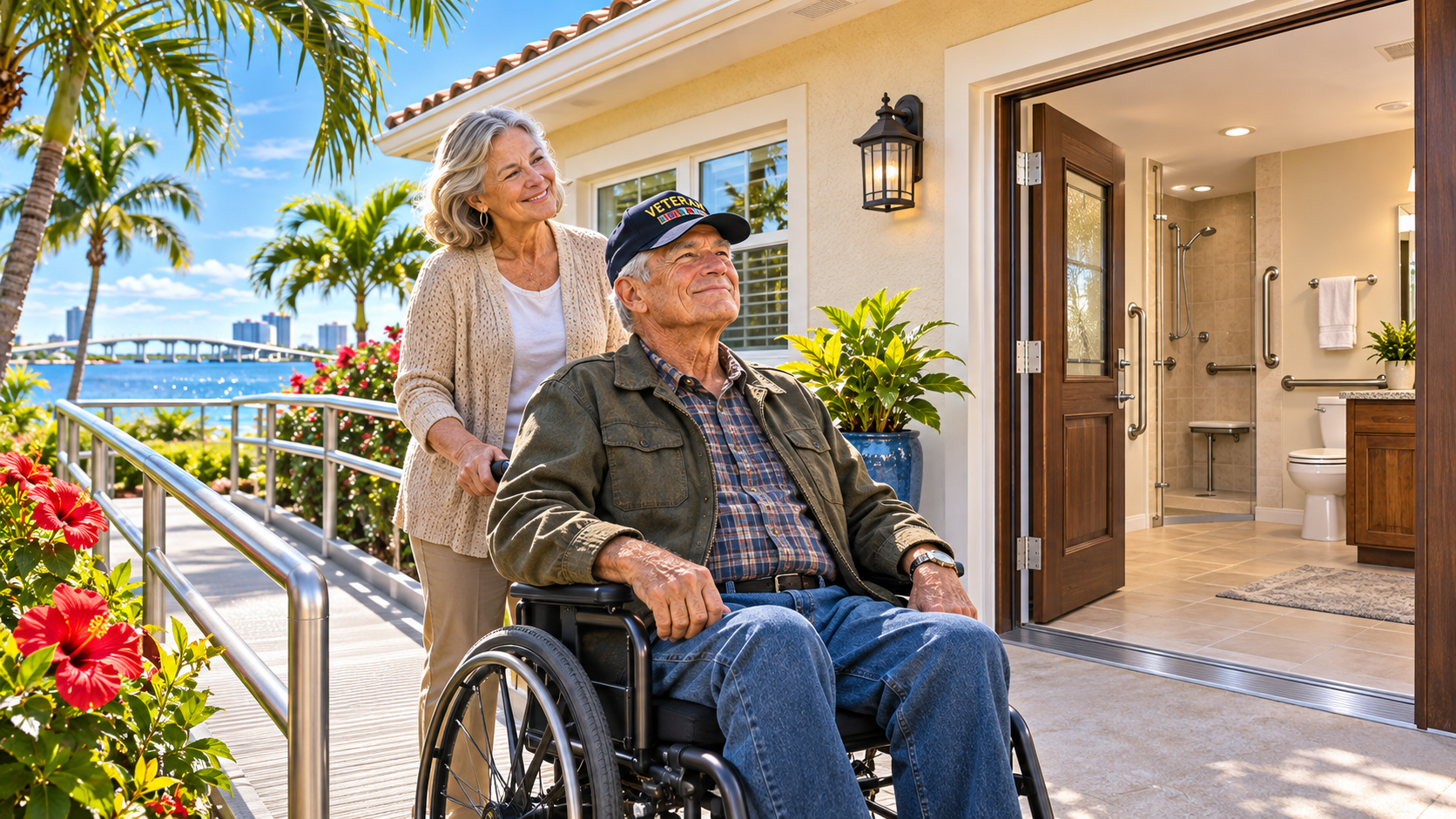 No two veterans have identical needs. Someone using a wheelchair may have different priorities from a person using a prosthesis. Someone with low vision may value contrast and controlled lighting; someone with hearing loss may benefit from visual or vibrating alerts. Traumatic brain injuries or neurological conditions can involve highly individualized environmental needs. Diagnosis alone does not tell us whether a house is appropriate. Ask what activities are difficult, what the person wants to do independently, which equipment is used and how needs could change.
Occupational therapists, rehabilitation professionals and qualified accessibility specialists can assess functional needs. A real estate professional can identify layouts and potential alternatives but cannot prescribe clinical modifications.
Study the pathway from the parking area to the entrance, not only the front door. Grade, drainage, threshold height, door operation, lighting and maneuvering space matter. Properly designed ramps, step-free entries or platform lifts may be possibilities, but Florida’s heavy rain and elevated coastal construction can complicate installation. A conceptual drawing does not establish feasibility; qualified professionals should assess structure, permits, applicable standards and safe use.
In bathrooms, the key concerns may include bathing, transfers, toileting, privacy, drainage and enough room to maneuver. Depending on individual needs, options can include step-free showers, properly anchored grab bars, reachable controls, handheld showers, suitable toilet heights, and appropriate lighting. “Comfort height” fixtures and walk-in tubs are not universally suitable; an individual’s transfer technique and needs determine what helps. Retrofit costs can increase in older slab-built Florida homes because of drainage, waterproofing and structural work.
Kitchens may benefit from reachable storage, suitable sink and countertop arrangements, easy-operated hardware, and thoughtfully placed appliances. Bedrooms, hallways, garages, living rooms and outdoor spaces also deserve evaluation. A home is not fully functional merely because it contains one accessible-looking bathroom.
A listing photograph rarely tells the whole story. Before making a decision, walk the actual route a resident would use from the vehicle to the bedroom, bathroom, kitchen and outdoor areas. Ask the person who will live there which features matter most; don’t assume a diagnosis supplies the answer.
|
Area |
What to investigate |
Who can evaluate it |
|
Parking and entrance |
Parking position, surface, slope, drainage, entry steps, door operation and a safe route in bad weather |
Accessibility professional; contractor or engineer for alterations |
|
Interior circulation |
Narrow openings, turning space, floor-level changes, furniture placement and the location of frequently used rooms |
Occupational therapist or accessibility specialist |
|
Bathroom |
Bathing and toileting routines, transfer needs, usable clearances, waterproofing, wall support and any slab modification |
Occupational therapist; qualified bathroom contractor |
|
Kitchen |
Reach to storage and appliances, preparation space, sink configuration and use by other household members |
Occupational therapist; kitchen/accessibility designer |
|
Sleeping and daily care |
Location of bedroom, restroom proximity, space for equipment and privacy if assistance is needed |
Resident and care team |
|
Sensory access |
Lighting, glare, alarm notification, acoustics, visual cues and safe wayfinding |
Relevant clinical and accessibility professionals |
|
Storm readiness |
Safe exit, evacuation transportation, device charging, power-loss plans and limitations of building elevators |
County emergency management; clinical team; electrical contractor |
A showing is a screening opportunity, not a clinical assessment or a construction approval. If a property requires essential adaptations, obtain feasibility and cost information from appropriate professionals before a purchase commitment becomes difficult to unwind.
A bathroom designed for accessibility need not resemble a medical facility. Thoughtful tile, natural or layered light, fixtures chosen for actual reach and grip, and well-integrated supports can create an inviting room. For one veteran, a roll-in shower and suitable transfer arrangement may matter most. Another may prefer a different bathing configuration, or may require space for a caregiver or mobility equipment. Higher toilets and walk-in tubs are not universally better; the person’s transfer method and preferences matter.
Older concrete-slab houses deserve particular scrutiny. Altering a shower’s floor elevation or drain may involve cutting concrete, waterproofing, rerouting plumbing and addressing nearby structural conditions. What looks like a simple bathtub replacement in a photograph can become a larger construction project. Obtain an appropriate inspection and written scope rather than treating a product advertisement as evidence of feasibility.
People with limited vision may benefit from contrast, reduced glare and consistent layouts. Others may need visual alarm notification, vibrating alert devices or individualized acoustics. Open layouts, bright lighting and other features are not suitable for everyone. Good accessible design can also be warm, attractive and personal: it need not make a house resemble an institution.
The ADA’s public-accommodation design requirements do not generally apply to an ordinary privately owned single-family home as though it were a public building. The Fair Housing Act, state and local construction codes, condominium rules and reasonable-accommodation or modification rights may apply in other settings. Before work in shared areas or a rental, seek property-specific advice rather than assuming an association can deny every modification or that every homeowner must use a particular ADA dimension. U.S. Access Board guidance.
Some residents may also need to plan for a trained service animal: appropriate circulation, water access, safe outdoor relief areas and heat conditions can affect daily usability. Equipment and circulation requirements must fit the actual person, animal and household.
Power failures, storms, flooding and elevator outages can threaten access for people who depend on powered mobility or medical equipment. A storm plan should work even when the ordinary elevator is unavailable, the cellular network is unreliable, or a preferred caregiver cannot reach the home.
A practical coastal accessibility plan:
Florida emergency management advises households to plan to care for themselves for at least 72 hours following an emergency. For anyone dependent on continuous electrical or clinical support, work with qualified professionals on a plan appropriate to their actual needs; a general supply-kit recommendation cannot replace a medically safe evacuation plan.
A veteran should not have to surrender the ordinary pleasures, privacy and dignity of home simply because the home must change.
Understanding how a home could be improved is one challenge. Paying for appropriate improvements, obtaining approval and finding a qualified contractor can be another. Government and charitable programs have different purposes and eligibility rules; no one should assume approval or available funding.
The VA’s Specially Adapted Housing (SAH) grant may help qualifying people with certain severe service-connected disabilities buy, construct or adapt a permanent residence. Specific disability categories, ownership interests and program rules apply. A disability-rating percentage by itself does not establish eligibility. The Special Home Adaptation (SHA) program serves different qualifying disability categories and may allow qualifying ownership by the veteran or an eligible family member.
Temporary Residence Adaptation (TRA) can allow certain SAH- or SHA-eligible veterans to adapt a family member’s home where they are staying temporarily. Federal legislation enacted September 2, 2026 extended this authority through December 11, 2026. As of this guide’s November 10 review, no later extension had been confirmed. A family planning work after that date should ask the VA to confirm that the program is authorized and that their particular project qualifies before making financial commitments. This authorization date does not mean that other VA benefits or medical services automatically end on December 11. See Public Law 119-103, section 4307.
These are different benefits, not interchangeable names for an ordinary remodeling allowance. Grant maximums can change by federal fiscal year. The VA disability-housing grant page currently displays grant ceilings identified as FY2026. Those published FY2026 amounts should not be assumed to be the FY2027 limits. Ask VA for the applicable ceiling before planning a project. Approval and award amounts depend on the individual and the proposed project.
The VA’s Home Improvements and Structural Alterations (HISA) benefit may support medically necessary improvements, such as permanent ramps, qualifying roll-in showers or accessible sinks. It is administered through VA health care processes and requires clinical justification and application documentation. HISA can sometimes address needs involving non-service-connected disabilities, under different funding limits and eligibility requirements. VA currently lists lifetime HISA limits of $6,800 or $2,000, depending on the eligible disability and benefit category; these are not annual payments. VA also requires a clinically justified project, a VA-approved prescription, an itemized estimate, and VA Form 10-0103. Renters need the property owner’s notarized authorization. Confirm the veteran’s remaining lifetime benefit with the local VA Prosthetic and Sensory Aids Service before any work begins. It is not a general grant for routine roof or air-conditioning replacement or any desired upgrade.
A veteran who needs structural repairs but does not qualify for an adaptation grant may still have other options. Sarasota and Manatee County housing-assistance programs sometimes use SHIP or other funds for income-eligible, owner-occupied rehabilitation. These programs may be restricted by geography, application periods, ownership, income, property condition and available allocations. An announced funding round is not proof that applications remain open. Some help is structured as a conditional forgivable loan rather than unrestricted grant money.
Community organizations worth contacting include SRQ Vets, Heroes Welcome Home and appropriate local nonprofit or county-referral programs. Services may involve ramps, small repairs, housing deposits or resource navigation. Ask the administering organization about its current intake period, project eligibility, service area and remaining funding before making plans.
Not every urgent home problem requires a VA disability-housing grant. A leaking roof, failed air conditioner, or unsafe water heater is generally a home-repair problem, while a clinically necessary ramp or bathroom alteration may involve an accessibility pathway. The distinction determines whom to contact first.
Habitat for Humanity Sarasota’s Critical Home Repair Program describes repairs such as roofs, HVAC systems and water heaters for qualifying homeowners. Its published criteria include household income below 80% of area median income, ownership and occupancy as a primary residence, and current mortgage and property taxes. A required repair scope exceeding the program’s $25,000 project maximum may make a home ineligible. Payment terms depend on the household’s ability to pay; this is not an unconditional free grant. Contact 941-866-2219 and confirm whether the specific address and repair qualify. See Habitat Sarasota’s program and eligibility FAQs.
For an immediate equipment need, the Manatee County Community Health Lending Library offers donated wheelchairs, walkers, canes, commodes and other items on free loans, subject to inventory. Contact 941-744-3951 or communityhealth@mymanatee.org and ask if the needed item is in stock; see the county’s equipment-lending service. The Suncoast Center for Independent Living is another possible referral for accessibility and equipment questions in Sarasota and Manatee; ask directly about current ramp or equipment service availability at scil4u.org.
A veteran or surviving spouse should also consider Florida’s Community Care for the Elderly (CCE) program when the issue combines functional impairment, home safety and daily assistance. It serves eligible adults 60 and older following an assessment and can include emergency home repair, personal care, respite and transportation. Begin with Florida’s Elder Helpline, 800-963-5337, and ask for a county-specific assessment. Services and openings are not guaranteed. Florida Department of Elder Affairs: CCE.
Program details originally checked November 9, 2026; availability of funding, equipment and appointments can change.
|
Potential pathway |
Primary purpose |
Where to begin |
Important limitation |
|
SAH |
Acquiring, building or adapting a permanent home for specified severe service-connected disabilities |
VA housing adaptation benefits; ask about VA Form 26-4555 |
Narrow qualifying disability and ownership conditions; approval not automatic |
|
SHA |
Acquiring or adapting a home for different specified service-connected disabilities |
VA housing adaptation benefits |
Different criteria from SAH; ownership by a qualifying family member may be possible |
|
TRA |
Certain adaptations to a family member’s home while an otherwise eligible veteran resides there temporarily |
VA housing adaptation benefits |
Current enacted authority runs through December 11, 2026; check for a later extension and confirm VA eligibility before committing |
|
HISA |
Clinically justified improvements to a residence, including certain permanent accessibility changes |
VA medical facility’s Prosthetic and Sensory Aids Service |
Different application and lifetime-limit rules; not general home repair |
|
Local SHIP or charitable repair assistance |
Eligible owner-occupied repairs, rehabilitation or other defined assistance |
County housing office or directly with administering nonprofit |
Income, geography, funding and application windows may limit access; some assistance is a conditional loan |
Why this table matters: A veteran with difficulty entering a home may need a medical assessment, a government-benefits review, contractor advice and an examination of local assistance—not just the name of a grant. A county Veterans Services officer can help the household identify an appropriate referral, while each administering organization determines its own eligibility and approval.
For SAH or SHA, start at VA disability housing grants, review the disability and ownership criteria and follow the VA’s application instructions (including VA Form 26-4555 where applicable). For HISA, contact the Prosthetic and Sensory Aids Service at the veteran’s VA medical facility: a VA clinical prescription, documented need and an estimate are central parts of the process. Ask before construction begins, because approval is not the same as reimbursement for past work. For SHIP and local repair programs, ask the administering county about household income, ownership, jurisdiction, available funds and whether assistance is a grant or conditional loan.
Ask whether the improvement is clinically appropriate, whether funding must be approved before construction, whether permits or association approval are required, and whether the contractor is qualified and insured. A project may affect drainage, flood compliance, insurance or future resale. An unapproved modification should not be assumed reimbursable. Begin with the need itself: “I cannot safely use my shower,” or “I need an accessible entrance,” then ask the VA care team, county veterans service officer or local housing administrator which program may apply.
Practical help is a meaningful form of gratitude. The goal is to make appropriate assistance understandable and accessible—not suggest every veteran needs it.
When we honor military service, attention turns to the person who wore the uniform. It should. Yet spouses, children, parents and loved ones may live through deployment, relocation, separation and transition in their own ways. They deserve recognition for their own achievements and lives—not only the role they played supporting a service member.
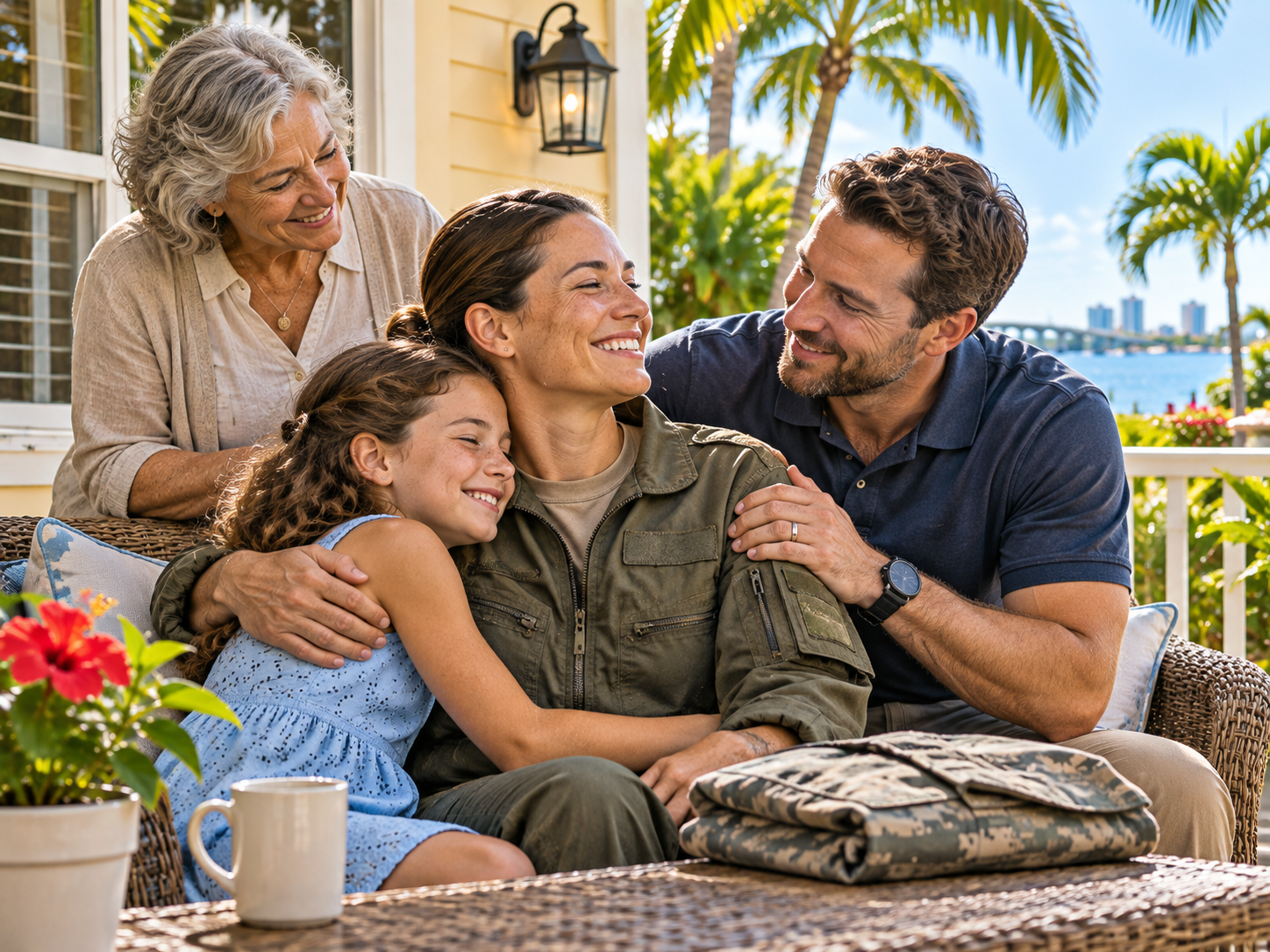 A spouse may start doing more household tasks. An adult child might arrange transportation. Over time, responsibilities can extend to personal care, appointments or managing services. Caregiving may be temporary or sustained. The veteran’s independence and the caregiver’s well-being deserve attention together.
The VA offers two distinct caregiver pathways. The Program of General Caregiver Support Services (PGCSS) provides qualifying support, training and other resources, without the comprehensive program’s monthly stipend. The Program of Comprehensive Assistance for Family Caregivers (PCAFC) has stricter eligibility requirements and may provide a stipend for an approved primary family caregiver, among other services. Eligibility depends on more than a disability-rating percentage. Caregivers can begin with 855-260-3274, the VA Caregiver Support Line. Eligible respite services may provide temporary relief and may occur in different settings, depending on local arrangements and care plans.
An adult child trying to help a veteran parent, or a spouse dealing with housing, benefits or estate paperwork, may need legal guidance rather than another benefits brochure. Bay Area Legal Services’ Medical-Legal Partnership with Bay Pines VA offers civil legal screening to eligible veterans, spouses and adult children who meet its VA-care or five-county residence conditions, including Sarasota and Manatee. Matters may include advance directives, housing, benefits, family law and consumer financial problems. Income and case screening apply, and a walk-in does not guarantee representation.
Call 727-398-9592 before visiting. The provider publishes walk-in clinics at Manatee County Veterans Services, 1401 Third Avenue West in Bradenton, on second and fourth Tuesdays, 9 a.m.–noon, and at Sarasota VA Clinic, 5682 Bee Ridge Road, Suite 100, on first and third Tuesdays, 9 a.m.–noon. Confirm holiday exceptions and current hours. Medical-Legal Partnership official clinic page.
A family home may embody decades of memories and self-determination. A well-intentioned suggestion to move can be received as a challenge to independence. Listen first: what does the veteran want? What has become difficult? Could repairs, transportation or home-based care help? Adult children can organize paperwork and coordinate professional advice, but family relationship alone does not confer legal decision-making authority. Powers of attorney, estate documents and health care permissions require appropriate legal review. Florida can recognize a power of attorney validly executed under another state’s laws even when its signing formalities differ from Florida’s; an institution may request additional legal confirmation. A financial power of attorney does not survive the principal’s death, and authority to make health-care decisions is governed separately, including Florida’s surrogate and proxy rules. Florida Statutes §709.2106.
Families do not need to take over a veteran’s decisions to be prepared. With the veteran’s consent, it can help to understand where essential information is kept and who may act if circumstances change.
A prepared folder can reduce confusion. It should be stored securely, and private medical and financial information should be shared only with authorized people.
 A surviving spouse may be grieving while also being asked to make decisions about benefits, funeral arrangements, insurance, and the family home. Having adult children does not mean they know what to do. Even a devoted son or daughter may never have dealt with a VA survivor claim, a mortgage servicer, or Florida homestead rules. The aim is not to solve every problem immediately. It is to address urgent obligations, safeguard essential information, and avoid irreversible decisions made in confusion.
First, deal with immediate needs and arrangements. Contact the appropriate medical or emergency professionals and a funeral home as circumstances require. Ask how to obtain certified death certificates and what paperwork will be needed. If the veteran may qualify for burial in a VA national cemetery, the family or funeral director can consult VA burial scheduling. A pre-need eligibility determination, if one exists, is helpful but does not itself schedule a burial.
Then notify the VA and investigate survivor benefits. The VA asks survivors or their legal representatives to report a veteran’s death as soon as possible, partly to avoid overpayment debt when benefits continue after death. The fastest reporting route VA identifies is 800-827-1000, select 5, Monday through Friday, 8 a.m.–9 p.m. Eastern (TTY: 711). Have the veteran’s name, date of death and service information if available, but do not delay the report because a document is missing. Record the date of the call and any follow-up directions. Safeguard payments received after death rather than assuming they belong to the survivor. Do not assume every post-death deposit is yours to spend or that every deposit must automatically be returned: ask VA to determine the benefit month, any month-of-death entitlement and the proper handling of funds.
Do not assume that starting an online survivor application automatically protects an earlier claim date. VA states that the automatic online intent-to-file feature does not apply to Dependency and Indemnity Compensation (DIC). A survivor who is gathering documents can ask an accredited representative about separately submitting VA Form 21-0966 (Intent to File) and confirming VA recorded it. An intent to file can preserve a potential effective date when a qualifying completed claim is submitted in time; it does not guarantee payment. File promptly, especially when a death-related effective-date rule or other deadline may apply. VA intent-to-file instructions.
An accredited representative can then help investigate Dependency and Indemnity Compensation (DIC), Survivors Pension, accrued benefits, burial assistance and other programs. The VA provides an online survivor-benefits application using Form 21P-534EZ for eligible spouses and children of deceased veterans; a death during active service may involve a different form and military casualty assistance. Ordinary accrued-benefit claims generally must be filed within one year after death; VA identifies a separate five-year period for certain lump-sum accrued benefits. The standard survivor application is VA Form 21P-534EZ for eligible surviving spouses and children; rules can differ for other applicants. If the veteran died with a claim or appeal pending, ask promptly whether substitution is available to continue it. These are distinct procedures, so confirm the appropriate form and deadline with an accredited representative. VA accrued benefits and substitution. A veteran’s disability compensation does not automatically continue unchanged as a surviving-spouse payment; each type of survivor benefit has its own conditions.
A 2026 survivor-claims improvement: Effective February 23, 2026, VA changed how it processes certain applications involving both DIC and Survivors Pension. In most cases, it can pay the higher applicable benefit—generally DIC—without first completing development of the lesser claim. VA identifies a specific exception involving a surviving spouse without dependents who resides in a nursing home and has applied for or receives Medicaid. This is a processing change, not a promise that every surviving spouse qualifies or can collect both benefits together. VA announcement of the survivor-claims change.
Protect the home without rushing to dispose of it. If there is a mortgage, identify the servicer and ask which payments, notices, or deadlines require attention. Locate the deed, tax records, homeowners and flood insurance, association notices and utility accounts. Do not assume that appearing on a deed, being married, or being an adult child automatically resolves estate authority or access to accounts. Ask a qualified Florida estate attorney about title, probate and authority; ask the county property appraiser separately about homestead and veterans’ tax exemptions. Report a death to relevant institutions through their official processes and safeguard the deceased person’s financial and identifying information.
In the following days, make a written decision list. Separate deadlines that cannot wait from choices that can: an insurance premium or foreclosure notice may need prompt action, while deciding to sell a longtime home may not. Discuss the surviving spouse’s wishes, income, support network, health, transportation, and future housing costs before considering a move. A surviving spouse’s possible VA home-loan eligibility, property-tax relief, or health benefits must be checked under each program’s rules.
A useful first call: “My spouse was a veteran and has died. I have the service record and our household paperwork, but I don’t know which survivor benefits or housing deadlines apply. Can you help me make a list of what to do first?”
This section offers a starting sequence, not a universal legal checklist. Families facing a court, foreclosure, insurance, or probate deadline should obtain individualized help promptly. Honoring the veteran should never require overlooking the family.
|
The question |
Where to begin |
What to ask |
|
How do I report the veteran’s death? |
VA: 800-827-1000, option 5 (weekday hours above) |
Confirm that VA has recorded the death, what information it still needs, and whether payments must be safeguarded pending reconciliation. |
|
Could we qualify for survivor compensation or pension? |
VA survivor-benefits application or an accredited Veterans Service Officer |
Ask separately about DIC, Survivors Pension, accrued benefits, and whether any filing deadline affects the claim. |
|
Who can help with legal authority and the home? |
A Florida probate or elder-law attorney, or Bay Pines VA’s legal-aid partnership for qualifying cases |
Ask who can speak for the estate, what happens to the deed, and whether a mortgage or insurance notice requires immediate attention. |
|
Could the property tax change? |
The property appraiser in the county where the home is located |
Ask about maintaining homestead status, possible surviving-spouse exemptions, and filing documentation or deadlines. |
|
Who can help me get organized? |
Manatee County Veterans Services or Sarasota County Veterans Services |
Request a survivor-benefits appointment and a list of the documents to bring. |
Important distinction: Reporting a death does not itself apply for survivor benefits. A surviving family member may need a separate claim. No family should infer that a VA benefit, title interest, or authority over an account transfers automatically.
Families sometimes assume that burial eligibility and arrangements can only be investigated after a death. In fact, the VA offers a pre-need determination of eligibility for burial in a VA national cemetery. The application uses VA Form 40-10007; an eligibility determination can clarify planning but does not reserve a specific gravesite or guarantee the preferred cemetery will have space when needed.
For an immediate burial after a death, the process is different. A family or funeral director can consult the VA’s scheduling instructions and contact the National Cemetery Scheduling Office at 800-535-1117 during its published hours. The VA-operated Sarasota National Cemetery is an important regional resource; eligibility for veterans, spouses and certain dependents must be established under the applicable rules.
A family may also want to ask separately about VA burial allowances, headstones or markers, memorial benefits, and survivor compensation; approval for one does not establish eligibility for another. Burial-allowance filing deadlines are different from survivor-benefit deadlines: VA generally requires an eligible claim for a non-service-connected burial allowance within two years after burial, with specified exceptions; the ordinary deadline does not apply to service-connected burial allowances. Some plot/interment and transportation requests also have different rules. Ask about eligibility and deadlines using the VA burial-allowance guidance rather than assuming all survivor-related claims share one deadline. If a loved one has died, gather service records and contact a county veterans service officer for guidance while a qualified funeral director coordinates time-sensitive arrangements.
There are homes that become part of a family’s history: trees planted when children were young, marks on a doorframe, dining tables that hold decades of conversation. For veterans who spent years relocating, remaining in one familiar place may be especially meaningful. As circumstances change, the question is not automatically whether to sell. It is what will allow the home to continue working for the person living there.
Aging in place can involve modifications, transport, personal care or medical services delivered at home. Some needs can be addressed with better lighting, safer bathroom layouts or manageable landscaping. Others require a clinical assessment, regular care or a different living arrangement. The veteran’s wishes remain central.
VA Home Based Primary Care provides interdisciplinary medical care to eligible enrolled veterans with appropriate clinical needs, depending on location. It is not general housekeeping. Homemaker and Home Health Aide services may provide help with daily activities under approved care arrangements. Veteran-Directed Care, where available, may allow qualifying veterans greater control over an approved personal-care budget and hiring arrangements. Availability, eligible tasks, expenses and program requirements vary. Respite care can help support family caregivers.
An older veteran or surviving spouse may also be eligible for help through Florida’s aging-services network, even when a particular VA program does not fit. Community Care for the Elderly (CCE) can include assessed respite, homemaking and personal care, transportation, and other services for functionally impaired adults age 60 or older. Florida’s RELIEF volunteer respite program may offer caregivers of qualifying homebound older adults a temporary break, including certain evenings or weekends. Neither is a promise of immediately available home care, full-time coverage or a paid family-caregiver stipend. Ask the Elder Helpline, 800-963-5337, to route the household to the appropriate county agency and check current availability. CCE · RELIEF.
Transportation to medical appointments, stores and community activities may matter as much as an accessible shower. In Manatee County, the Manatee Moves program provides qualifying mobile veterans designated trips within county boundaries after registration. It is not universal paratransit. Other VA or community transport pathways may be worth investigating.
A familiar community may contain friends, religious congregations, neighbors, volunteer activities and lifelong attachments. A smaller or newer house is not necessarily better if moving produces isolation. On the other hand, a large property can become too costly or burdensome to maintain. Financial analysis should include insurance, taxes, home repairs, association dues, care costs, accessibility modifications and the costs of alternative housing.
For VA appointments outside Manatee Moves’ eligible trips, Bay Pines VA’s Veteran Transportation Service (VTS) and Volunteer Transportation Network (VTN) are worth asking about. Both describe free transportation for qualifying veterans enrolled in VA health care with scheduled medical appointments. VTS requests should be made at least 48 hours in advance; availability, pickup geography and mobility accommodation must be confirmed. Ask the care team or Bay Pines mobility manager at 727-398-6661, extension 12166. These are ride programs—not the same as mileage reimbursement. Bay Pines transportation guidance.
For family supporting a hospitalized veteran, the Bay Pines VA Fisher House provides no-cost temporary lodging when its specific clinical, distance and family-support criteria are met; its published local criteria ordinarily include living 50 miles or more from the medical center. The treating team must submit a referral. Rooms are not guaranteed, and Fisher House is not emergency housing for people experiencing homelessness. Bay Pines Fisher House guidance.
If a hospital or rehabilitation facility is preparing to discharge a veteran who now needs help walking, bathing, managing medications or staying safe, ask for a discharge-planning conversation before the homecoming. Clarify the current functional assessment, who will provide help on the first night, the equipment required, accessible transportation, prescriptions and follow-up appointments. Ask the care team whether an occupational therapy home-safety evaluation, VA social-work referral, home-based care screening, or short-term alternative arrangement is appropriate. Enrollment in VA health care or Medicare does not automatically provide unlimited round-the-clock custodial care. If the discharge plan depends on a family member providing care, that person should understand the tasks, time and safety requirements before accepting responsibility.
There is no single correct response when a home becomes harder to manage. A family conversation works better when it compares realistic choices rather than framing the situation as “stay at all costs” versus “sell immediately.”
|
Choice |
Potential advantages |
What to examine before deciding |
|
Remain, with small changes |
Familiar routines and neighbors; limited disruption |
Whether changes address the actual difficulty; ongoing maintenance and care costs |
|
Undertake major adaptations |
Preserves a meaningful home while improving function |
Clinical suitability, construction feasibility, grants, permits, project time and eventual needs |
|
Relocate to a more suitable home |
May improve access or reduce maintenance |
Purchase and selling costs, insurance, new community, transportation and accessibility |
|
Live nearer to family |
More frequent connection and practical support |
The veteran’s privacy, caregiver expectations, legal arrangements and independent activities |
|
Consider residential care |
Services and supervision appropriate to some care needs |
Clinical fit, quality, costs, admissions requirements, availability and the veteran’s preferences |
A decision should also account for the caregiver. If the only plan depends on one person providing every ride, medication reminder and daily task, ask what happens when that caregiver is ill, at work or needs respite. This is a planning question, not a judgment about the family’s commitment.
Some veterans may choose to live closer to family, rent a single-level home, build an accessible residence or consider assisted living or skilled nursing care. These choices serve different care needs; VA enrollment does not automatically pay for any chosen facility. Florida operates state veterans’ homes, with individual admission criteria, costs and capacity. The VA Veteran Decision Aid is useful for comparing priorities and care settings.
Ask what the veteran wants to preserve, which activities are difficult, what support is available today, what would happen if a caregiver were unavailable, and what living arrangements genuinely fit the next stage of life. Independence can mean freedom to stay, or freedom to choose somewhere new.
Before a family makes a decision about a longtime home, ask the veteran: (1) What about this home matters most to you? (2) Which daily activities are actually difficult today? (3) Can approved modifications and available support address them? (4) What are the full annual costs here compared with the alternatives, including insurance, assessments, transportation and care? (5) How would each choice affect proximity to the people, services and activities you value?
If the resident wants, include a trusted family member and the relevant professionals. Being an adult child or designated caregiver does not automatically confer financial or medical decision-making authority. When legal capacity, title or estate planning is in question, obtain qualified advice before signing or transferring anything.
Financial security can determine whether someone remains in a beloved home, makes appropriate modifications or pursues another living arrangement. In coastal Florida, home expenses can include property taxes, homeowners and flood insurance, roofs, utilities and condominium assessments even when the mortgage is paid off.
VA disability compensation is generally a tax-free monthly payment for qualifying service-connected disabilities. Neither combat service nor a visible injury is universally required. The VA evaluates the actual service connection, evidence and rating.
Veterans Pension is a separate, needs-based benefit for qualifying wartime veterans who meet age or disability, service, financial and other requirements. Income and net worth matter, and asset-transfer rules can have serious consequences. Do not retitle or give away a home solely because someone suggests it will secure eligibility.
Aid and Attendance and Housebound pension benefits can increase pension payments for qualifying needs, but these benefits have distinct rules and generally cannot be paid simultaneously. Compensation-based Special Monthly Compensation is another separate category; do not conflate it with pension-based Aid and Attendance.
 Florida statutes establish multiple programs that should not be described as one general veterans exemption. Certain veterans with qualifying total and permanent service-connected disabilities may receive a homestead exemption under §196.081; distinct rules also address some surviving spouses of service members who died on active duty. Under §196.24, qualifying disabled former service members may receive an exemption on $5,000 of assessed property value—not a $5,000 cash payment or a $5,000 reduction in the tax bill. §196.082 provides a percentage discount from homestead ad valorem tax for certain veterans age 65 or older with a qualifying permanent combat-related service-connected disability, subject to additional statutory conditions. Some benefits can carry over to qualifying surviving spouses, but the applicable requirements differ. Even where ad valorem taxes are exempt, non-ad valorem assessments may remain. Ownership, residency, military service and disability documentation must be evaluated under the particular provision. See the Florida Department of Revenue veterans tax-benefits guide and Chapter 196.
Applications and individualized eligibility questions go to the county property appraiser, not automatically to a lender or property-tax collector. March 1 is the usual initial application deadline, although statutory late-filing and documentation provisions may apply. A veteran awaiting federal disability documentation should ask about filing the property-tax application now rather than assuming the documents must arrive first. A veteran’s VA mortgage eligibility does not establish exemption eligibility. Nor does the seller’s historic property-tax bill establish what a purchaser will pay after a change of ownership.
Official source: Florida Statutes Chapter 196.
Review housing costs alongside benefits and household income. Beware of anyone guaranteeing a disability rating, pension, grant or foreclosure rescue in exchange for questionable fees or property transfers. Accredited claims representatives, reliable agencies and qualified legal or financial advisors can help distinguish assistance from exploitation. Benefits should increase the veteran’s practical choices, not create pressure to pursue a particular transaction.
Illness, changes in employment, family loss or rising expenses can threaten stable housing. Housing hardship is a circumstance, not an identity, and it does not diminish a veteran’s service or dignity. Support may exist before a veteran becomes homeless.
The VA’s National Call Center for Homeless Veterans, 877-424-3838, is available 24/7 for veterans experiencing or at risk of homelessness and for people helping them. It is a referral and coordination pathway, not a guarantee of an immediate housing placement.
Supportive Services for Veteran Families (SSVF) works through funded providers on homelessness prevention and rapid rehousing for qualifying households, potentially including case management and time-limited financial help. It is not universal rental assistance. HUD-VASH combines HUD rental vouchers with VA case management for eligible veterans experiencing homelessness; voucher supply, eligibility and suitable units constrain placement. The VA also supports transitional housing through Grant and Per Diem and other programs with different purposes and admission criteria.
On Veterans Day in 2022, WFLA News Channel 8 investigator Walt Buteau interviewed three veterans who had experienced homelessness and were living in a small Bradenton housing complex. They spoke about military service, the difficulty of life without stable housing, expectations about benefits, and what they hoped might come next. Their answers were not identical; their experiences were their own.
The segment is a reminder that moving indoors can be an important beginning without automatically resolving every other difficulty. A stable place to live can give someone room to address medical needs, seek work, reconnect with assistance, and make choices about the future. It does not remove the need for ongoing support or the right to decide what kind of life to build.
The veterans’ interviews were recorded in November 2022, not today. For more recent context, the VA reports that the January 2025 national Point-in-Time Count identified 32,495 veterans experiencing homelessness on a single night, including people in shelters and people in places not intended for habitation. That is a national one-night estimate—not a current count for Bradenton, and not a measure of everyone who experiences housing instability over a full year. VA: Point-in-Time Count.
Watch the local report: WFLA News Channel 8, “On their day, veterans reflect on broken promises, suicide, homelessness and hope” (November 2022). This historical account is paraphrased from a supplied transcript of the report; names and direct quotations have been omitted because the recording has not been independently reviewed for this guide.
If you or someone you know needs housing assistance now: Call 877-424-3838, the VA National Call Center for Homeless Veterans. Veterans who are homeless or at risk—and family, friends, or supporters calling about a veteran—can speak with trained VA counselors around the clock. Asking for assistance does not guarantee an immediate placement, but it can begin the referral process.
A veteran facing missed payments should contact the loan servicer promptly and consult VA help to avoid foreclosure. Options may include repayment plans, forbearance, loan modification or other qualifying loss mitigation. Forbearance does not usually erase debt. The VA Partial Claim Program may help certain qualifying VA-guaranteed borrowers bring a mortgage current, but the partial claim is deferred debt, not free money. The VA’s published guidance says qualifying borrowers must successfully complete a three-month trial payment plan, and servicers have until November 28, 2026 to add this option to their systems. That date is a servicer implementation deadline, not a cutoff for borrowers to ask for help. The deferred amount generally becomes due upon sale, refinance or loan payoff; borrowers should confirm the precise obligation and whether the option has been implemented by their servicer. This is not automatic after three payments: the servicer must evaluate the borrower through the applicable VA loss-mitigation process. The VA’s servicer FAQ states that a prior COVID-era VA partial claim or refund-modification partial claim on the same guaranteed loan can prevent a new Partial Claim; other loan-specific conditions can also affect eligibility. An approved trial payment plan is required, not simply three payments sent without a servicer-approved arrangement. Ask about other foreclosure-prevention options too. A pending inquiry does not itself stop a foreclosure.
If sustainable ownership is not possible or desirable, a carefully evaluated sale might preserve equity or prevent further expense. But a proposed sale does not automatically pause foreclosure deadlines, and short-sale arrangements require servicer approval. Veterans should understand liens, mortgage payoffs, closing costs and applicable timelines. Beware of people promising guaranteed rescue or pressuring an owner to sign away rights.
Sarasota and Manatee County veterans services offices can assist with benefit navigation. Locally operating nonprofits worth screening include Jewish Family & Children’s Service of the Suncoast, Turning Points and St. Vincent de Paul CARES, along with SSVF providers. Call the program before visiting or applying to ask whether it serves your address, is accepting inquiries and currently has resources available. People assisting a veteran should begin with the veteran’s preferences and consent; being family or a concerned neighbor does not automatically provide legal authority over finances or housing.
Housing security is the beginning of other possibilities: work, health, education, family life and the ability to plan for tomorrow.
A home can represent a milestone after service, a place to raise children, a retirement goal, or decades of accumulated family history. Renting may also be the most appropriate choice. There is no single housing arrangement that defines success.

For eligible veterans, service members and certain surviving spouses, the VA guaranty can help a private lender offer favorable purchase financing. Depending on qualifications, a borrower may buy with no down payment and without monthly private mortgage insurance, but still face closing costs, insurance, prepaids and possibly a VA funding fee. Certain borrowers are exempt from that fee. The Certificate of Eligibility confirms VA-benefit eligibility; it is not mortgage approval. A lender independently evaluates repayment capacity, credit and other requirements.
For borrowers with full entitlement, VA does not impose a county-based VA home-loan limit, but that does not mean unlimited borrowing. The lender still determines whether the borrower qualifies, and the purchase price and appraised value matter. If some entitlement is already in use, county limits may affect the guaranty and the down payment needed. Official starting points: VA Home Loans and VA entitlement and loan limits.
A VA appraisal helps establish value and assess specified minimum property requirements; it is not a comprehensive home inspection. Independent inspections and specialist evaluations may reveal roof, plumbing, electrical, moisture, drainage, seawall, pool or other conditions requiring investigation. The required VA escape clause gives the VA-backed buyer a choice when the VA-established reasonable value is below the contract price: negotiate, supply the difference with their own funds, or exit without forfeiting the earnest-money deposit under the clause. It applies to qualifying purchase contracts, including new construction, and is distinct from any home inspection contingency. The protection should not be read as a promise that separate builder-option deposits, appraisal or inspection expenses, or every other fee will be refunded. Before signing a builder’s purchase agreement, have the lender and appropriate real-estate or legal professional review every deposit provision.
A buyer’s housing budget should include insurance, hurricane deductibles, flood risk, taxes, maintenance and association obligations. The fact that an individual qualifies for a loan does not establish that a particular property is suitable or affordable over time.
VA-backed financing for a condominium generally requires applicable project approval. Florida condo due diligence should include association finances, insurance, litigation, repairs, structural inspection requirements, reserve studies and possible assessments. Veterans with mobility needs should assess parking, common areas, elevator reliability, emergency operations and modification permissions. A ground-floor unit is not necessarily flood-safe. New construction can offer an opportunity to plan accessibility early but is not automatically accessible; projects and builders must meet applicable financing and permitting requirements.
Veteran sellers should understand equity, outstanding loans, closing costs, the next housing arrangement and any VA entitlement effects. Certain VA-backed mortgages can be assumed by an approved qualified buyer. The buyer need not always be a veteran, but without qualifying entitlement substitution the selling veteran’s entitlement may remain tied to the mortgage. Release of liability and assumption approval are separate issues that require confirmation. Entitlement may be restorable under applicable VA rules after payoff or in other qualifying circumstances.
For a veteran buying or selling in Florida, the following questions belong in the transaction file:
Neither veteran status nor an appealing listing description is a reason to skip ordinary due diligence. When a veteran must sell under financial pressure, obtaining accurate equity estimates and speaking with the servicer before a deadline can be especially consequential.
A mortgage benefit is only one part of the decision. The veteran’s needs, total ownership costs, accessibility, medical care and family support may matter more than the available loan terms. The detailed comparison of staying, adapting and relocating appears in Chapter 7; a real estate advisor can help evaluate property and transaction options without replacing clinical, benefits, legal or lending professionals.
Florida’s Gulf Coast attracts people for water, warm weather, family proximity, employment, culture and retirement. Veterans’ priorities are just as varied as anyone else’s. The practical question is which communities offer the costs, access to care, transportation and connections that each household needs.
A veteran weighing homes in Bradenton, Sarasota, Lakewood Ranch, Venice, North Port or the barrier islands should compare more than purchase prices. Ask how far the property is from needed care, whether there is an accessible route from parking to the bedroom and bathroom, what the association controls, and how much the household would spend on taxes, insurance, maintenance and transportation. Barrier-island access and hurricane evacuation planning can matter as much as the floor plan. For condominium buyers, assess the impact of elevator outages, inspections, reserves and assessments. For any home, obtain the actual insurance options and property-specific costs rather than assuming a neighbor’s bill will be yours.
The Bay Pines VA Healthcare System includes outpatient services in Bradenton and Sarasota and regional facilities. Clinics differ in services; a nearby location may not provide every needed specialty. Before selecting housing based on care proximity, verify the current clinic address, offered services, referrals and travel requirements. A clinic may refer someone to a different location for specialized treatment. County veterans service offices provide benefits guidance separate from medical care. The Sarasota Vet Center is different from a VA medical clinic: it provides confidential readjustment counseling to eligible veterans, service members and families, including some people who are not enrolled in VA health care. Call 941-927-8285 to discuss eligibility; the 24-hour Vet Center call center is 877-927-8387. Sarasota Vet Center.
Manatee Moves offers qualifying, preregistered mobile veterans designated medical and dental trips within Manatee County and trips to the county Veterans Services office. Veterans should call 941-745-3795 to begin eligibility screening; the county can also assist with obtaining missing discharge papers. Once approved, riders can use the app or call 941-747-1739 to book. County guidance permits advance bookings of up to three days; rides operate Monday–Saturday, 5:30 a.m.–7 p.m., with phone booking available weekdays, 8 a.m.–5 p.m. Riders are limited to two one-way trips per day. This is not wheelchair-lift transportation or unrestricted ride-share service; check mobility and destinations before arranging an appointment. Official Manatee Moves registration guidance.
On October 30, 2026, Bay Pines VA announced a lease award for a planned replacement Sarasota VA Clinic at 2390 Lakewood Ranch Boulevard. The proposed facility is expected to expand services, including primary care, mental health, dental, audiology and optometry. It entered design in October 2026, with construction projected to begin in late 2027. It is not an operating clinic today: veterans should continue using the current VA location listings and appointment instructions rather than traveling to the planned site for care. Official Bay Pines VA announcement.
Coastal living brings practical questions about flood and wind coverage, hurricane deductibles, maintenance, salt exposure and storm damage. A FEMA flood-zone designation and a county hurricane evacuation zone are different kinds of information; neither should be used as a substitute for the other. Flood risk is not eliminated outside a high-risk mapped zone.
Households relying on elevators, powered mobility devices or medical equipment should have individualized emergency plans. Florida’s Special Needs Registry helps local agencies plan but does not automatically qualify someone for a special-needs shelter or guarantee emergency assistance. Contact county emergency management directly about eligibility, accessible transportation and shelter arrangements. Plan to be self-sufficient for at least 72 hours where safe and medically appropriate, and arrange any required backup power or medical supplies with the relevant clinicians and equipment providers. Assess backup power and equipment needs with appropriate professionals. For condominium buyers, confirm how common-area access, association finances and elevator operations may be affected by storms and repairs.
Veterans can participate in the region’s professional, volunteer, faith, recreational, educational and cultural life. Some prefer boating or beaches, others the arts or family routines, and many continue working or starting businesses after service. The best community is one that supports the person’s relationships, health, interests, budget and future—not a lifestyle chosen for them by a brochure. Veteran homeowners and surviving spouses should also review tax exemptions, care access and maintenance obligations before deciding whether to remain, relocate or downsize.
|
Question |
Practical answer |
Official starting point |
|
Can I use VA financing without a down payment? |
Some qualified borrowers can, subject to lender approval, property value and other requirements. A Certificate of Eligibility does not mean the mortgage is approved. |
|
|
Does a VA appraisal replace an inspection? |
No. A VA appraisal addresses value and specified minimum property requirements. Independent inspection is strongly advisable. |
|
|
Can a veteran get free transportation to any appointment? |
Not through Manatee Moves. This county program has registration, discharge, mobility, destination and service-boundary limits. The county provides mobile-app and telephone booking. |
Local program pages reviewed November 10, 2026: Sarasota County describes its owner-occupied SHIP rehabilitation applications as open, subject to eligibility and funds; properties inside the City of Sarasota are excluded from this particular county program, although the city may have its own programs. Manatee County’s comparable rehabilitation application round is currently closed. Published intake does not establish an available award, contractor, equipment item or appointment. Sarasota HERO official program · Sarasota SHIP funding notice.
|
County program |
Publicly posted intake status, Nov. 10, 2026 |
Where to begin |
What this does not establish |
|
Accepting applications on a first-qualified basis; eligible service area excludes the City of Sarasota; FY2026–27 notice sets June 30, 2029, or until funds run out |
941-861-5336 · SHIP@scgov.net |
Geographic eligibility, available funds, income rules, secured-loan terms, approval |
|
|
Application round closed on the official county page |
941-749-3029 to inquire about other options or future rounds |
Any guarantee of when applications will reopen |
These are housing-program intake statuses, not guarantees of funding and not evidence that the same rules apply throughout each city or county. Confirm jurisdiction, application procedures and loan or forgiveness conditions with the administrator.
Program information originally collected November 9, 2026; selected official VA and county pages rechecked November 10, 2026. Contacts and programs can change. A listing establishes a useful inquiry pathway, not that funding, appointments or housing placements are available on demand. Distinguish benefits counseling, clinical care, emergency housing, and charitable assistance: these are different kinds of services.
|
Agency or organization |
Who should contact it / what to ask |
Verified contact route |
Important limitation |
|
Veterans, dependents and eligible survivors who need assistance understanding records, benefit claims or referrals |
941-745-3795 · Official county page |
Benefit eligibility determined by the applicable agency; confirm appointment procedures |
|
|
Benefits and claims guidance; offices in Sarasota, Venice and North Port |
Sarasota: 941-861-8387; Venice and North Port: 941-861-3047; veterans@scgov.net |
Appointments required; the county currently lists Sarasota at 2200 Ringling Blvd, Suite 125; Venice at 4000 S. Tamiami Trail, Suite 2040; North Port at 6919 Outreach Way, Suite B109. Use the county’s current office page rather than an older printed directory if suite numbers differ. |
|
|
VA enrollment, primary care, specialties, referrals, social work, caregiver services |
Clinic services differ; confirm which facility provides the needed care |
||
|
Bay Area Legal Services: Bay Pines VA medical-legal partnership |
Civil legal screening for eligible veterans, spouses and adult children, including housing, benefits and advance directives |
727-398-9592; Bradenton clinic 2nd/4th Tuesdays, 9 a.m.–noon, 1401 Third Ave W; Sarasota VA Clinic 1st/3rd Tuesdays, 9 a.m.–noon, 5682 Bee Ridge Rd, Suite 100; phone intake generally weekdays, 9 a.m.–4:30 p.m. |
Walk-in screening is first-come, first-served; income and case screening apply; confirm schedules before travel; representation is not guaranteed |
|
Ask about borrowing a wheelchair, walker, commode or other donated equipment |
941-744-3951; ask about the needed item and pickup procedures |
Inventory varies; free loan is not a permanent equipment entitlement |
|
|
Qualifying veterans, service members and families seeking confidential readjustment counseling, including concerns related to PTSD or military sexual trauma |
941-927-8285 · 4801 Swift Road, Suite A, Sarasota; 24-hour Vet Center call center 877-927-8387 |
VA health-care enrollment or disability rating is not required to ask for counseling; the Vet Center determines eligibility, and counseling differs from VA medical care |
|
|
Preregistered qualifying mobile veterans seeking designated medical/dental trips or transportation to county Veterans Services inside Manatee County |
Register 941-745-3795; telephone booking 941-747-1739 (weekdays, 8 a.m.–5 p.m.); approved riders may use the app |
Not wheelchair-lift paratransit or trips to any destination; two one-way rides/day maximum; advance bookings up to three days; rides generally Monday–Saturday, 5:30 a.m.–7 p.m. |
|
|
Ask about minor home alterations, ramps, vehicle repairs or other emergency practical needs |
941-777-8387 · Services inquiry |
Current funding, approval criteria and project capacity unconfirmed |
|
|
Ask about eligible veteran home-purchase, deposits or repairs |
Program limits, service areas, and grant capacity must be confirmed for the applicant |
||
|
Manatee residents needing homelessness and community resource navigation |
Do not infer that all listed services are veteran-specific or currently funded |
||
|
Ask about Operation Military Assistance and veteran housing stability |
Funding, eligibility and live intake need case-specific confirmation |
||
|
Ask about eligible SSVF, homelessness prevention, housing navigation and regional service areas |
Local funding and immediate placement cannot be presumed |
||
|
Burial, memorial eligibility and arrangements |
Eligibility and arrangements are determined under VA burial rules |
Sarasota National Cemetery: Veterans and eligible family members can explore burial eligibility in advance rather than wait until an emergency. Start with the VA pre-need determination or the cemetery’s VA page. This is eligibility planning, not a reservation of a particular burial space.
Unsure about federal benefits or paperwork? Start with a county Veterans Services office or an accredited representative.
Need medical treatment or a medical referral? Contact the VA care team or relevant clinic; a county benefits office isn’t a substitute for clinical care.
Need confidential readjustment counseling? Ask the Sarasota Vet Center whether its eligibility rules cover your circumstances.
Need a ride in Manatee County? Ask Manatee Moves about qualification and booking; if you use a wheelchair, request a different accessible transportation referral.
Need immediate housing help? Call the National Call Center for Homeless Veterans at 877-424-3838, and describe whether you’re unhoused or at risk of losing housing.
Need a repair or ramp? Ask the clinical team which modifications are appropriate and then inquire with the VA or local nonprofits about program-specific assistance. Do not schedule a reimbursable project before approval.
Need military records but cannot locate a DD214? Use the VA military-records request guide to reach National Archives request options. If you are submitting a VA benefits claim, VA says it will request the DD214 after receiving your application; do not assume you must obtain it separately first.
A home modification can be necessary without being covered by every program. These six checks can prevent avoidable delays:
Throughout this guide, we have discussed benefits, health care, home modifications, financial assistance, housing decisions and the responsibilities families sometimes carry. Each subject matters in its own right. Together, they point to something larger: the way a community honors those who served should not be measured only by what is said during ceremonies or commemorations. It should also be reflected in what happens afterward.
It is reflected when a veteran finds someone willing to explain a complicated benefits process. When an older homeowner learns that assistance may exist to make a familiar house more accessible. When a surviving spouse receives clear guidance during a difficult time. When a caregiver discovers support. When someone facing the loss of a home is treated with dignity and given a chance to understand the available choices.
These moments may never receive public attention. They are no less meaningful because of that.
A benefits letter, medical referral or housing decision belongs to a person with a life outside that paperwork. The best assistance begins by asking what that person wants and what would make everyday life easier. Family members and caregivers also need clear guidance, but their help should protect the veteran’s choices wherever possible.
If you came here looking for help, use the resource guide at the beginning and the local contacts above. If someone you know is trying to navigate benefits, make a home accessible, care for a loved one, or avoid losing housing, share the relevant section with them. A useful contact or a clear first step can matter more than a grand statement.
To those who serve and have served, and to the families who share in the responsibilities of service: thank you. If this guide helps someone find an answer, reach an appropriate office, or make a home safer and more comfortable, it has served its purpose.
For questions about the real estate aspects of buying, selling, staying in, or adapting a Gulf Coast home, you are welcome to contact John Acosta, Real Estate Advisor | Fine Properties, at john@johnacostarealestate.com. For benefits, legal, clinical, loan or tax eligibility questions, use the qualified professionals and agencies identified throughout this guide.
For readers who want to check the current rules, the following official pages are especially useful. Individual program and local-office links also appear directly beside the relevant guidance throughout this article.
Information reviewed November 10, 2026. Benefits and local assistance programs can change. Confirm eligibility, deadlines and availability with the agency administering the program before taking action, especially for housing grants, mortgage relief and benefits applications. For Temporary Residence Adaptation projects planned after December 11, 2026, confirm the program’s current authorization with VA.
Editorial and Affiliation Notice
This guide is an independent educational resource prepared by John Acosta Real Estate. It is not affiliated with, endorsed by, or approved by the U.S. Department of Defense, the Department of Veterans Affairs, or any branch of the U.S. Armed Forces. Military personnel depicted in illustrative imagery do not represent specific individuals or imply official affiliation.